Image (Credit): Image of the three dots NASA’s Apollo 17 crew reported seeing during their lunar visit. (NASA)
“Now we’ve go a few very bright particles or fragments or something that go drifting by as we maneuver.”
“There’s a whole [bunch] of big ones on my window down there – just bright. It looks like the Fourth of July out of Ron’s window.”
-Statements by Apollo 17 Command Module Pilot Ronald Evans and Lunar Module Pilot Harrison Schmitt, respectively, per a recently released Department of Defense document that is part of information being released that may apply to UFOs. Of course, as you read more of the transcript, you will find that the astronauts casually discuss how these particles look like “jagged, angular fragments” that may be ice chunks or paint chips. The media is certainly playing up the various sightings and issues, but I recommend reading of the transcripts to get a better feel for what was said and the various explanations proposed.
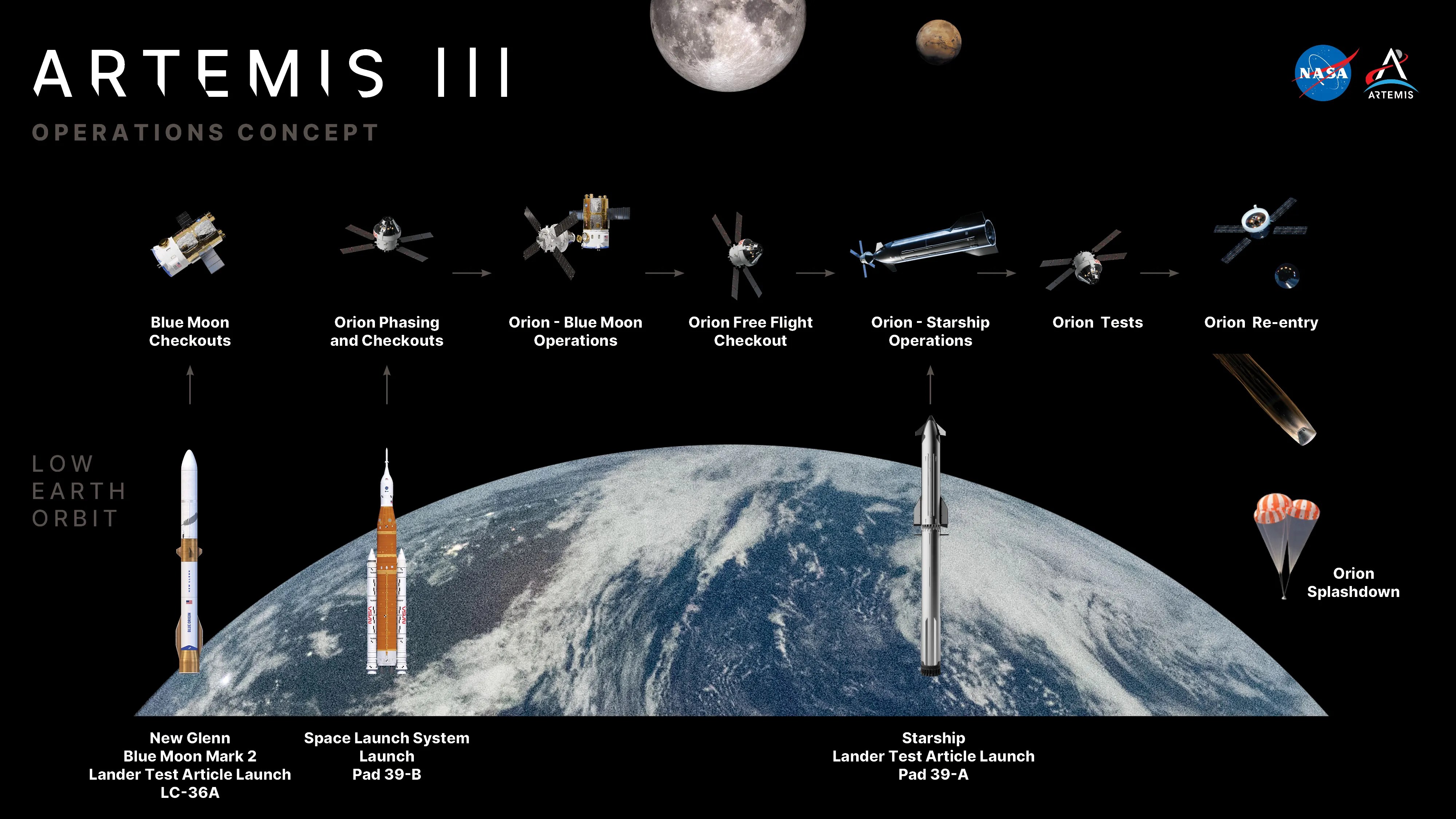
“But for all the Artemis II mission accomplished, how we arrived at it was far from perfect, and the decisions of previous administrations that led to these deficiencies deserves careful reflection. Almost the entirety of [the Space Launch System is repurposed decades-old Space Shuttle hardware. I understand why, the Shuttle program was ending, and it was important to look after the industrial base. I will also say that was at a time when we did not have a geopolitical competitor challenging America in the high ground of space, but perpetuating the past does not help us realize a better future. Even after over $100 billion of taxpayer funding to date, and this most recent and successful Artemis II mission, we would not have launched again until late 2028 with the aim of putting astronauts on the Moon under the previous plan. A plan with no hope of achieving this national imperative. You do not fly rockets like this every three plus years and expect success. Further, you do not make each vehicle a work of art by materially changing the configuration. You also do not build a base in orbit above the Moon, when the scientists, the engineers, the astronauts, and certainly the space-loving community want to be on the surface of the Moon, which is hard enough to achieve.”
-Statement by NASA Administrator Jared Isaacman at his hearing before the Senate Committee on Appropriations, Subcommittee on Commerce, Justice, Science, and Related Agencies, earlier this week. He was justifying his revamping of the Artemis schedule and elimination of the Lunar Gateway. He also defended the White House’s cuts to his budget, though not everyone in the room was convinced. Ranking Member Senator Chris Van Hollen (D-MD) was not happy with the planned cuts to the Science Mission Directorate, stating:
I think everyone in this room knows that without space science, there is no space exploration. Without space science, there is no new planetary discovery. Without space science, there is no NASA
Image (Credit): An artist’s rendering of Voyager 1. (NASA/JPL-Caltech)
“While shutting down a science instrument is not anybody’s preference, it is the best option available…Voyager 1 still has two remaining operating science instruments — one that listens to plasma waves and one that measures magnetic fields. They are still working great, sending back data from a region of space no other human-made craft has ever explored. The team remains focused on keeping both Voyagers going for as long as possible.”
–Statement by Kareem Badaruddin, Voyager mission manager at the Jet Propulsion Laboratory, regarding NASA’s decision to shut down the Low-energy Charged Particles experiment (LECP). The instrument measures low-energy charged particles, such as ions, electrons, and cosmic rays, helping NASA to better understand the region of space where Voyager 1 is located. The LECP was turned of on Voyager 2 back in March 2025.
“The Planetary Society is deeply disappointed by this budget proposal. The White House’s budgeting office has put forward the same budget cuts to NASA and NASA Science that were rejected by overwhelming bipartisan majorities in Congress last year. This proposal needlessly resurrects an existential threat to U.S. leadership in space science and exploration.”
-Statement from a Planetary Society press release after the Office of Management and Budget (OMB) released its proposed NASA budget for Fiscal Year 2027. The proposal would cut the overall agency budget by 23 percent and reduce the Science Mission Directorate by 47 percent. You may remember a similar attempt at cuts that was later reversed by the Congress. It appears everyone will be playing this game again this year.
Note: The budget picture above may look like a lunar landing, but it is a full-scale crash if allowed to stand. We can call the impact site “Trump Crater” filled with the remains of our space program if it cannot be reversed.
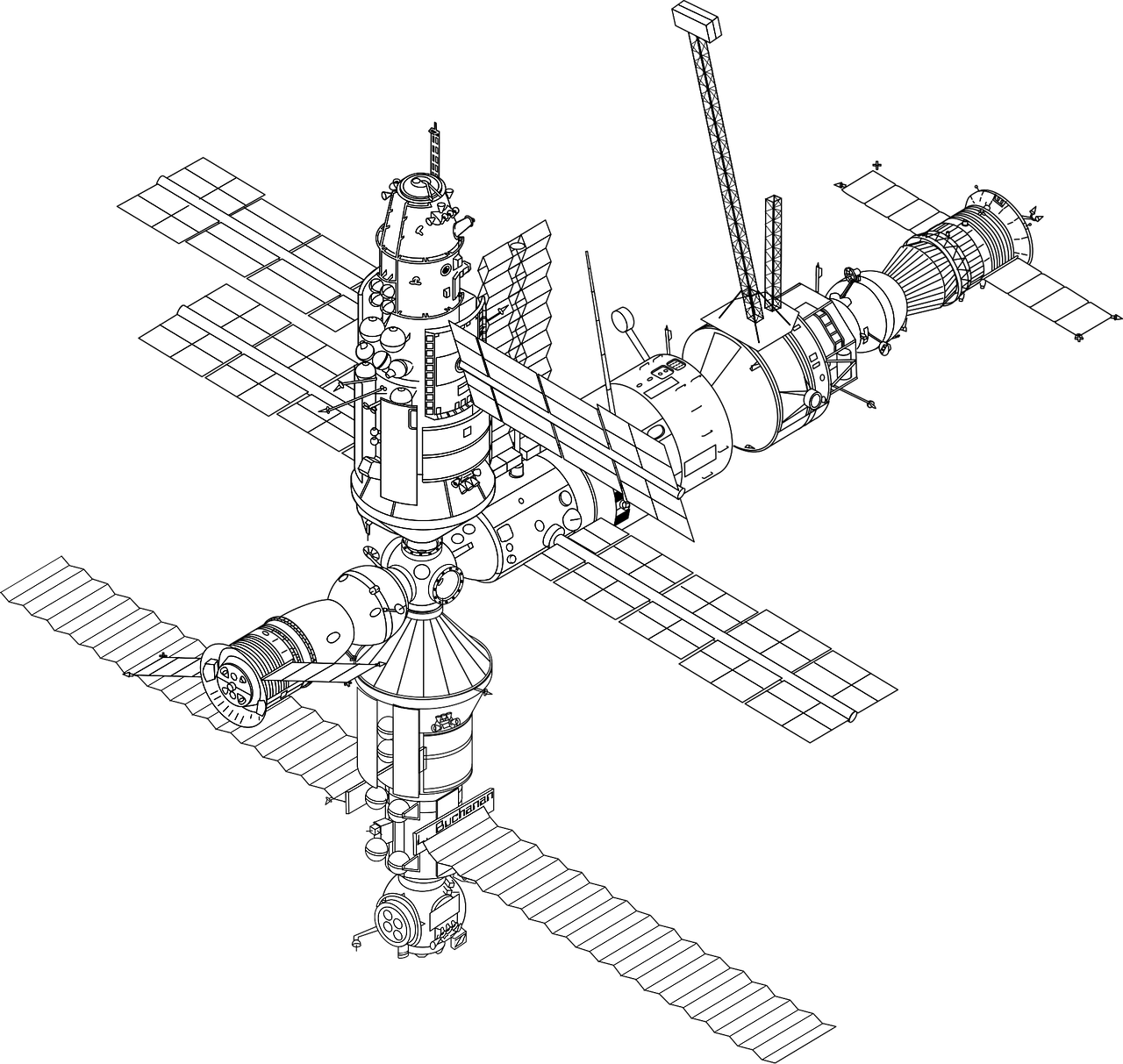
Image (Credit): The ISS’s “window to the world” is pictured from the Nauka Multipurpose Laboratory Module. (NASA)
“We expected a launch market that was going to take off. We expected tourism to take off. We expected the ability to do research and technology development on the International Space Station, bring it back to Earth and mass produce it…We’re not seeing any of those three things.”
–Statement by Joel Montalbano, NASA’s acting associate administrator for space operations, addressing the need for NASA to build onto the current International Space Station (ISS), which is part of the newly announced NASA space initiatives. Mr. Montalbano was speaking at a March 25th hearing before the House Committee on Science, Space, and Technology, Subcommittee on Space and Aeronautics. The vice ranking member of the full committee, Rep. George Whitesides (D-CA), questioned NASA’s new approach, stating:
Based on the old plan, several companies raised probably in excess of $2 billion in private capital and did so on the expectation that NASA would follow through…My concern is that if NASA is not a reliable partner for private investors, we’re not going to get that money and we’re not going to then save money by being able to cost-share with the private sector.