Space Quote: Voyager 1 Still Going, but with One Less Instrument

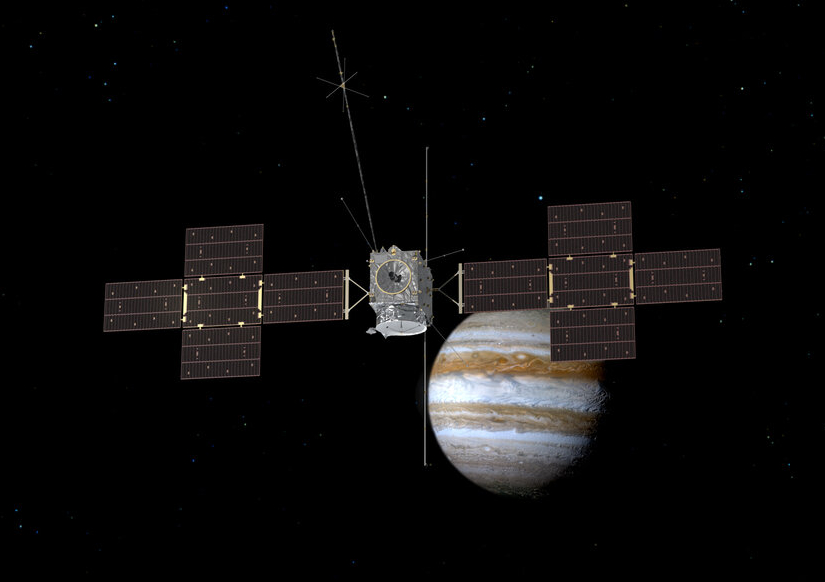
Image (Credit): An artist’s rendering of Voyager 1. (NASA/JPL-Caltech)

“While shutting down a science instrument is not anybody’s preference, it is the best option available…Voyager 1 still has two remaining operating science instruments — one that listens to plasma waves and one that measures magnetic fields. They are still working great, sending back data from a region of space no other human-made craft has ever explored. The team remains focused on keeping both Voyagers going for as long as possible.”

Statement by Kareem Badaruddin, Voyager mission manager at the Jet Propulsion Laboratory, regarding NASA’s decision to shut down the Low-energy Charged Particles experiment (LECP). The instrument measures low-energy charged particles, such as ions, electrons, and cosmic rays, helping NASA to better understand the region of space where Voyager 1 is located. The LECP was turned of on Voyager 2 back in March 2025.

House Report: Budget Issues at NASA

A new released minority staff report from the House Committee on Science, Space, and Technology, titled MISSION ABORTED: How NASA Illegally Implemented the President’s Budget Request Without Congressional Approval, has a few issues with the budget process at NASA.

Here is the main point from the report’s executive summary:

In 2025, NASA implemented the President’s Budget Request for Fiscal Year 2026 instead of the laws duly enacted by Congress. NASA leaders denied this fact repeatedly during the summer and fall of 2025. But the evidence gathered by Committee Staff says otherwise. Without authorization or direction from Congress, and in violation of the basic separation-of-powers framework set forth by the Constitution, NASA put into effect an executive branch proposal as if it were the law of the land. The consequences of that decision – for the agency, its workforce, and American leadership in science and space – were adverse to the agency’s mission.

The 38-page report gives plenty of examples about the various missions delayed or thwarted by NASA management, such as the Electrified Powertrain Flight Demonstration project and the Advanced X-ray Imaging Satellite mission.

Last year was a pretty horrible year overall for government programs, but we can all be thankful that DOGE did not get too far past the destruction of the US Agency for International Development before it steered into the rocks and eventually sunk. Besides, Mr. Musk would not want to attack an agency that keeps him in business.

With Jared Isaacman as NASA’s administrator, and Congress basically ignoring White House cuts, the overall damage has been contained. With that said, the scars left on agency programs and personnel will be long-lasting.

Congress will need to remain vigilant and continue to investigate and highlight any budgetary abuses at NASA should they still occur, even if it is only the minority party paying attention at the moment (though that minority status seems likely to change with elections later this year).

We will see many more such reports in the years to come, but for too many it will be too little, too late.

A Day in Astronomy: Apollo 13 Sets a Distance Record

Image (Credit): Apollo 13 mission patch. (NASA)

On this day in 1970, the Apollo capsule traveled to the farthest point from Earth of any Apollo mission. It was an unbroken record until last week, with the Artemis II mission exceeded this distance by 4,105 miles.

Of course, that was a great achievement in an otherwise troubled Apollo mission. The Apollo 13 crew, consisting of Commander James A. Lovell, Command Module Pilot John L. “Jack” Swigert and Lunar Module Pilot Fred W. Haise, would never make it to the surface of the Moon. That is a story worth reading (as well as a movie worth watching).

Space Quote: Key Senator Pushes Against White House NASA Cuts

Credit: Image by Pabitra Kaity from Pixabay

“I’m going to try to lead the subcommittee and the whole committee to put us in a position where we are funding NASA, NOAA and our other agencies in a way that is pretty similar to what we did last year.”

Statement last Sunday by Senator Jerry Moran (R-KS), who serves at the chair of the Senate Appropriations Commerce, Justice and Science subcommittee, which oversees NASA. The subcommittee successfully reversed most of the proposed White House cuts in the Fiscal Year 2026 NASA budget. The senator is a speaker at this week’s Space Symposium in Colorado Springs, CO.

Space Stories: Cygnus XL Cargo Craft Arrives at ISS, China Further Along Than US with Moon Lander, and a Martian Hopper Mission

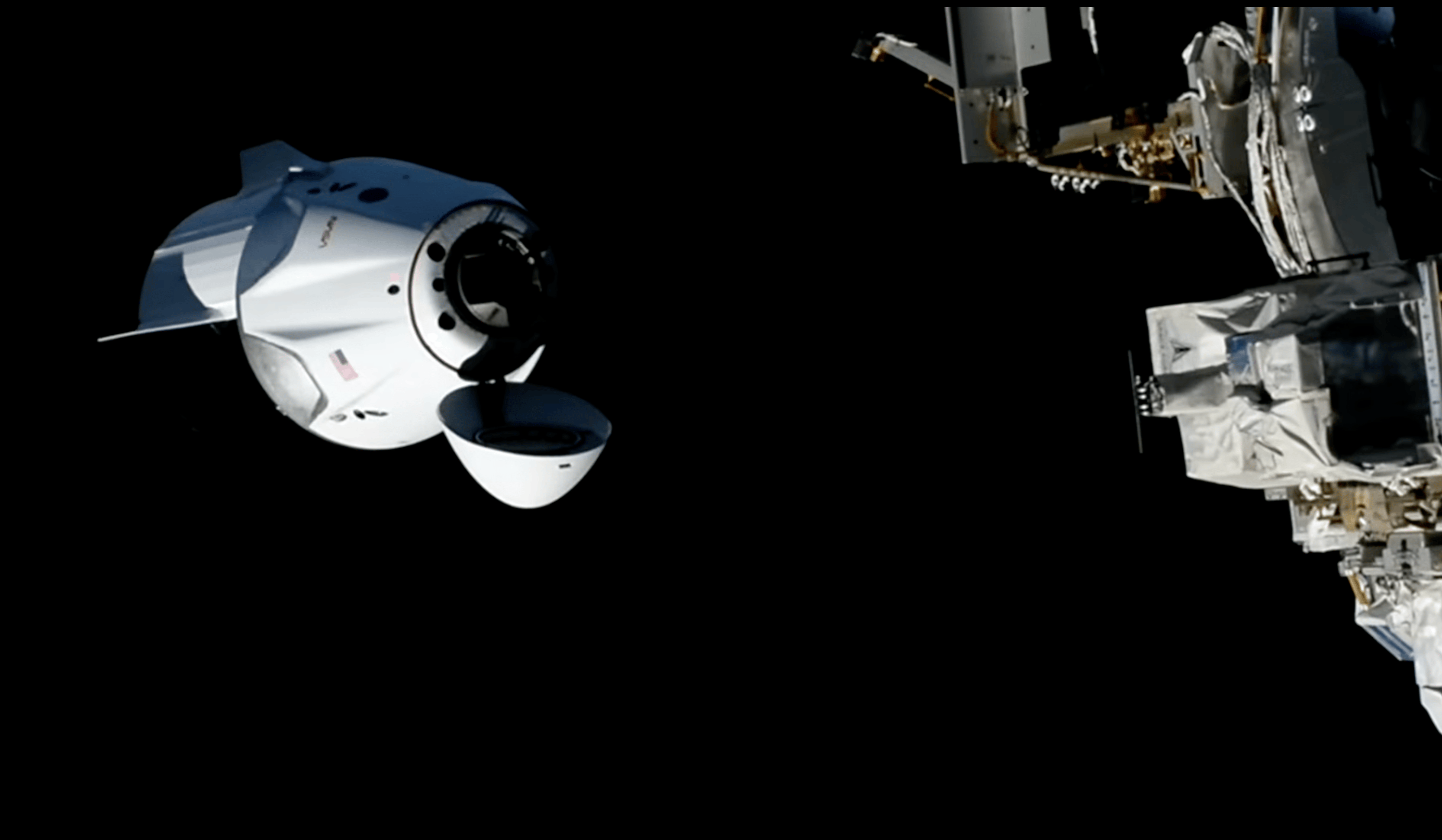
Image (Credit): The International Space Station’s (ISS) robotic arm reaching out to the Cygnus XL cargo spacecraft as it arrives on April 13, 2026. (NASA)

Here are some recent space-related stories.

NASA: “Canadarm2 Reaches Out and Captures Cygnus XL Cargo Craft

At 1:20 p.m. EDT, NASA astronaut Chris Williams, with assistance from NASA astronaut Jack Hathaway, captured Northrop Grumman’s Cygnus XL spacecraft using the International Space Station’s Canadarm2 robotic arm…NASA’s Northrop Grumman Commercial Resupply Services 24 mission launched at 7:41 a.m. on April 11 on a SpaceX Falcon 9 rocket from Space Launch Complex 40 at Cape Canaveral Space Force Station in Florida, carrying more than 11,000 pounds of scientific investigations and cargo to the orbiting laboratory.

Scientific American: How China Could Still Win the New Moon Race

China is not yet ready to perform a crewed circumlunar mission like the U.S., which began development of the Orion spacecraft in the 2000s and redesigned it to go with the SLS rocket in the early 2010s. But China is progressing on all the necessary hardware to reach the moon, with a stated goal of a crewed landing before 2030. Notably, the nation has already tested a key component that the U.S. is still working to bring online: the landing hardware. Last year China demonstrated its Lanyue crewed lunar lander, performing a propulsive lunar landing and lunar launch tests in simulated moon gravity conditions. In the U.S. SpaceX and Blue Origin are both working on NASA-funded lander concepts needed to make a 2028 Artemis landing possible.

Universe Today: Meet Orpheus – A Hopper Mission Built To Hunt For Life In Martian Volcanoes

We’ve spent decades scratching the surface of Mars trying to uncover life there. But we’ve been searching a barren wasteland bombarded by radiation and bathed in toxic perchlorates. The entire time, it’s likely that it’s been too hostile to harbor extant life. So if we want a better shot at finding currently living life on Mars, we need to go underground. That is exactly the purpose of Orpheus, a proposed Mars vertical takeoff and landing (VTOL) hopper mission put forth by Connor Bunn and Pascal Lee of the SETI Institute at the 57th Lunar and Planetary Science Conference (LPSC).