Space Quote: AI is Ready to Run a Telescope

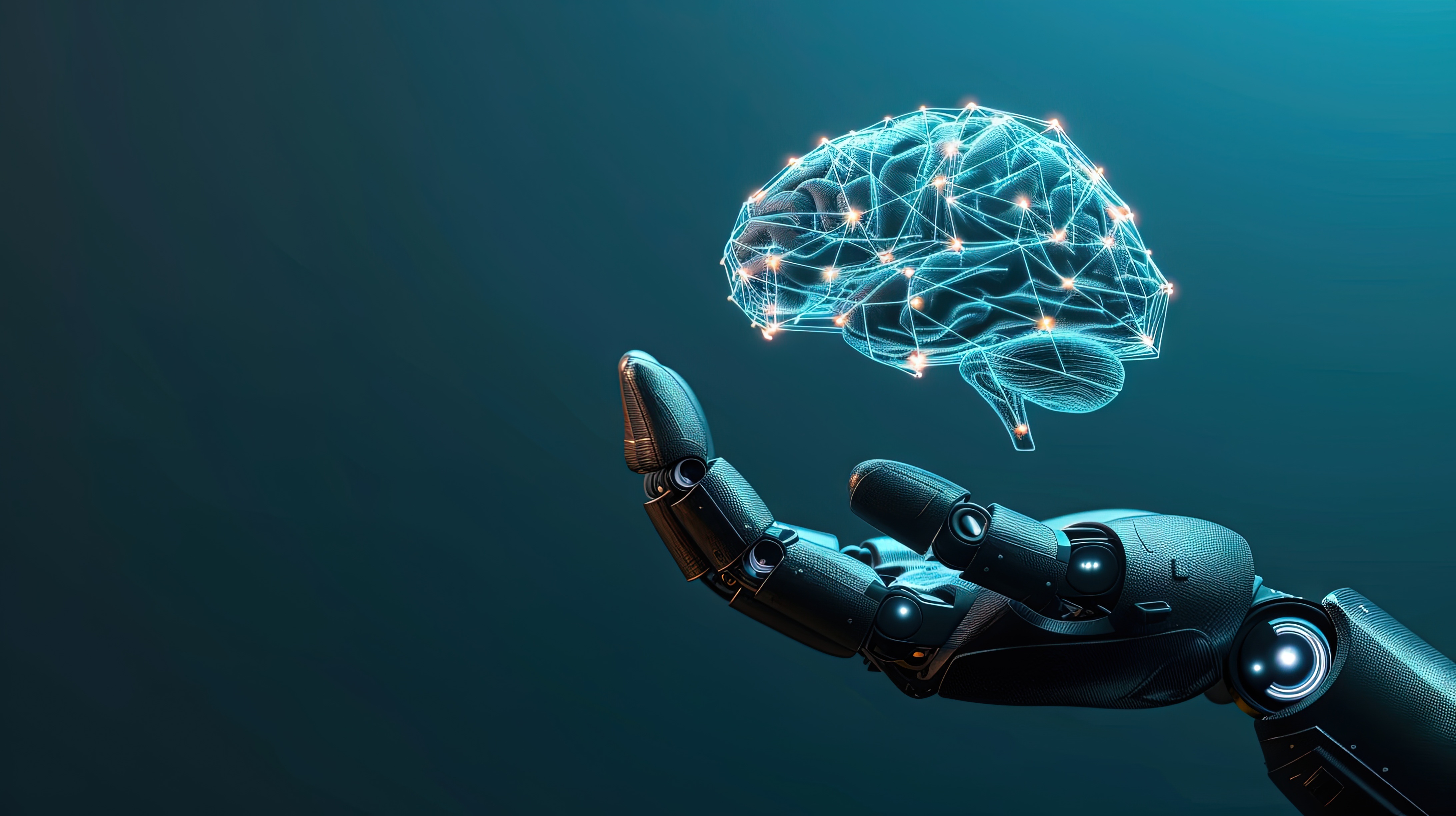
Credit: Image by Alexandra_Koch from Pixabay

“It is exciting to see ideas from AI and reinforcement learning brought to telescope scheduling, where every decision must balance changing conditions and scarce observing time…Developing intelligent scheduling systems for astronomical surveys also raises fascinating new machine learning problems, and we are excited to continue exploring them through this project.”

-Statement by Northwestern University’s Aravindan Vijayaraghavan, who co-led the AI telescope project with Drlica-Wagner, as quoted by NOIRLab. The AI program planned and managed observations on a national facility for the first time. It is hoped that the involvement of AI could add efficiencies to the process, thereby allowing astronomers to have more time for their science.

Podcast: AI Data Centers in Space

If you are following the debate about whether data centers belong in orbit, this Freakonomics Radio podcast titled “Should A.I. Move to Space?” may be for you.

Guest host Steve Levitt talks to a number of experts about the role of AI in our economy. I recommend listing to all of the podcast since much of it touches on the logistics of data centers in orbit, but it is the later part of the podcast involving a discussion with Will Marshall, co-founder and C.E.O. of Planet Labs, that peaked my attention. He discusses both the role of Planet Labs as its satellites monitors every corner of the Earth’s surface as well as the need for AI data centers in space.

In terms of the Planet Lab satellites, I found his most intriguing statements were related to the reduced costs of satellites. While most of the stories in the press seem to be about the decrease in rocket costs, Mr. Marshall said the real transformation is the miniaturization of satellites. Even under the earlier rocket system (pre-SpaceX), the drop in satellite costs due to smaller satellites would have been incredible.

In the quote below, Mr. Marshall is referring initially to the lower rocket costs, but then he expands into the real cost saving:

But remember even a four or five x reduction in cost, which really helps the whole space industry and has helped spawn it, is less significant, purely from an economic standpoint, than the 100 to a 1,000x improvement in cost performance of satellites that are going in. So, in each kilogram that you put up into space, if you can get a hundred times more data, because you’ve made the satellite way smaller, then you have won big time, even if the launch cost didn’t change one iota.

In his discussion about AI data centers, Mr. Marshall also has a unique view about the role of the Earth’s surface versus space:

I think it’s inevitable that, within a 10-ish year timeframe, most computers being built on the Earth will be going to space. I actually think not only is it going to be economically cheaper, but it’s going to be more sustainable. Earth’s life is so precious, it’s incredible, but yet we’re whittling away a lot of it. We’re doing deforestation for lithium, for cows, for whatever, we’re doing it. And we need to put our energy-intensive infrastructure into orbit, if we can, to not have a collision course with the biodiversity on the planet,

The podcast episode is in two parts, so be sure to listen to the second part when it comes out.

AI is Impersonating Carl Sagan and Others

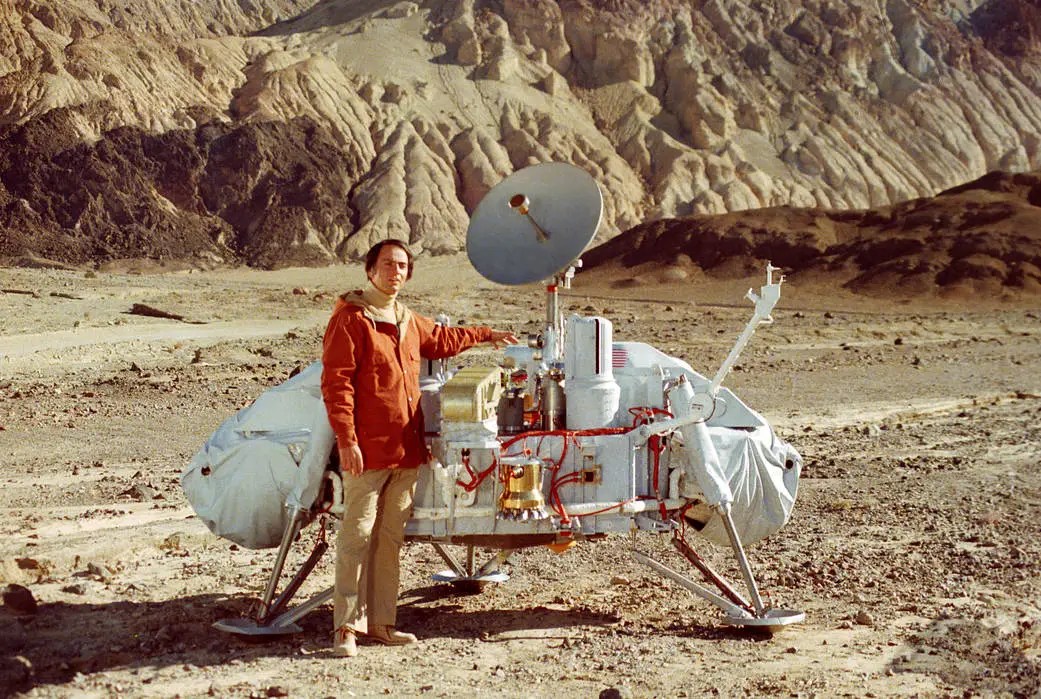
Image (Credit): Dr. Carl Sagan poses with a model of the Viking lander in Death Valley, California. (NASA)

AI can do a number of things well, including astronomy-related tasks, but it also has a tendency to step on toes and steal other peoples creations. This was certainly the case with the editing program Grammarly, which wanted to go beyond simple grammar-related corrections. Instead, it started bragging about how it could edit like various famous writers and other well known individuals via a service called Expert Review.

Would you like Carl Sagan to edit your work? Well, Expert Review can help. How about Neil deGrasse Tyson? Sure, why not?

The problem is that Grammarly never obtained permission to mimic these parties, so now it faced a multi-million dollar lawsuit. The Guardian newspaper cites an company official who stated that Expert Review has already been taken down for redesign. That sounds a lot like a “rapid disassembly” of the service.

Many would like the equivalent of a Carl Sagan to be only a click away for advice and input, but this is not the way to do it.

We can only hope that AI services, currently backed by billions in investment funds, can one of these days figure out a way to (1) seek permission beforehand for data use and (2) share the wealth with true creators.

Until then, AI should stick to the raw AI astronomy data and stop impersonating the astronomers.

Space Stories: Another Artemis II Delay, AI Discovers Cosmic Oddities in Hubble Data, and AI Drives a Martian Rover

Image (Credit): Artemis II mission patch. (NASA)

Here are some recent space-related stories of interest.

CBS News: Artemis II Moon Rocket Fueling Test Runs into Problems with Hydrogen Leak

A hydrogen leak at the base of NASA’s Artemis II moon rocket Monday threw a wrench into a carefully planned countdown “wet dress” rehearsal, but engineers were able to manage a workaround and the test proceeded toward a simulated launch. Whether mission managers will be able to clear the rocket for an actual launch as early as Sunday to propel four astronauts on a flight to the moon will depend on the results of a detailed overnight review and post-test analysis. NASA only has three days — Feb. 8, 10 and 11 — to get the mission off this month or the flight will slip to March.

ZME Science: Astronomers Unleashed an AI on Hubble’s Archive and Uncovered 1,300 “Cosmic Oddities.” Most Were Completely New to Science

For more than three decades, the Hubble Space Telescope has collected targeted images to answer specific scientific questions, from mapping galaxies to studying nearby nebulae. Hubble has gathered so much data that despite their best efforts, astronomers haven’t had the time to analyze it all in detail yet…Now, two astronomers have revisited that massive archive with a new plan. They deployed an artificial intelligence system designed to notice when something looks “wrong”. In just 60 hours of computing time, the tool flagged over 1,300 anomalies hidden within 100 million Hubble snapshots. Hundreds of them have never appeared in scientific literature.

NASA/JPL NASA’s Perseverance Rover Completes First AI-Planned Drive on Mars

NASA’s Perseverance Mars rover has completed the first drives on another world that were planned by artificial intelligence. Executed on Dec. 8 and 10, and led by the agency’s Jet Propulsion Laboratory in Southern California, the demonstration used generative AI to create waypoints for Perseverance, a complex decision-making task typically performed manually by the mission’s human rover planners…During the demonstration, the team leveraged a type of generative AI called vision-language models to analyze existing data from JPL’s surface mission dataset. The AI used the same imagery and data that human planners rely on to generate waypoints — fixed locations where the rover takes up a new set of instructions — so that Perseverance could safely navigate the challenging Martian terrain.

Podcast: We Need To Talk About AI

Credit: Image by Brian Penny from Pixabay.

The recent Cool Worlds Podcast is basically a rambling talk about the use of AI in the scientific community. Titled “We Need To Talk About AI,” this dialogue by Professor David Kipping follows his visit to the Institute of Advanced Study at Princeton where he heard about how his colleagues are using AI in their work.

Professor Kipping covers many points and makes it clear from the start that he has some serious questions about the impact of AI on his own work and the work of graduate students. For instance, he asks:

  • Will cheap AI change the science community’s need need for graduate students in the future given the time and cost to develop those new scientists compared to the amazing advances in AI?
  • Will the cheap AI program of today become more costly down the road once the AI companies need to recoup the billions of dollars invested in this technology?
  • Will science become too dependent on this technology while human skills atrophy?

He is also very honest about how he uses AI in the production of his own public videos explaining scientific developments and controversies. More interestingly, he wonders aloud whether we will even need his videos in the future as AI gets better and we have the ability to seek our own answers rather than waiting for the next video.

It’s a lot to digest and worth your time, if only because it is an ongoing set of questions in basically every industry at this point.

Listen for yourself and consider giving your own input back to Professor Kipping. He is soliciting your opinion as he finds his way forward in this new world.