
March 30, 2026 Astronomy Question
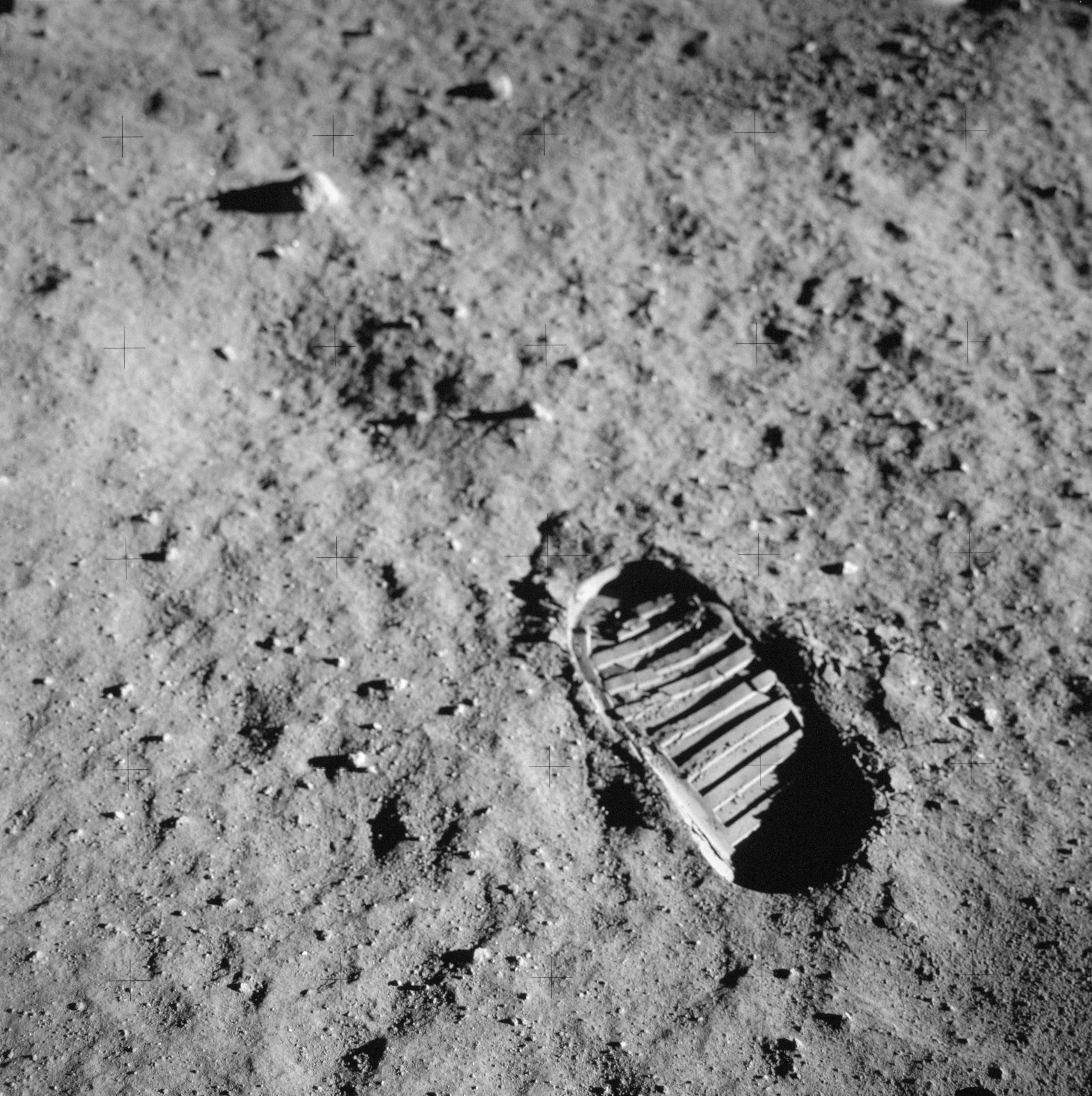
Multiple Choice: Which statement below is NOT TRUE about the Moon?
A. Lunar dust smells like a chemical solvent.
B. Some craters on the Moon are colder than the surface of Pluto.
C. The Moon has an atmosphere.
D. The Moon orbits the Sun rather than the Earth.
The correct answer is A, which is not true. According to Apollo 17’s Harrison “Jack” Schmitt, the dust smelled like spent gunpowder. He stated,
All I can say is that everyone’s instant impression of the smell was that of spent gunpowder, not that it was ‘metallic’ or ‘acrid’. Spent gunpowder smell probably was much more implanted in our memories than other comparable odors.
Apollo 11’s Buzz Aldrin said it smelled more like burnt charcoal, noting:
It was like burnt charcoal or similar to the ashes that are in a fireplace, especially if you sprinkle a little water on them.
February 27, 2026 Astronomy Question

Multiple Choice: In terms of space history, what was Operation Morning Light?
A. An incident involving a failed rocket motor on the Soviet Union’s Mir space station.
B. The first commercial aircraft to communicate with a NASA satellite.
C. A commercial effort to build a suborbital reusable manned spacecraft.
D. A falling Soviet satellite that almost created a nuclear crisis.
The correct answer is D, involving a Soviet satellite. In January 1978, the Soviet Union lost contact with its Kosmos 954 satellite. This satellite had a reactor that contained over 100 pounds of highly enriched uranium. The US and Canadian governments became involved in the search for Kosmos 954, with Canadian aircraft carrying US equipment to locate this satellite. Eventually, the satellite crashed in Canada, creating a debris field that covered 15,000 square miles across the Northwest Territories. Both Canadians and Americans searched for the pieces, but only about 10 of Kosmos 954 was recovered.
Note: “Clipper Morning Light” (N739PA) was a Pan American World Airways Boeing 747-121 known for being the first commercial aircraft to communicate with a NASA satellite.
January 17, 2026 Astronomy Question
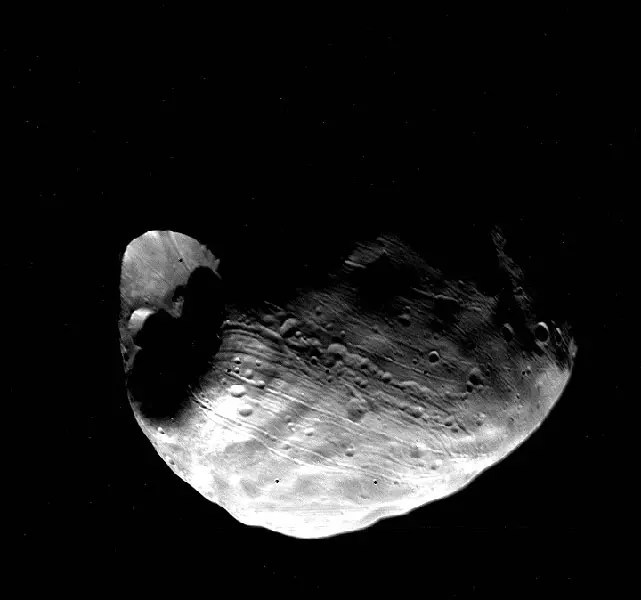
Multiple Choice: The craters on the Martian moon Phobos were named after the works of what author?
A. Erasmus
B. Jonathan Swift
C. Jules Verne
D. Voltaire
The correct answer is B, Jonathan Swift. The craters on Phobos (or Fear, the son of Mars) were named after astronomers who studied the moon as well as the people and places in Jonathan Swift’s book Gulliver’s Travels., which discussed Mars having two moons. The other Martian moon Deimos (or Dread, another son of Mars) has only two named craters – Swift (noted above) and Voltaire, the French satirist who also wrote about two Martian moons in his 1752 story Micromégas.
December 7, 2025 Astronomy Question
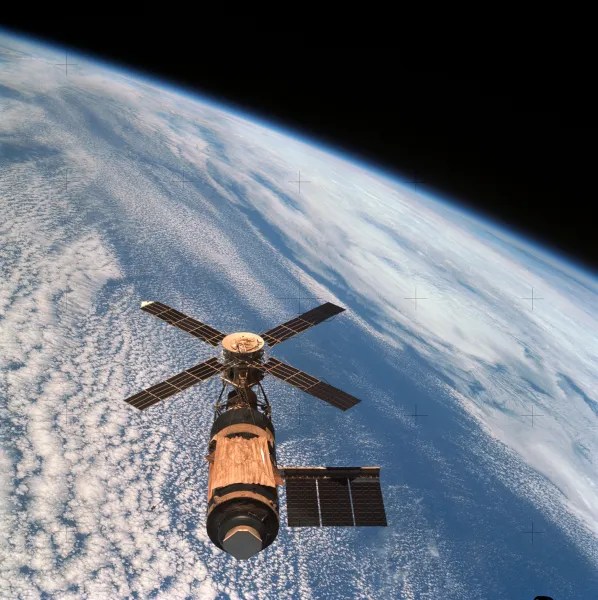
Two-Part Multiple Choice:
Part 1: When Sklyab fell from the sky in 1979, what country was hit with falling debris?
A. Argentina
B. Australia
C. New Zealand
D. Papua New Guinea
Part 2: What was the size of the fine that this country tried to impose on NASA as compensation for the debris damage?
A. $400
B. $40,000
C: $4 million
D: $14 million
The correct answer for Part 1 is B. The Skylab debris fell onto Western Australia, which was part of a debris footprint that stretched over 2,450 miles. The correct answer for Part 2 is A. As a result of the Skylab incident, Australia imposed a fine of $400 related to littering. NASA never paid the fine. However, as the Guinness Book of World Records notes, a US radio host paid the fine in 2009 (the 30th anniversary) after raising the funds from his listeners.
November 18, 2025 Astronomy Question
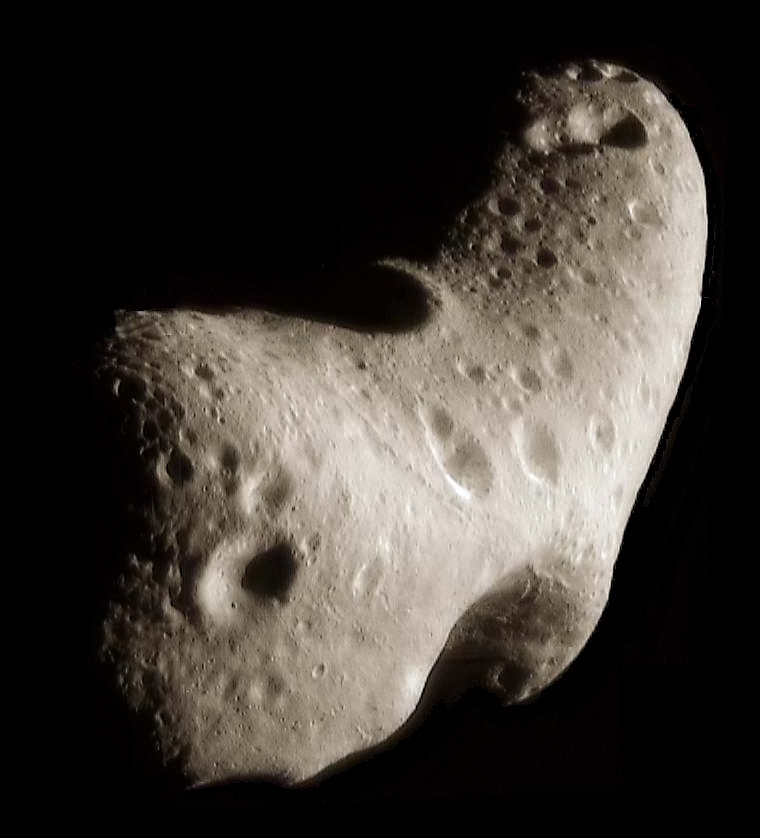
Multiple Choice: What is the average distance between the asteroids located in the asteroid belt between Mars and Jupiter?
A. 4,000 miles
B. 50,000 miles
C. 600,000 miles
D. 1.1 million miles
The correct answer is C. The average distance between asteroids in the asteroid belt is about 600,000 miles. This is good news considering all the spacecraft we have sent through the asteroid belt. Overall, the asteroid belt contains between 1 and 2 million large asteroids that are more than 1/2 mile across, and millions more than are much smaller. The largest object in the asteroid belt is the dwarf planet Ceres.
October 28, 2025 Astronomy Question

Multiple Choice: In the television series Star Trek, which of the following was not a founding species of the United Federation of Planets, a collection of governments based on universal liberty and equality?
A. Vulcans
B. Andorians
C. Tellarites
D. Betazoids
The correct answer is D. The five founding species of the United Federation of Planets were Earth (or Terra), Vulcan, Tellar, Andor, and Alpha Centauri. The Betazoids are members of the United Federation of Planets, but not one of the founding species (per non-canon sources).
This question and more were posed on PBS’s Pioneers of Television website. Check it out for more fun Star Trek questions.
September 17, 2025 Astronomy Question

Multiple Choice: How many galaxies can be viewed with the naked eye from the Northern Hemisphere?
A. One
B. Two
C. Five
D. Eight
The correct answer is B. You can view two galaxies with the naked eye from the Northern Hemisphere – the Andromeda Galaxy (2.5 million light-years away) and M33 (2.7 million light-years away).
You may have thought that the Small and Large Magellanic Clouds orbiting the Milky Way Galaxy should have been included, but they can only be seen from the Southern Hemisphere.
If the question was asked without naming a hemisphere, the answer would be four galaxies can be viewed with the naked eye, or five if you include the Milky Way Galaxy.
You can find these facts and more at the Royal Museums Greenwich.
August 16, 2025 Astronomy Question
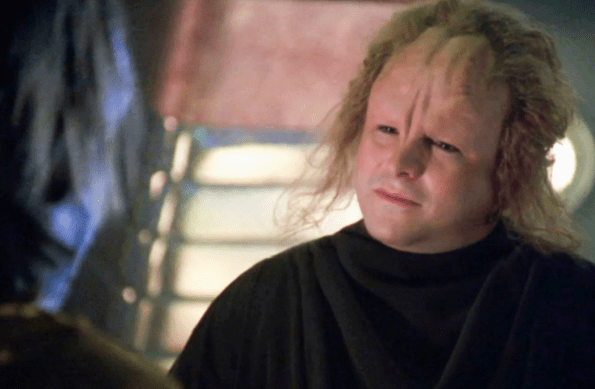
Multiple Choice: What Seinfeld actor had a cameo on Star Trek: Voyager?
A. Jason Alexander
B. Jerry Seinfeld
C. Julia Louis-Dreyfus
D. Michael Richards
As shown in the image above, the correct answer is A. Jason Alexander, who played George Costanza on Seinfeld, was in the Star Trek: Voyager fifth season episode titled “Think Tank.” He played the part of Kurros an interstellar genius and troublemaker. Much later, he also provided the voice for Dr. Noum in the animated series Star Trek: Prodigy.
Another interesting occurrence is the actor crossover between the Seinfeld and Star Trek series over the years. Screenrant reports that more than 30 actors appeared in both iconic shows.
July 19, 2025 Astronomy Question
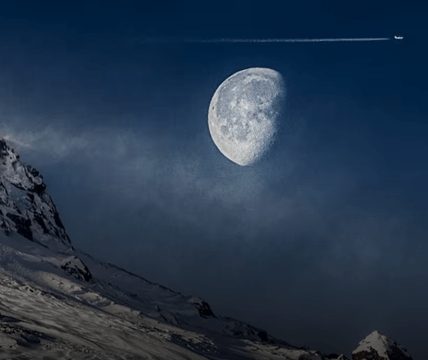
Multiple Choice: How many moons in our Solar System are larger than a planet in our Solar System?
A. Zero
B. One
C. Two
D. Three
The correct answer is C. Two moons in our Solar System are larger than Mercury, the smallest planet in our Solar System – Jupiter’s moon Ganymede and Saturn’s moon Titan.
If Pluto were still a planet, then you could add five more moons to this list – Earth’s Moon, Jupiter’s moons Callisto, Io, and Europa, as well as Neptune’s moon Triton.
You can learn more about the larger moons at this link.
June 22, 2025 Astronomy Question

Multiple Choice: What name below is not the name of a real asteroid?
A. Broccoli
B. Nordic
C. Jetta
D. Mr. Spock
The correct answer is B, Nordic, which is not the name of an asteroid. Broccoli, Jetta, and Mr. Spock are all asteroids located between Mars and Jupiter.
Mr. Spock is not named after who you might have in mind. Instead, it is the name of the cat accompanying astronomer James B. Gibson when he discovered the asteroid in August 1971. This led to the ban on naming asteroids after pets.
You can see a full list of asteroid names at this link.
May 7, 2025 Astronomy Question:

True or False: If you lined up all of the planets in our solar system, you could fit them between the Earth and the Moon.
The correct answer is “true.” All seven of the other planets of the Solar System are able to fit into the 250,000-mile gap between the Earth and the Moon. See the BBC Sky at Night magazine for more interesting space facts.
March 24, 2025 Astronomy Question:
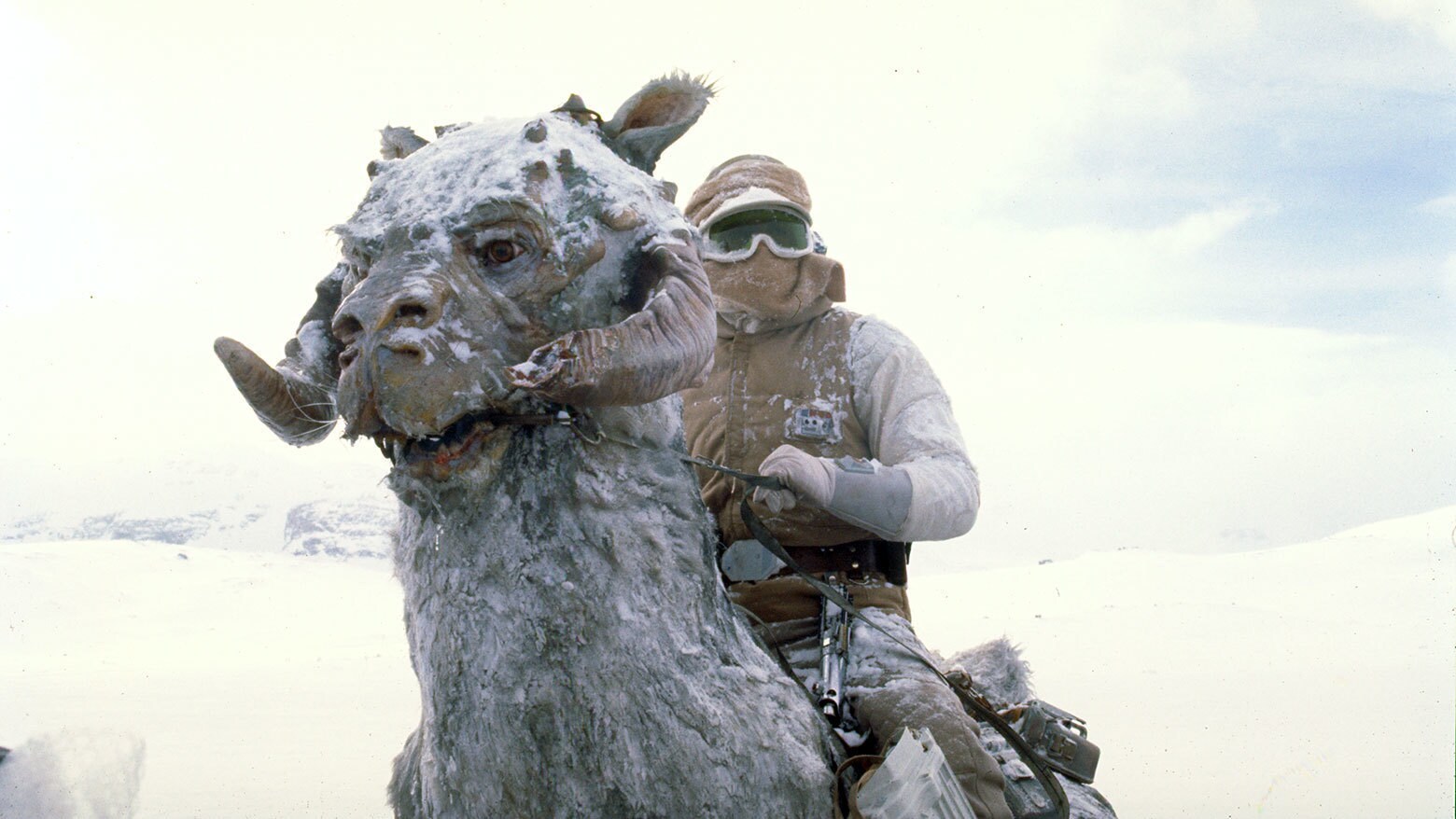
Multiple Choice: What is the coldest planet in our solar system?
A. Jupiter
B. Saturn
C. Uranus
D. Neptune
The correct answer is C, Uranus, where the temperatures in the planet’s cloud tops average –224°C. The icy planet is 1.78 billion miles from the Sun.
Uranus also has a 97 percent tilt to its axis, unlike any other planet in the solar system. Given that it takes 84 Earth years for the planet to circle the sun, each pole gets 42 years of sun and 42 years of darkness.
Visit this NASA link for more on Uranus.
January 31, 2025 Astronomy Question:
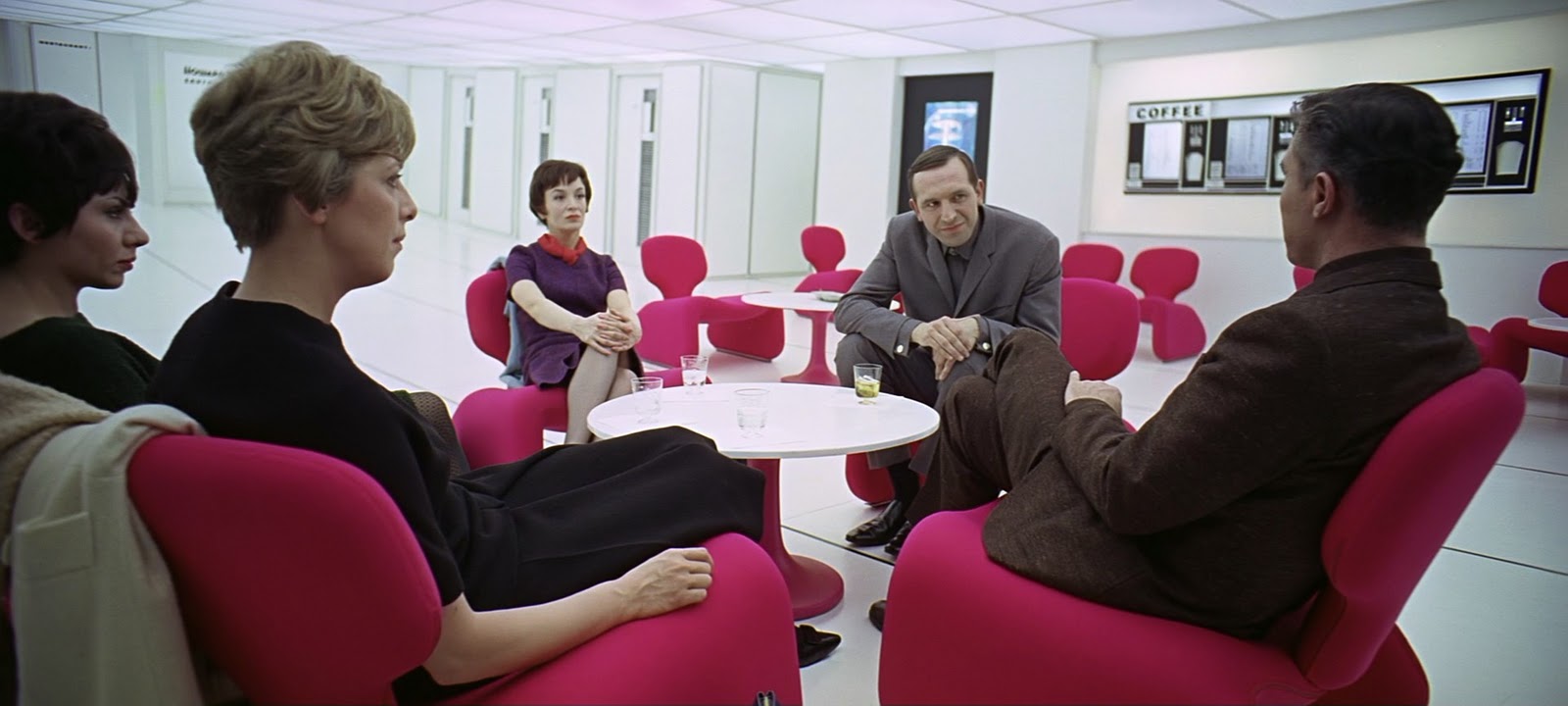
Multiple Choice: What commercial brand listed below was not shown in the 1968 film 2001: A Space Odyssey?
A. Hilton Hotels.
B. Macy’s department store.
C. Aeroflot airlines.
D. BBC news.
The correct answer is B, Macy’s department store. While the store was originally part of a film scene where Dr. Floyd orders a toy for his daughter from Macy’s via a video call, the scene was later cut from the final film. You can learn about Macy’s and the other commercial brands in a post titled “Product placement in 2001: A Space Odyssey.”
December 28, 2024 Astronomy Question:

Multiple Choice: The first person to be married while orbiting the Earth was of what nationality? And in what spacecraft where they when the marriage occurred?
A. An American astronaut in an Apollo spacecraft.
B. A Russian cosmonaut in the Mir space station.
C. An American astronaut in the International Space Station.
D. A Russian cosmonaut in the International Space Station.
The correct answer is D, a Russian cosmonaut in the International Space Station. The first space wedding took place in August 2003 when Russian cosmonaut Yuri Malenchenko was married via video link with Ekaterina Dmitriev, who was at NASA’s Johnson Space Center in Houston, Texas with a cutout of her husband-to-be (pictured below). Malenchenko’s time on the station had been extended, interfering with his planned Earth-based wedding.

November 19, 2024 Astronomy Question:

Multiple Choice: Which planet in our solar system rotates in the opposite direction of every other planet?
A. Venus
B. Jupiter
C. Uranus
The correct answer is C, Venus. Venus is the only planet that spins backwards when compared to the other planets of the solar system. It is possible that the different spin relates to an earlier collision between Venus and another body, but the reason is still unknown. Another interesting fact is that one rotation on Venus (or one Venusian day) is equivalent to 243 Earth days.
More on the Rotation of Venus: https://www.skyatnightmagazine.com/space-science/venus-spins-backwards
October 30, 2024 Astronomy Question:
Multiple Choice: How long will it take the Voyager I spacecraft to travel one light year at its current speed?
A. 5,000 years
B. 18,000 years
C. 23,000 years
The correct answer is B, 18,000 years. Voyager 1 is travelling about 35,000 miles per hour. NASA noted that it will take the Voyager I spacecraft nearly 40,000 years to travel two light years to Proxima Centauri, the nearest star.
More on Voyager: https://science.nasa.gov/mission/voyager/did-you-know/
September 30, 2024 Astronomy Question:
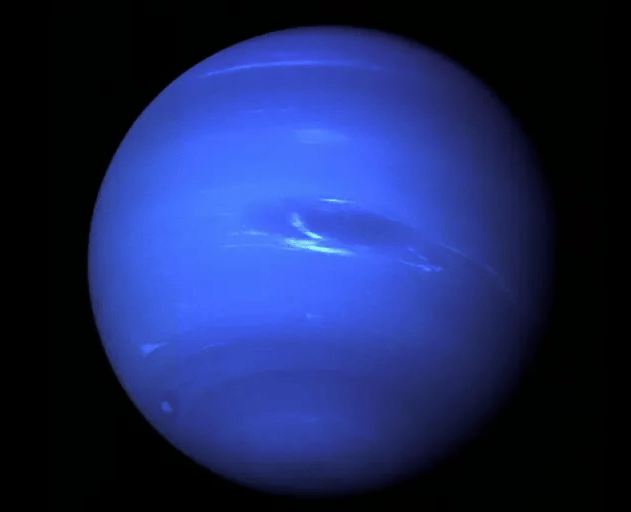
True or False: Neptune has orbited the Sun a total of five times since it was first discovered.
The correct answer is “false.” In fact, Neptune has orbited the Sun only once since it was directly observed with a telescope in 1846 by Johann Gottfried Galle. Neptune orbits the Sun every 165 years, meaning it was not until 2011 that it completed its first orbit since its discovery.
Another interesting fact is that sometimes Neptune finds itself orbiting further away from the Sun than Pluto. The last time that happened was from 1979 to 1999.
More on Neptune: https://science.nasa.gov/neptune/neptune-facts/
 Our Awesome Universe