Pic of the Week: 2026 Astronomy Photographer of the Year Winner

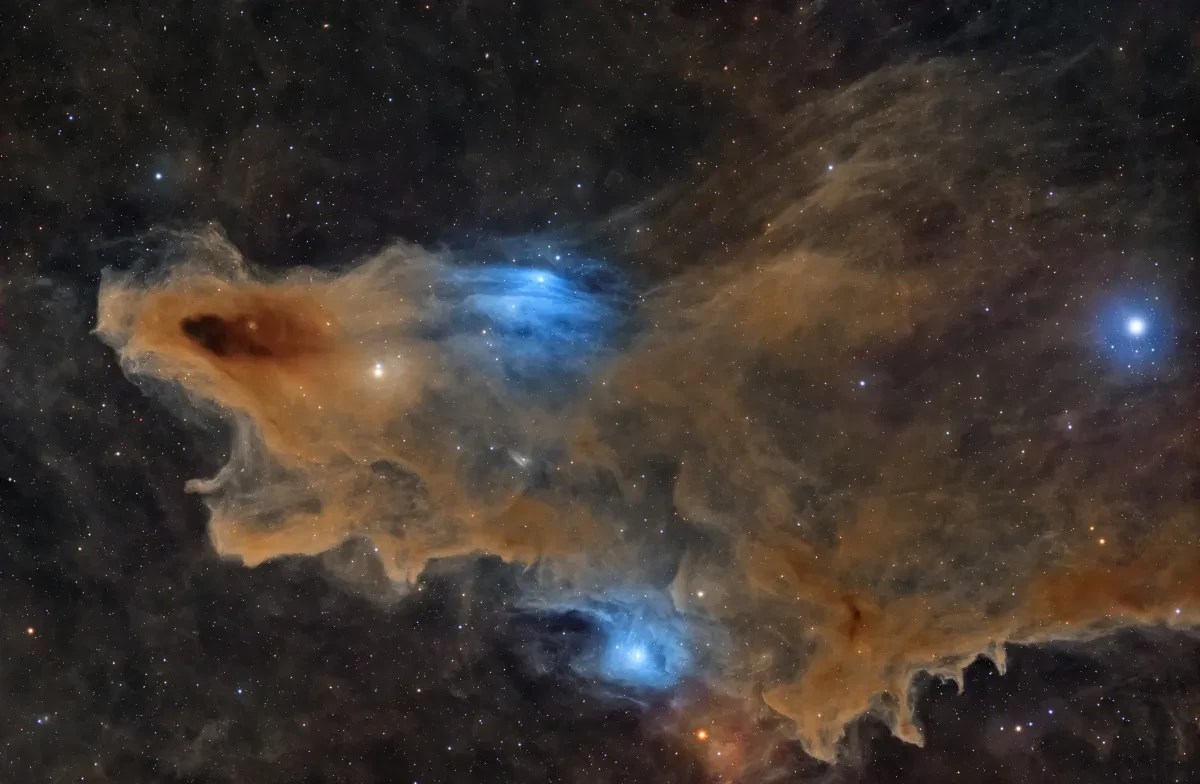
Image (Credit): “The Quiet Predator” by Ali Alobaidly.

This week’s image is the winning entry in the ZWO Astronomy Photographer of the Year 2026 contest at the Royal Museums Greenwich. The photo of the Shark Nebula is titled “The Quiet Predator,” and it was submitted by Ali Alobaidly.

Here is how Ali Alobaidly describes his photo:

 The Shark Nebula (LDN 1235) prowls 650 light years away in the constellation Cepheus, its silhouette carved not from flesh and teeth, but from interstellar dust dense enough to block starlight.

This predator drifts silently through space, camouflaged against the faint glow of the background stars, lit only by nearby blue-coloured reflection nebulae.

Unlike its oceanic cousins, the Shark Nebula doesn’t bite, but it does photobomb astrophotographers with a molecular cloud big enough to make Earth look like a speck of plankton.

You can see the other winning and shortlisted images at the main site.
Pic of the Week: Beauty and the Beast

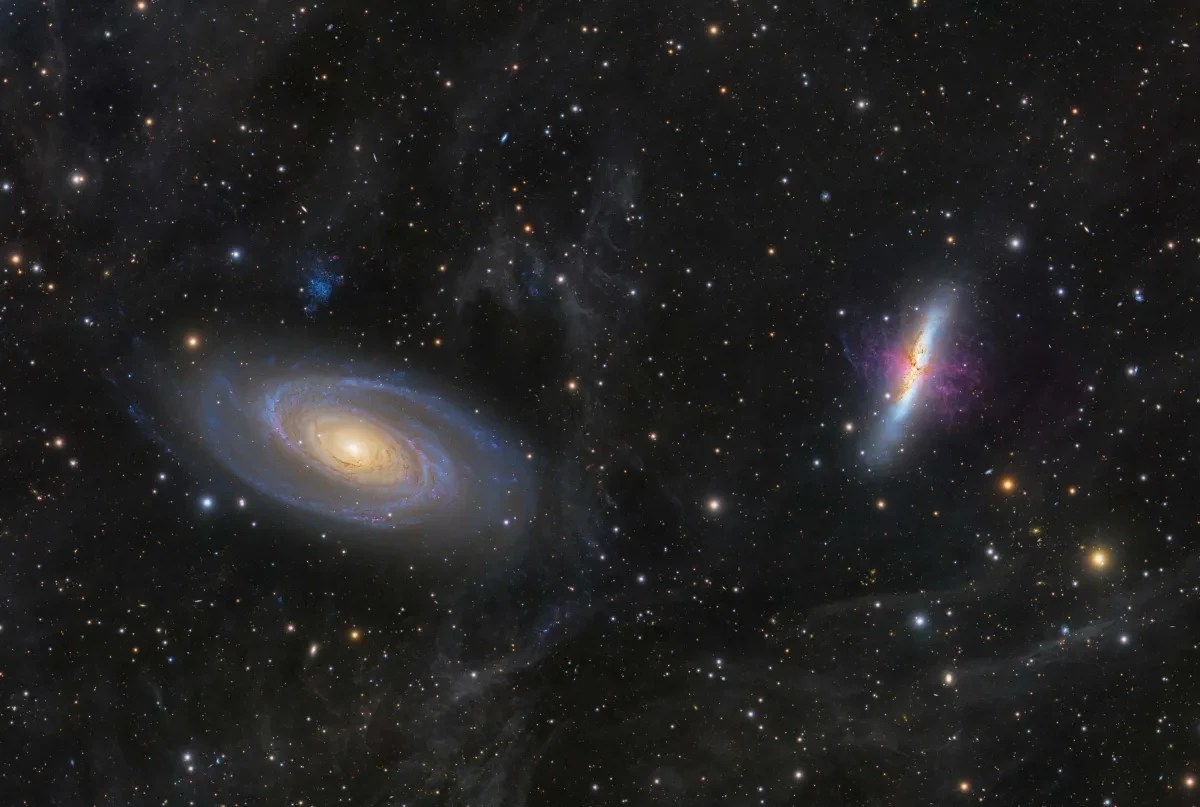
Image (Credit): Chinese photographers’ entry “Cosmic Neighbours: Beauty and the Beast.”(Yijing Zhu and Xinghan Yang)

This week’s image is from another finalist in the Royal Observatory Greenwich’s annual ZWO Astronomy Photographer of the Year competition. The photo is labeled “Cosmic Neighbours: Beauty and the Beast” by photographers Yijing Zhu and Xinghan Yang. It was taken in Ürümqi, Xinjiang Uyghur Autonomous Region, China.

Here is a description of the photo from the photographers:

This image captures a dramatic cosmic pairing: the serene elegance of Bode’s Galaxy (M81, left) alongside the chaotic violence of the Cigar Galaxy (M82, right). Located about 12 million light years from Earth, these two neighbours are locked in a gravitational dance that has shaped their destinies profoundly. M81 retains its perfect grand design spiral form, a picture of galactic grace.  

In stark contrast, M82 is a starburst galaxy, reeling from a close encounter with its larger companion. This gravitational disturbance has triggered a furious burst of star formation at its core, which blasts into space spectacular red filaments of superheated hydrogen gas that are clearly visible in this deep exposure.

Finalists Announced in Astronomy Photographer Contest

Image (Credit): New Zealand photographer Evan McKay’s entry “Te Hoho Rock Moonrise.” (Evan McKay – Aotearoa/New Zealand)

The finalists have been named in the Royal Observatory Greenwich’s annual ZWO Astronomy Photographer of the Year competition. One of those photographs is provided above. It competed in the Skyscapes category, which is one of nine competition categories. The photo was taken at Cathedral Cove, Waikato, North Island, Aotearoa/New Zealand.

Here are a few words about this image from photographer Evan McKay:

On this particular night I only had a small window to capture the sky before the Moon started to rise, so I decided to make the most of it. I got my mount polar-aligned during twilight and then started shooting the sky panorama from this location. The Moon began to rise soon after I finished the sky, so I then captured the foreground. The moonlight gave me the best of both worlds and did a fantastic job lighting up the foreground. To enhance the sky, I shot a separate panorama using a dual narrowband filter and blended it in to bring out the nebulae.

The judges will announce the winners of the competition on September 17, with an event to follow the next day.

You call see all of the finalist photos at this competition link.

Time to Submit Your Photos to the ZWO Astronomy Photographer of the Year 2026 Competition

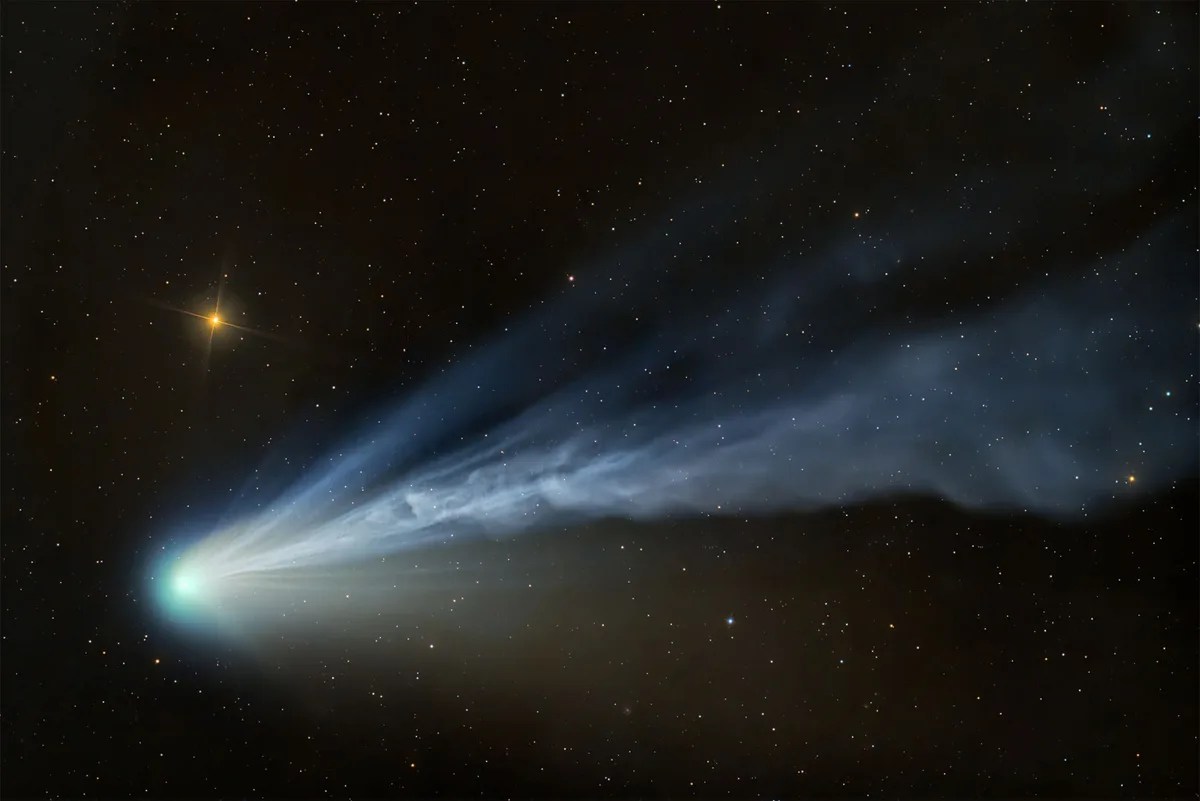
Image (Credit): “Comet 12P/Pons−Brooks Taking a Final Bow” submitted by Dan Bartlett and 2025 winner in the Planets, Comets and Asteroids category of the ZWO Astronomy Photographer of the Year 2025. (Dan Bartlett)

It is that time of year for photographers to submit up to 10 of their best photos to the Royal Observatory Greenwich’s ZWO Astronomy Photographer of the Year 2026 competition. Submissions can be made from January 5th to March 2nd. The top prize is worth £10,000, with lesser amounts for category winners, , runners-up, and highly commended entries.

The categories are:

  1. Planets, Comets and Asteroids;
  2. Aurorae;
  3. People and Space;
  4. Skyscapes;
  5. Our Moon;
  6. Our Sun:
  7. Stars and Nebulae;
  8. Galaxies;
  9. ZWO Young Astronomy Photographer of the Year;
  10. Special Prize: Best Newcomer; and
  11. Special Prize: Annie Maunder Open Category.

You can find all of the 2025 winners here.

Pic of the Week: Moonrise Perfection over the Dolomites

Image (Credit): “Moonrise Perfection over the Dolomites” by Fabian Dalpiaz. (Royal Observatory Greenwich)

This week’s image is one of the winning photographs in the Royal Observatory Greenwich’s Astronomy Photographer of the Year 2025 contest. The photograph, ranked as highly commended under Skyscapes, was submitted by Fabian Dalpiaz and is titled “Moonrise Perfection over the Dolomites.” It was taken on November 15, 2024 in Santuario di Pietralba, Deutschnofen, South Tyrol, Italy.

Here is the notation attached to the photo:

This is a perfectly planned shot of the Full Moon rising above the rugged peaks of the Dolomites. With no clouds in sight and in flawless conditions, the golden light of sunset bathes the mountains, creating harmony between Earth and sky. All it takes is being in the right place at the right time and pressing the shutter button.