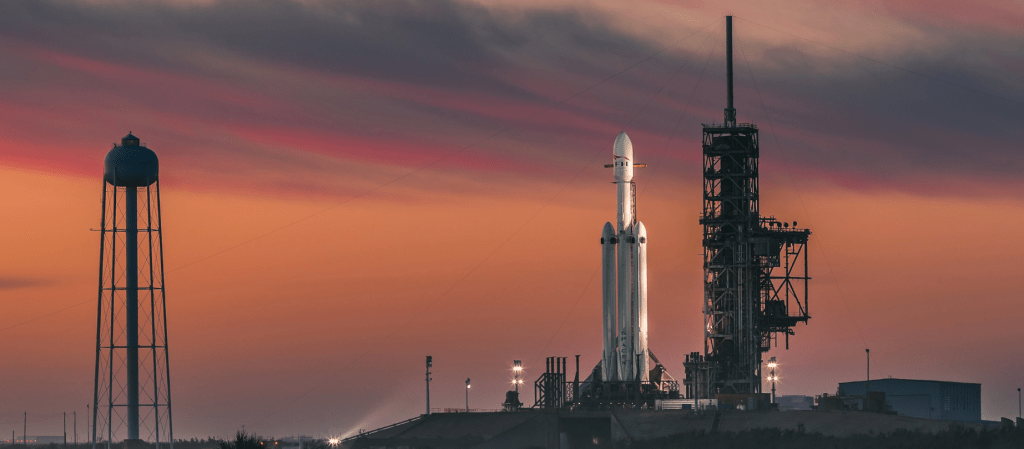
Space Quote: Elon, It’s All in Your Hands

Image (Credit): Falcon Heavy rocket. (SpaceX)

“It would be nice to have a bit more free time on my hands, as opposed to just working day and night from when I wake up till when I go to sleep seven days a week. It’s pretty intense.”

-Statement by Elon Musk from last year, as quoted in yesterday’s Wall Street Journal story, “Twitter Suit Tests Musk as He Faces Tesla, SpaceX Hurdles.” The newspaper cites Tesla’s struggles with new car plants in Germany and Texas, which he calls “gigantic money furnaces,” as well as the billions in losses at SpaceX related to the Starship and Starlink programs. Musk can only blame himself for distracting himself and investors with the Twitter deal. He needs to decide what he wants to spend his time on. If it is not SpaceX, maybe he should sell the firm to others who believe in space. That way he has more money in his pocket for his other distracting hobbies.

SpaceX and Russia: Shuttle Swaps

Image (Credit): Artist’s image of the Boeing Starliner space capsule. (Boeing)

It wasn’t that long ago U.S. astronauts were completely dependent on Russian rockets to get to the International Space Station (ISS). NASA was paying about $60 million per seat on the Soyuz spacecraft. Well, times have certainly changed with SpaceX now ferrying astronauts, Boeing working on its own crewed Starliner capsule, and Northrop Grumman already helping with cargo.

Now NASA is mixing it up. NASA and Russia’s Roscosmos agreed this weak to place astronauts on the Soyuz again and cosmonauts on the SpaceX Dragon spacecraft. Bloomberg reports NASA stated that such mixed crews “ensures there are appropriately trained crew members on board the station for essential maintenance and spacewalks.” In other words, with two launches to the ISS planned in September, a mixing of the crews will ensure some stability in space if only one makes it to the station. Not a bad idea.

Even with all the rhetoric and stunts taking place, it’s nice to see a little bit of common sense prevailing.

Pic of the Week: The Carina Nebula

Image (Credit): The Carina Nebula as captured by the JWST. (NASA)

This week’s image is an amazing view of the Carina Nebula from the James Webb Space Telescope (JWST). It is one of the first images released by NASA this week. More of the early images are available here.

Here is NASA’s description of what you are seeing in this image:

This landscape of “mountains” and “valleys” speckled with glittering stars is actually the edge of a nearby, young, star-forming region called NGC 3324 in the Carina Nebula. Captured in infrared light by NASA’s new James Webb Space Telescope, this image reveals for the first time previously invisible areas of star birth.

Called the Cosmic Cliffs, Webb’s seemingly three-dimensional picture looks like craggy mountains on a moonlit evening. In reality, it is the edge of the giant, gaseous cavity within NGC 3324, and the tallest “peaks” in this image are about 7 light-years high. The cavernous area has been carved from the nebula by the intense ultraviolet radiation and stellar winds from extremely massive, hot, young stars located in the center of the bubble, above the area shown in this image.

I look forward to posting more such images as they are released.

SpaceX Starship: Booster Issues

Image (Credit): Test run of the Starship Booster on May 5, 2022. (SpaceX)

Earlier this week, SpaceX conducted another test of its Starship. However, the booster was damaged by an explosion during a pre-launch test and will now need to be inspected to determine whether it can be used in the inaugural launch of the Starship later this summer.

For more on the Starship, check out the Cool Worlds video titled “Why Starship Could Transform Astronomy.” It argues that reduced launch costs, reduced complexity, and heavier payloads would allow NASA to launch a fleet of telescopes within current budgets. For instance, the larger Starship payload would have allowed NASA to avoid all of the contortions necessary to fold the James Webb Space Telescope into a smaller rocket. The video also argues that SpaceX’s willingness to take risks is something NASA may want to emulate.

These are interesting times with NASA and SpaceX testing new rockets to place astronauts on distant objects. Even if Russia wants to sit this one out, we have a full blown space race underway domestically.

European/Russian Rover Coordination Now Dead

Image (Credit): Drawing of the ESA’s ExoMars martian rover called the Rosalind Franklin. (ESA)

The European Space Agency (ESA) has decided to terminate cooperation with Russia on the ExoMars rover mission. The joint mission, planned for September 2022, was suspended earlier this year after Russia invaded Ukraine. The ESA has now cut all links on the project and hopes to work with NASA on some aspects of the mission.

The rover, named the Rosalind Franklin, would be the first European rover to visit Mars. It is designed to explore the surface of Mars as well as collect and analyse samples. The plan is to land the rover at a site with high potential for finding well-preserved organic material, particularly from the very early history of the planet.

Both Covid and the war in Ukraine have delayed the rover mission, but the ESA will see it through, alone if necessary, but hopefully with others. Maybe Russia can be a partner again in the future, but it will need new leadership that knows how to play well with others.