A Day in Astronomy: Curiosity Rover Arrives on Mars

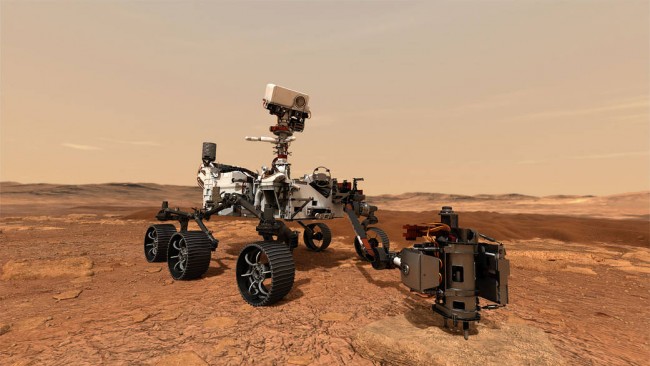
Image (Credit): Artist’s illustration of the Curiosity rover using its drill to core a rock sample on Mars. (NASA/JPL-Caltech)

On this day in 2012, the Mars rover Curiosity landed on Mars (using Eastern Time). The rover was sent to the Red Planet to to explore the Gale crater and look for evidence that Mars had the conditions needed to support microscopic life in its past. A video from NASA walks you through the rover’s exploration to date and also highlights Maggie, Curiosity’s duplicate here on Earth.

An anniversary posting from NASA explains more about the mission, including issues with the rover’s drilling arm, wheels, and power supply. Life on Mars can be tough.

That said, the rover has already learned a lot after 10 years and it is expected to continue exploring in the years to come. NASA noted:

…most important, Curiosity has determined that liquid water as well as the chemical building blocks and nutrients needed for supporting life were present for at least tens of millions of years in Gale Crater. The crater once held a lake, the size of which waxed and waned over time. Each layer higher up on Mount Sharp serves as a record of a more recent era of Mars’ environment.

You can track the progress of the Curiosity rover using this website.
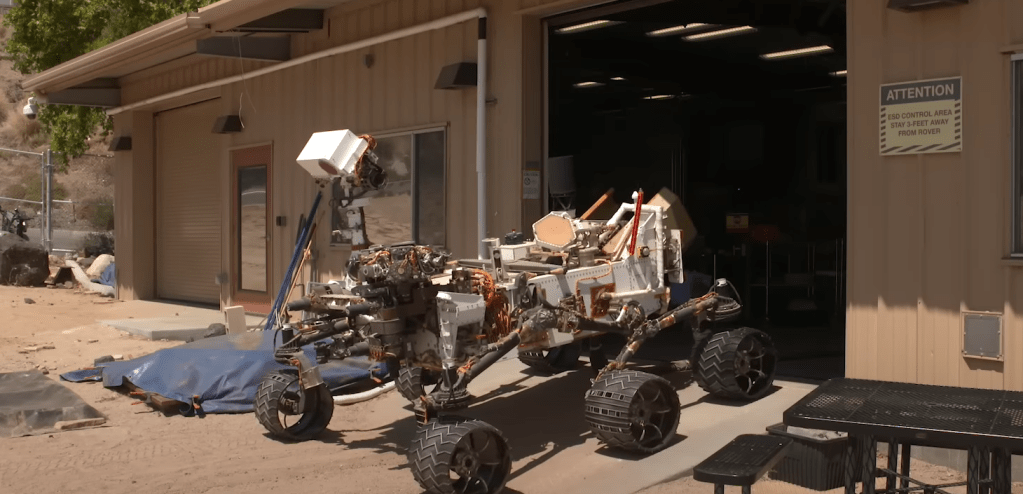
Image (Credit): NASA’s duplicate Mars rover called Maggie. (NASA/JPL-Caltech/ASU/MSSS/JHU-APL)

Profile: The Cosmosphere

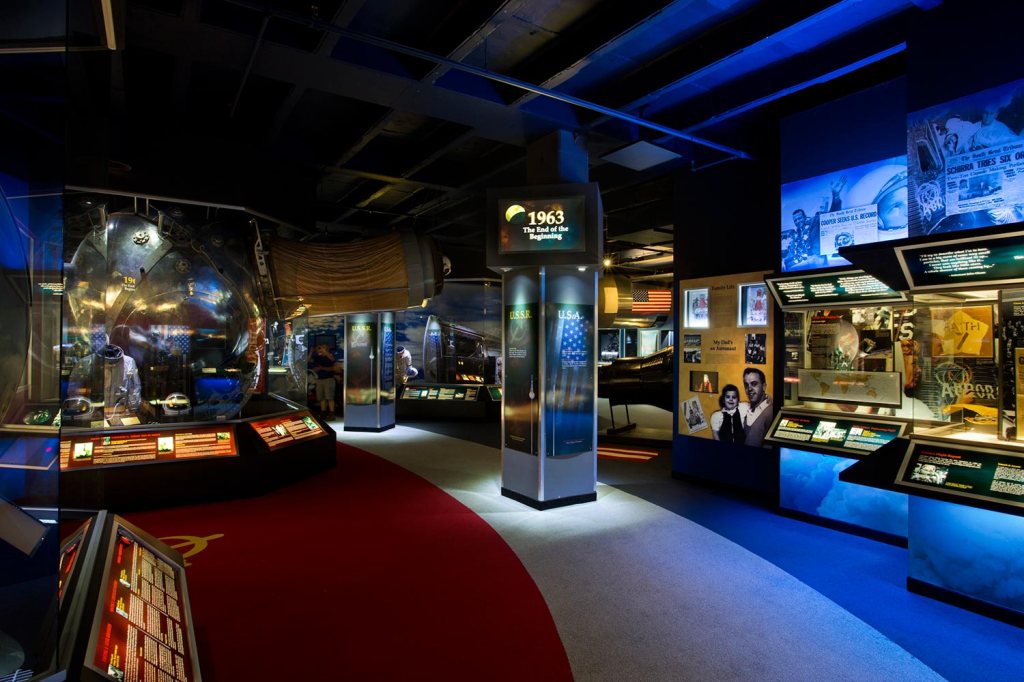
Image (Credit): Exhibits at the Cosmosphere’s Hall of Space Museum. (Cosmosphere)

You may have visited the Smithsonian National Air and Space Museum or ventured down to Florida to visit the Kennedy Space Center, but have you heard of the Cosmosphere in Kansas?

Started in 1962, the Cosmosphere in Hutchinson, Kansas claims to host “…the largest combined collection of U.S. and Russian space artifacts in the world and telling the comprehensive story of mankind’s race to space unlike anywhere else on Earth.”

For example, here are a few of the items you can view at the museum:

  • Flown Liberty Bell 7 Mercury spacecraft;
  • Flown Gemini X spacecraft;
  • Flown unmanned Russian Vostok;
  • Flown Apollo 13 command module, Odyssey;
  • Apollo space suits; and
  • Russian Sokul Spacesuit.

You can also find material related to German V-1 and V-2 rockets, Cold War spying, X-planes, and more. The expanded multinational coverage of space and conflict makes this a unique destination.

Image (Credit): A German V-1 rocket from World War II in the Hall of Space Museum. (Cosmosphere)

Pic of the Week: The Cartwheel Galaxy

Image (Credit): The Cartwheel Galaxy, located about 500 million light-years away, as captured by the JWST. (NASA, ESA, CSA, STScI)

This week’s picture is one of the latest images from the James Webb Space Telescope (JWST). It shows the Cartwheel Galaxy, which is about 500 million light-years away. The Hubble’s view of this same galaxy is provided below.

Here is a little more from NASA:

NASA’s James Webb Space Telescope has peered into the chaos of the Cartwheel Galaxy, revealing new details about star formation and the galaxy’s central black hole. Webb’s powerful infrared gaze produced this detailed image of the Cartwheel and two smaller companion galaxies against a backdrop of many other galaxies. This image provides a new view of how the Cartwheel Galaxy has changed over billions of years.

The Cartwheel Galaxy, located about 500 million light-years away in the Sculptor constellation, is a rare sight. Its appearance, much like that of the wheel of a wagon, is the result of an intense event – a high-speed collision between a large spiral galaxy and a smaller galaxy not visible in this image. Collisions of galactic proportions cause a cascade of different, smaller events between the galaxies involved; the Cartwheel is no exception.

The collision most notably affected the galaxy’s shape and structure. The Cartwheel Galaxy sports two rings — a bright inner ring and a surrounding, colorful ring. These two rings expand outwards from the center of the collision, like ripples in a pond after a stone is tossed into it. Because of these distinctive features, astronomers call this a “ring galaxy,” a structure less common than spiral galaxies like our Milky Way.

The bright core contains a tremendous amount of hot dust with the brightest areas being the home to gigantic young star clusters. On the other hand, the outer ring, which has expanded for about 440 million years, is dominated by star formation and supernovas. As this ring expands, it plows into surrounding gas and triggers star formation.

Image (Credit): An image of the Cartwheel Galaxy taken with the NASA/ESA Hubble Space Telescope. (ESA/Hubble & NASA)

Movie: Mutiny in Outer Space

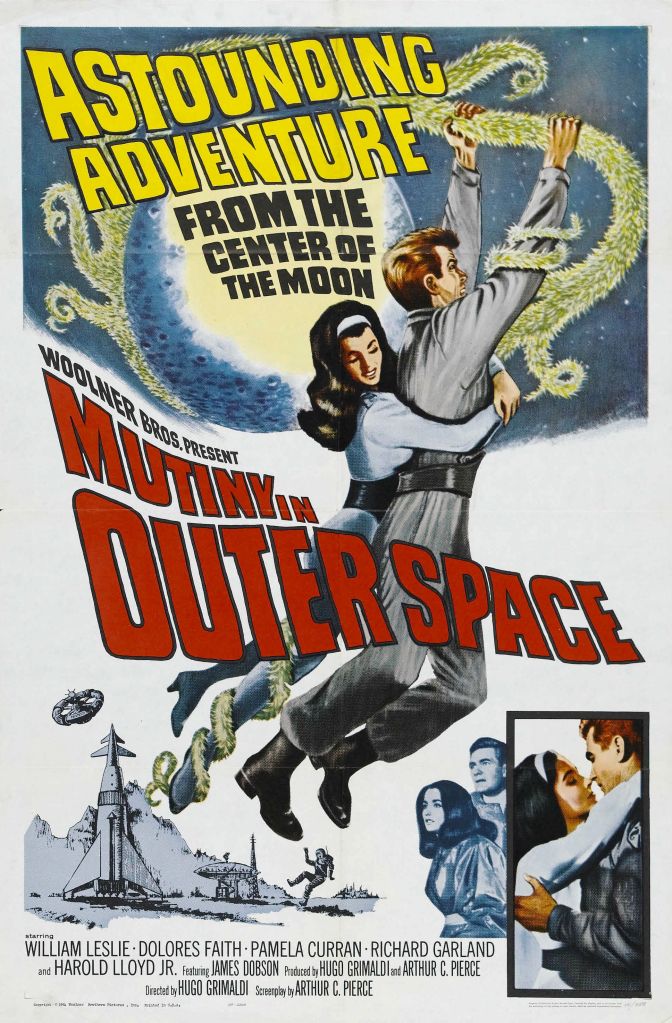
Image (Credit): Poster for the 1965 film Mutiny in Outer Space. (Hugo Grimaldi Film Productions)

If Hollywood is not planning to provide any summertime space movies, maybe it’s time to check the archives for something fun from the past. One such movie is Mutiny in Outer Space, a black and white film from 1965. You can find it on the Internet Archive and Youtube.

The story involves a space station infected by a lunar sample and efforts by the crew to contain the damage. It reminded me of Star Trek with deadly tribbles, though the special effects are pretty primitive compared to Star Trek, which came out the next year in color. Even so, the story hit on some themes that are recognizable today, such as space junk threatening the space station, the discovery of water on the Moon, and the establishment of lunar bases.

One humorous bit from the movie was the arrival of astronauts from the Moon at the space station. It appears the incoming rocket was unable to dock at the station, so the two astronauts had to float from the rocket to the space station. After they departed, the rocket oddly broke into two pieces and somehow landed on the space station like a suitcase on top of a station wagon. I remember hearing that Star Trek did away space transportation, and such awkward scenes, by simply creating the transporter room. It saved a lot of production money and became a key part of the series.

The film is earnest and humorous at the same time. I recommend you check out the film if you need a fun diversion some evening.

Image (Credit): Scene from the film Mutiny in Outer Space. (Hugo Grimaldi Film Productions)

Lunar Pits Offer Refuge

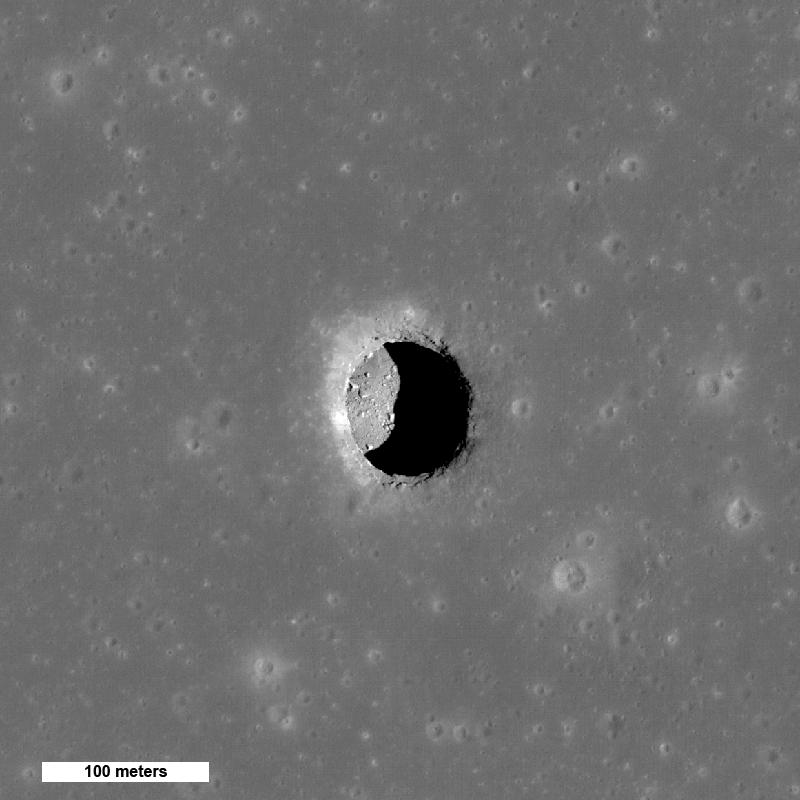
Image (Credit): Mare Tranquillitatis pit crater revealing boulders on an otherwise smooth floor. (NASA/Goddard/Arizona State University)

If you are looking for a comfortable spot on the Moon, you could do much worse than a lunar pit. These pits have shaded portions that maintain a comfortable temperature of about 63 F. That is much better than the surface temperatures of 260 F in the day and minus 280 F at night. Such pits can also be useful to visitors by protecting them cosmic rays, solar radiation, and micrometeorites.

You can see one of these pits above, as detected by NASA’s Lunar Reconnaissance Orbiter (LRO) spacecraft.

You may ask why we are looking at building space habitats when such locations exist. A good question, but I expect the location, size, and stability of these pits will also be important. Maybe they can at least serve as a safe shelter should the be needed.

More study is necessary, of course, before any big decisions on human settlement can be contemplated.

You can read more about the lunar pits here. You can also check out this video.