Podcast: Capturing Life Off Planet and Here on Earth

Image (Credit): Venus as captured by NASA’s Mariner 10 spacecraft in February 1974. (NASA)

I recommend checking out Alan Alda’s interview with astronomer Sara Seager in a recent Clear + Vivid podcast episode. MIT Professor Seager has focused her work on exoplanet atmospheres as well as another planet nearby – Venus. In the interview, she discusses her early work as well as her theories about the existence of life in the atmosphere of Venus. She also discusses her involvement with MIT’s Transiting Exoplanet Survey Telescope (TESS). 

And while I do not remember it coming up during the interview, Professor Seager is also known for the Seager equation (shown below), which is less demanding than the Drake equation and focuses on any form of life on another planet (without reference to technology).

  • N = the number of planets with detectable signs of life
  • N* = the number of stars observed
  • FQ = the fraction of stars that are quiet
  • FHZ = the fraction of stars with rocky planets in the habitable zone
  • FO = the fraction of stars with observable planets
  • FL = the fraction of planets that have life
  • FS = the fraction of life forms that produce planetary atmospheres with one or more detectable signature gases

But in addition to the science, it was a fascinating discussion about Professor Seager’s life covering the early death of her husband from cancer, her attempts to get her life back on track, and her discovery later in life that she has autism. Most science stories focus on the work, but Mr. Alda has a unique way of drawing out the person in these interviews. It is a great episode, and you can read more about Professor Seager’s life and work in her book The Smallest Lights in the Universe.

Credit: Crown Publishing

The House Committee Dodged a Killer Asteroid

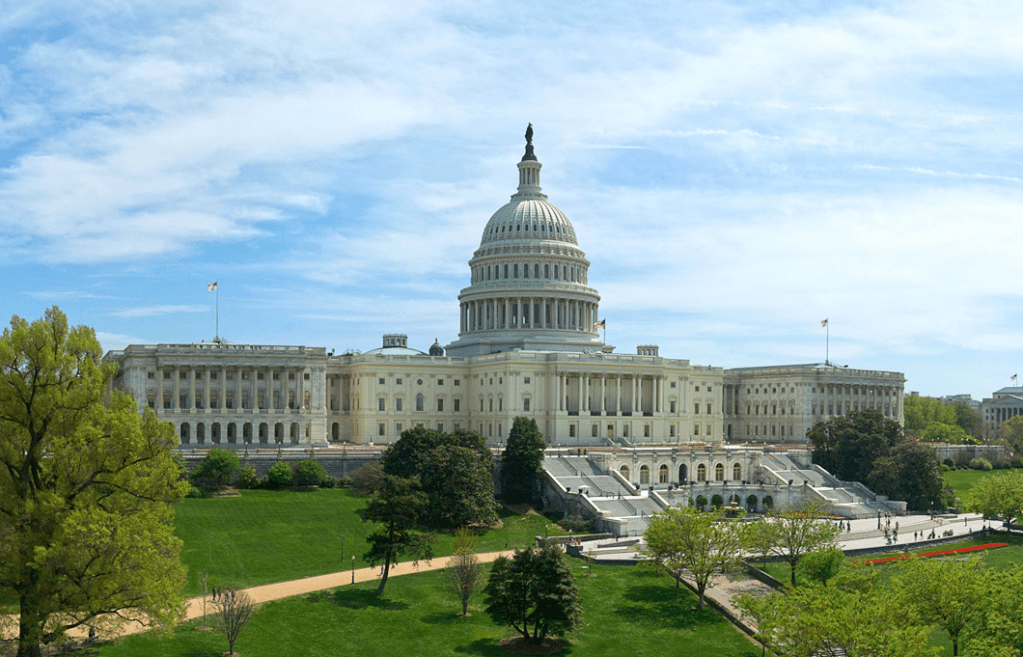
Image (Credit): U.S. Capitol Building. (U.S. Capitol Police)

The House Committee on Science, Space, and Technology, which oversees NASA’s programs, may have a chance to get some things done this year. Earlier in the week, New York Congressman George Santos stepped down from the Committee on Science, Space, and Technology as well as the House Committee on Small Business. With all of the problems following this man, his presence on either committee would have been a pure distraction.

The House Committee on Science, Space, and Technology has a broad jurisdiction beyond just NASA:

The Committee on Science, Space, and Technology has jurisdiction over all energy research, development, and demonstration, and projects thereof and all federally owned or operated non-military energy laboratories; astronautical research and development, including resources, personnel, equipment, and facilities; civil aviation research and development; environmental research and development; marine research; commercial application of energy technology; National Institute of Standards and Technology, standardization of weights and measures and the metric system; National Aeronautics and Space Administration; National Science Foundation; National Weather Service; outer space, including exploration and control thereof; science scholarships; scientific research, development, and demonstration, and projects therefor. The Committee on Science, Space, and Technology shall review and study, on a continuing basis, laws, programs, and Government activities relating to non-military research and development.

Given the Artemis program as well as the other NASA endeavors currently underway, the Committee should be focusing as much time as possible on space missions rather than bogus resumes and lies to the public.

NASA-related hearings from last year include:

We need a serious Congress if we are going to conduct serious science and space exploration. Let’s hope Washington DC can keep its focus on the real stars (rather than the political black holes that can suck in all light and common sense).

Pic of the Week: ISS Space Junk

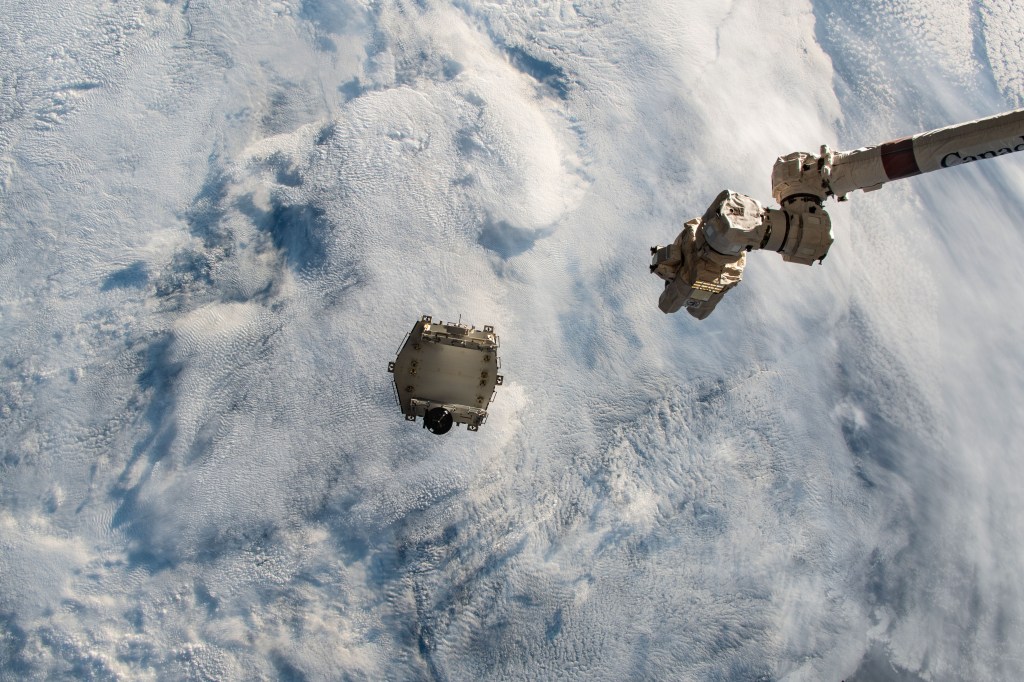
Image (Credit): Canadarm2 robotic arm jettisoning flight support equipment toward the Earth’s atmosphere. (NASA)

This week’s image is a recent shot from the International Space Station (ISS) showing how it deals with unneeded equipment. Fortunately, this “space junk” will quickly burn up in the Earth’s atmosphere rather than remain a threat to the ISS. Given the size of that junk, I hope nothing else bumps into it on the way down.

Here is the story from NASA:

The Canadarm2 robotic arm is pictured extending away from the International Space Station after jettisoning flight support equipment toward the Earth’s atmosphere. The flight hardware secured a pair of roll-out solar arrays inside the SpaceX Dragon cargo ship’s trunk during its ascent to orbit and rendezvous with the space station in November 2022. The jettisoned support equipment drifted safely away from the station and will eventually harmlessly burn up in the atmosphere with no chance for recontacting the space station.

Note: As this story illustrates, NASA has a habit of tossing out the trash from orbit.

A Day in Astronomy: Space Shuttle Columbia Disaster

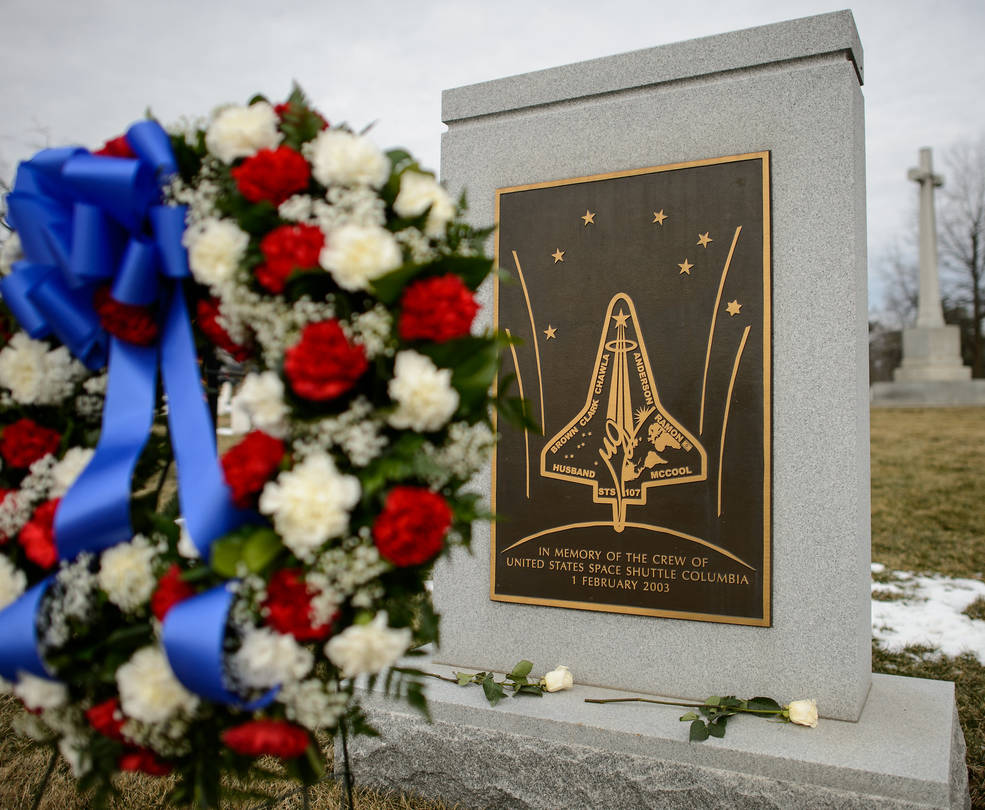
Image (Credit): Space Shuttle Columbia Memorial. (NASA)

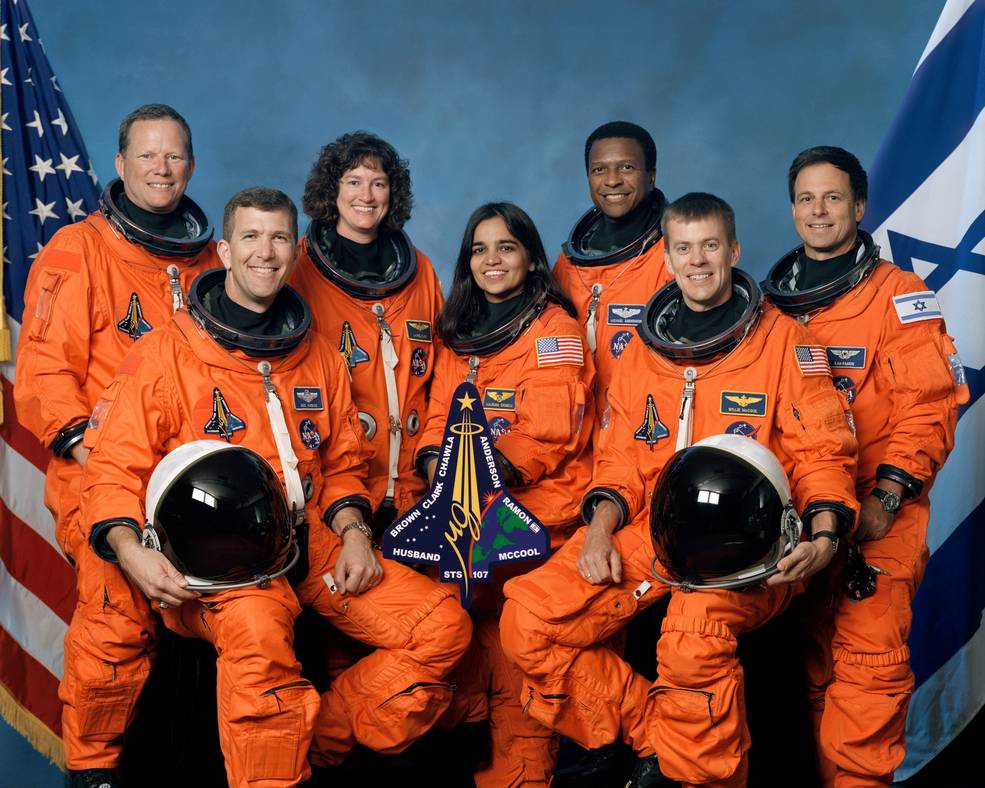
On this day in 2003, the STS-107 mission aboard NASA’s oldest space shuttle Columbia came to a horrible end when the shuttle disintegrated upon reentry. That day we lost crew members David M. Brown, Rick D. Husband, Laurel B. Clark, Kalpana Chawla, Michael P. Anderson, William C. “Willie” McCool, and Ilan Ramon. It was just 17 years after losing the crew on the space shuttle Challenger.

At the memorial service for the astronauts, President George W. Bush stated:

This cause of exploration and discovery is not an option we choose; it is a desire written in the human heart. We are that part of creation which seeks to understand all creation. We find the best among us, send them forth into unmapped darkness, and pray they will return. They go in peace for all mankind, and all mankind is in their debt. Yet, some explorers do not return. And the loss settles unfairly on a few.

You can learn more about the STS-107 mission here.

Image (Credit): STS-107 crew members David M. Brown, left, Rick D. Husband, Laurel B. Clark, Kalpana Chawla, Michael P. Anderson, William C. “Willie” McCool, and Ilan Ramon. (NASA)