“We built the International Space Station with the Russians. What a contrast, with the Chinese government,…They are secretive, they are non-transparent. They will not share when Earth is threatened by one of their tumbling rockets coming back in, they will not share their trajectories, so it’s a huge difference in the way we approach our civilian space program with the Russians visa vie the Chinese.”
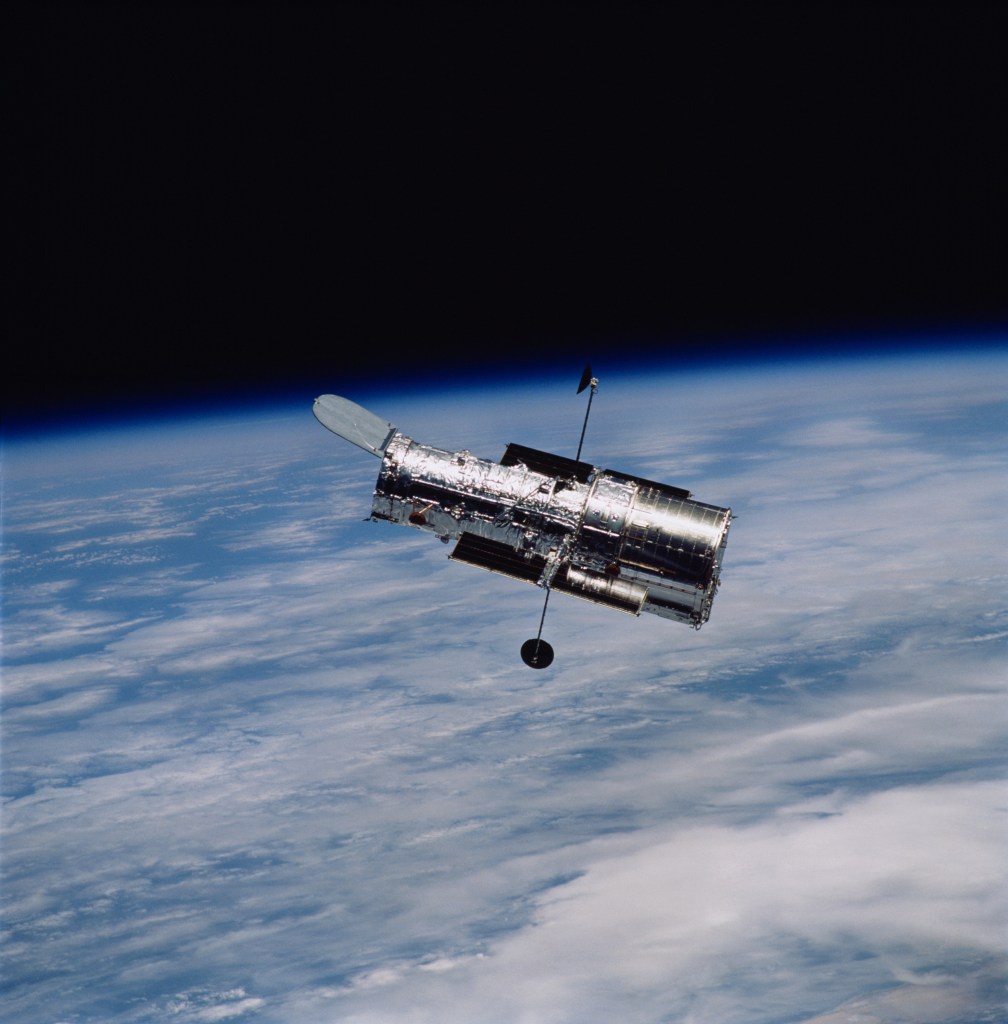
Image (Credit): The Hubble Space Telescope orbits with Earth in the background. (NASA)
On this day in 1990, NASA’s Space Shuttle Discovery launched the Hubble Space Telescope. We do not think of the shuttles anymore as we discuss reusable rockets, but the shuttles were the first reusable spacecraft-launching vehicles.
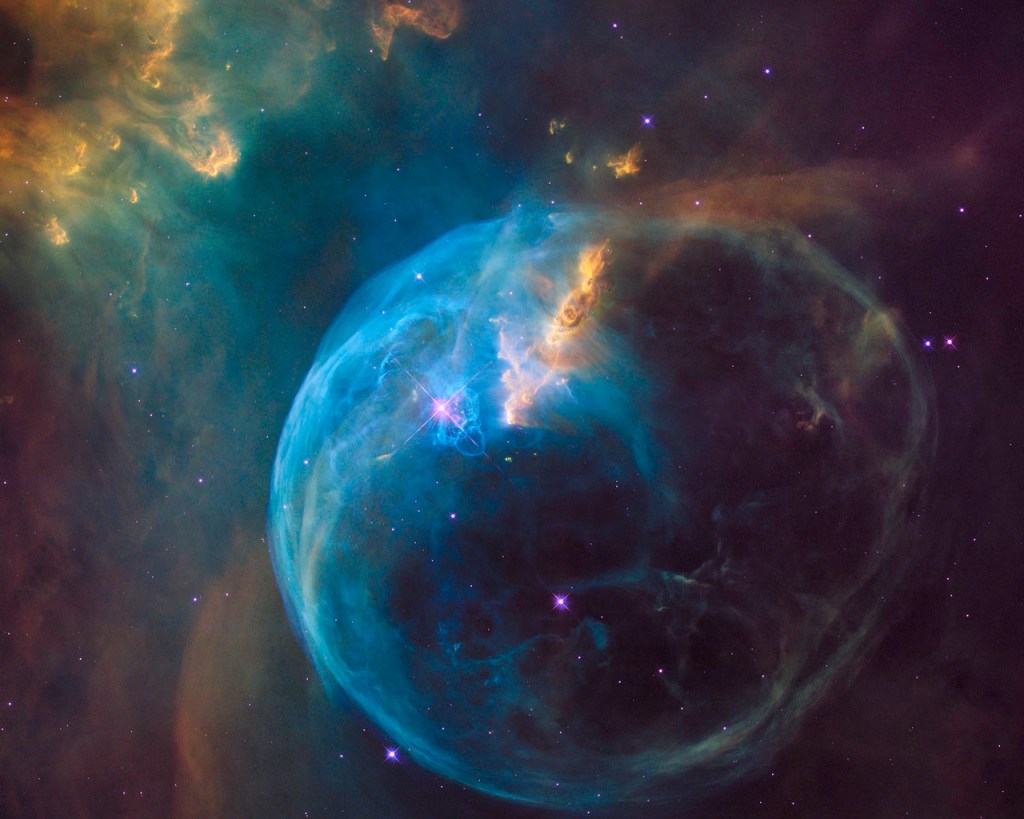
After some initial problems, the Hubble became a critical component in the exploration of the universe. Some of the telescope’s amazing images are shown below.
It is still going strong, even though its successor, the James Webb Space Telescope (JWST), is the more powerful of the two. Launched in late 2021, the JWST has expanded on some of Hubble’s earlier work. The pair are a powerful team.
Hubble has made more than 1.5 million observations since its mission began in 1990.
Astronomers using Hubble data have published more than 19,000 scientific papers, making it one of the most productive scientific instruments ever built. Those papers have been cited in other papers over 1.1 million times.
Hubble has no thrusters. To change angles, it uses Newton’s third law by spinning its wheels in the opposite direction. It turns at about the speed of a minute hand on a clock, taking 15 minutes to turn 90 degrees.
Hubble has peered back into the very distant past, to locations more than 13.4 billion light-years from Earth.
Hubble’s mirror is about 7.9 feet (2.4 m) across. It was so finely polished that if you scaled it to be the diameter of the Earth, you would not find a bump more than 6 inches (15 cm) tall.
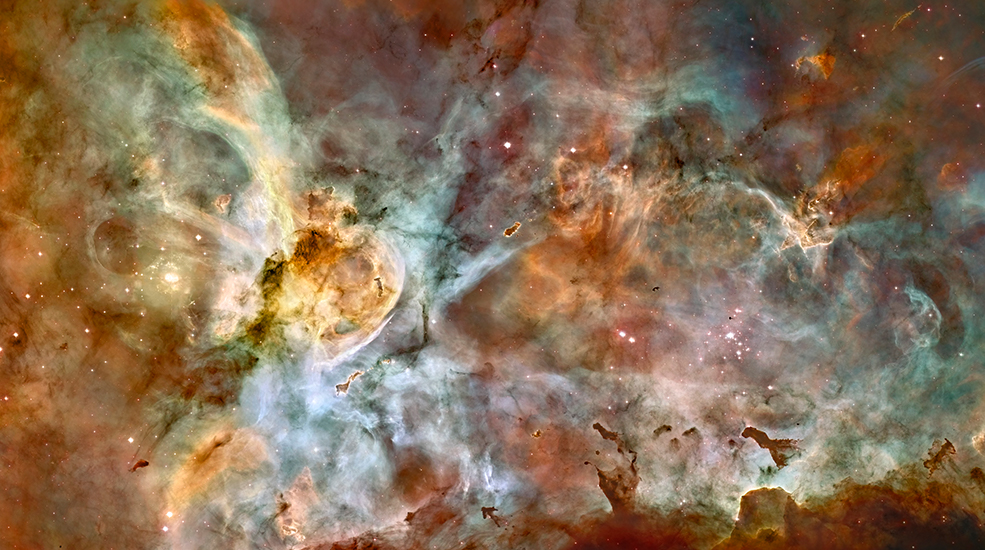
Image (Credit): The Carina Nebula. (NASA, ESA, N. Smith (University of California, Berkeley), and The Hubble Heritage Team (STScI/AURA)
Image (Credit): NGC 3603. (NASA, ESA and the Hubble Heritage (STScI/AURA)-ESA/Hubble Collaboration)
Image (Credit): The Horsehead Nebula, otherwise known as Barnard 33. (NASA, ESA, and the Hubble Heritage Team (AURA/STScI))
Direct imaging of gas giant exoplanets provides information on their atmospheres and the architectures of planetary systems. However, few planets have been detected in blind surveys with direct imaging. Using astrometry from the Gaia and Hipparcos spacecraft, we identified dynamical evidence for a gas giant planet around the nearby star HIP 99770. We confirmed the detection of this planet with direct imaging using the Subaru Coronagraphic Extreme Adaptive Optics instrument. The planet, HIP 99770 b, orbits 17 astronomical units from its host star, receiving an amount of light similar to that reaching Jupiter. Its dynamical mass is 13.9 to 16.1 Jupiter masses. The planet-to-star mass ratio [(7 to 8) × 10−3] is similar to that of other directly imaged planets. The planet’s atmospheric spectrum indicates an older, less cloudy analog of the previously imaged exoplanets around HR 8799.
Citation: Thayne Currie, G. Mirek Brandt, Timothy D. Brandt, Brianna Lacy, Adam Burrows, Olivier Guyon, Motohide Tamura, Ranger Y. Liu, Sabina Sagynbayeva, Taylor Tobin, Jeffrey Chilcote, Tyler Groff, Christian Marois, William Thompson, Simon J. Murphy, Masayuki Kuzuhara, Kellen Lawson, Julien Lozi, Vincent Deo, Sebastien Vievard, Nour Skaf, Taichi Uyama, Nemanja Jovanovic, Frantz Martinache, N. Jeremy Kasdin, Tomoyuki Kudo, Michael McElwain, Markus Janson, John Wisniewski, Klaus Hodapp, Jun Nishikawa, Krzysztof Hełminiak, Jungmi Kwon, Masahiko Hayashi. Direct imaging and astrometric detection of a gas giant planet orbiting an accelerating star. Science (2023). https://doi.org/10.1126/science.abo6192
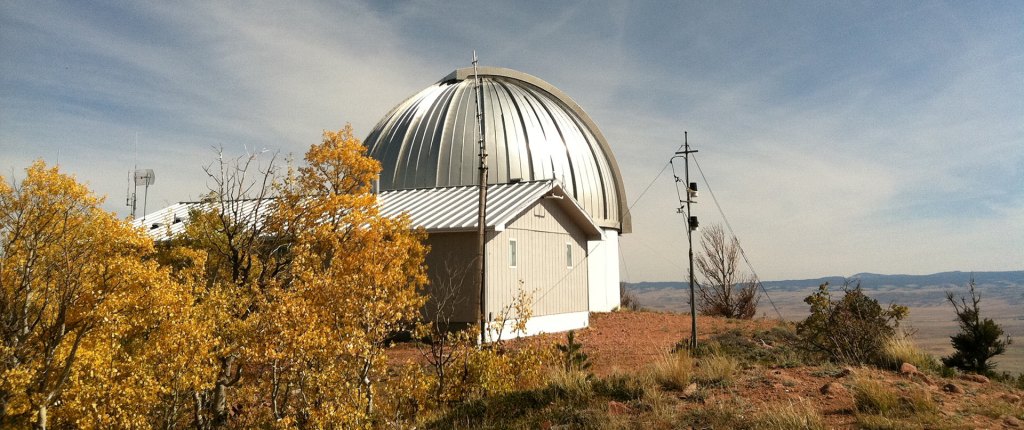
Image (Copy): The Wyoming Infrared Observatory (WIRO). (WIRO)
The New York Times had a good article on various mishaps related to telescopes here on Earth (such as WIRO above) as well as those now floating in space. The story, “From Bullets to ‘Bird Residue,’ the Many Trials of Telescopes,” shares stories about various natural (bird poop) and man-made (dropped tool) events that have left their marks on astronomy.
We have all heard about the misshaped mirror on the Hubble Space Telescope as well as micrometeors hitting the James Webb Space Telescope, but have you heard about the employee who shot and hammered the primary mirror at the McDonald Observatory in West Texas?
Take a look at the article. You will find plenty of stories to amuse you as well as give you pause.
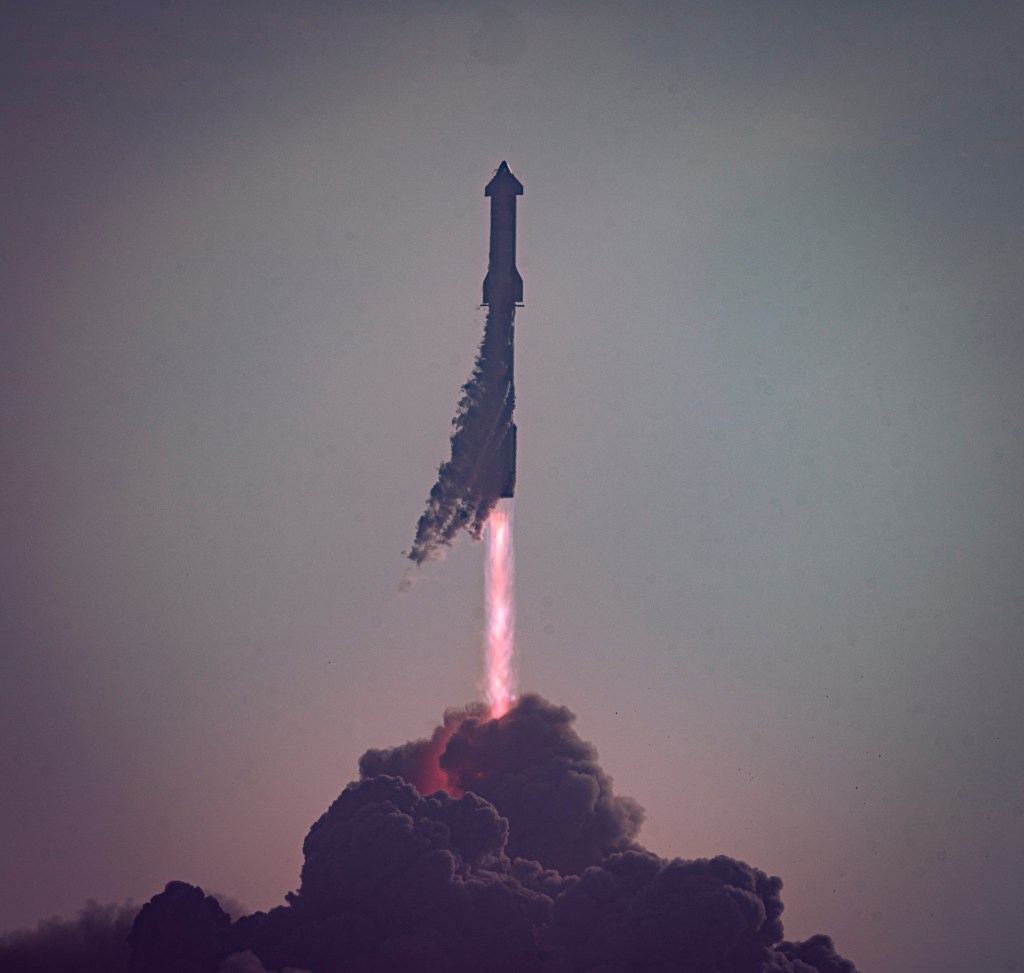
Image (Credit): The Starship before the “rapid unscheduled disassembly.” (SpaceX)
“As if the flight test was not exciting enough, Starship experienced a rapid unscheduled disassembly before stage separation.”
-Statement by SpaceX following the self-destruct of the Starship rocket after it started to spin out of control. What a way to put a spin on a malfunction. I am sensing the rapid unscheduled disassembly of the English language.




 Our Awesome Universe