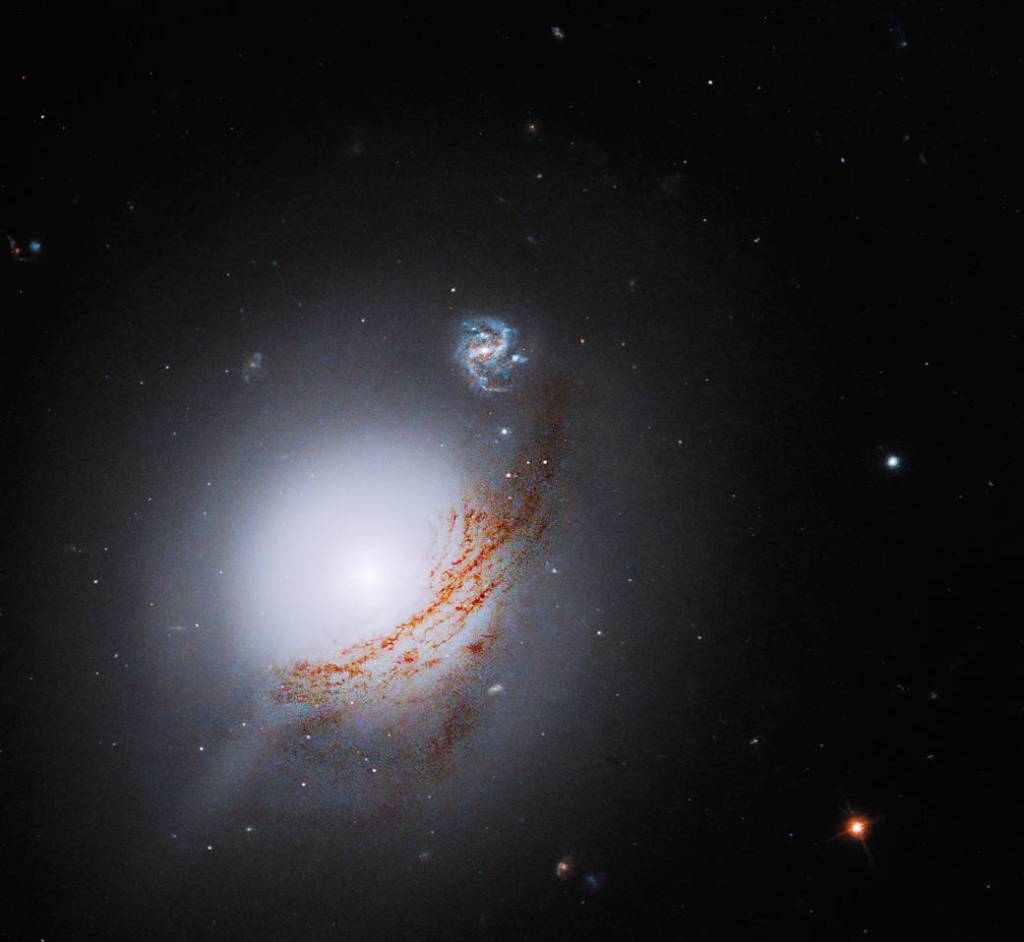
Image (Credit): NGC 5283, as captured by the Hubble Space Telescope, with its active galactic nucleus, which is at the heart of a galaxy where a supermassive black hole exists. (NASA, ESA, A. Barth (University of California – Irvine), and M. Revalski (STScI); Processing: Gladys Kober (NASA/Catholic University of America)
Yes, I know. This is too many celebrations over an eight-day period, starting with Astronomy Day last Saturday. But who cannot be excited by Black Hole Week?
If you missed the various NASA-sponsored events over the past week, you can find them here.
Check out the presentation of the largest black holes from Monday’s presentation. It puts it all into very scary perspective.
And you can learn plenty more about black holes by visiting this NASA page.
A recent video from the YouTube channel Cool Worlds titled “The Fermi Paradox Has An Incredibly Simple Solution” is a fun review of the Fermi Paradox, which asks “Where are they?” in reference to alien visitors. The video goes into the meaning of the question as well as possible interpretations of the paradox itself.
Professor David Kipping from the Department of Astronomy at Columbia University does a nice job of explaining some of the “answers” to the so-called paradox, and even introduces one of his own called the “Weak Anthropic Principle.” I do not want to spoil the story, so I recommend you view the short video on your own. It is enlightening.
The scariest bit of the presentation involves “self-replicating universal constructors” that could colonize the galaxy with present-day rocket technology. Moreover, such constructors may be in development by businesses today with programs such as ChatGPT, as warned by many parties today. Under this scenario, the colonization of our galaxy would start in a Microsoft or Google lab, with humans playing no part in that eventual future because we will not be needed.
Sweet dreams as you ponder that.
Check out the Cool Worlds YouTube page for other fascinating videos.
Note: The creators of the YouTube channel Cool Worlds is also planning a podcast in the near future. That should be a nice addition to the group’s educational material.
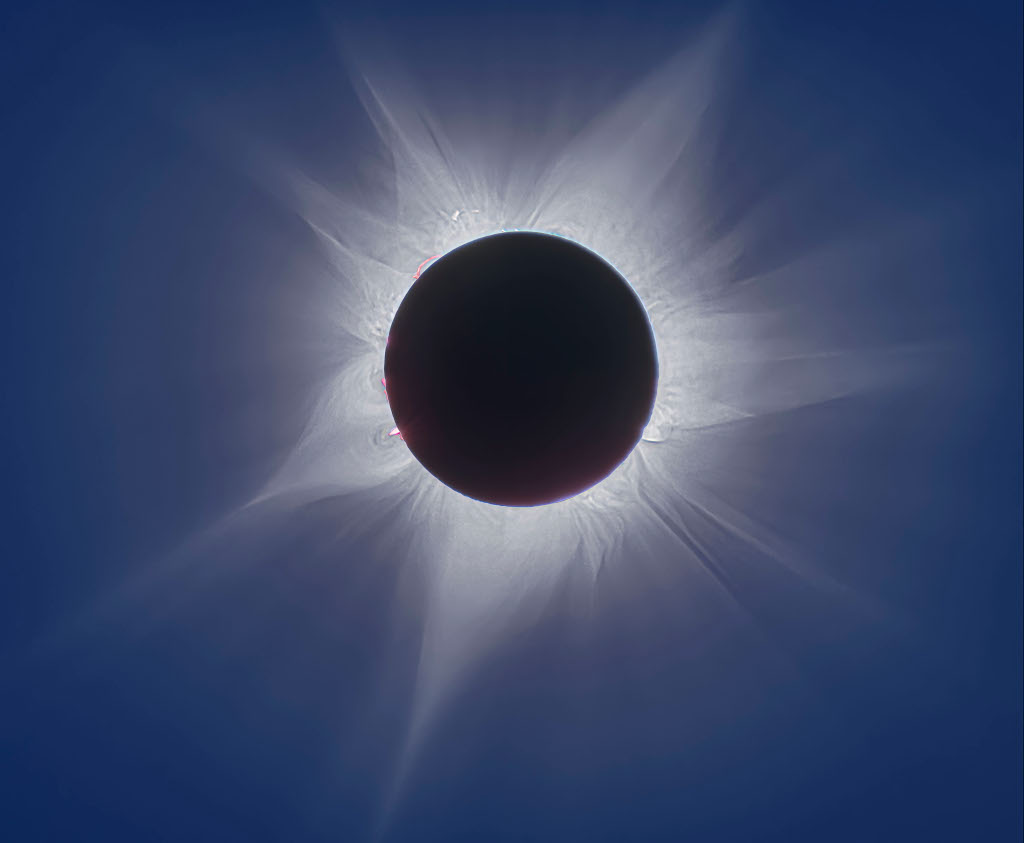
Along a narrow path that mostly avoided landfall, the shadow of the New Moon raced across planet Earth’s southern hemisphere on April 20 to create a rare annular-total or hybrid solar eclipse. From the Indian Ocean off the coast of western Australia, ship-borne eclipse chasers were able to witness 62 seconds of totality though while anchored near the centerline of the total eclipse track. This ship-borne image of the eclipse captures the active Sun’s magnificent outer atmosphere or solar corona streaming into space. A composite of 11 exposures ranging from 1/2000 to 1/2 second, it records an extended range of brightness to follow details of the corona not quite visible to the eye during the total eclipse phase. Of course eclipses tend to come in pairs. On May 5, the next Full Moon will just miss the dark inner part of Earth’s shadow in a penumbral lunar eclipse.
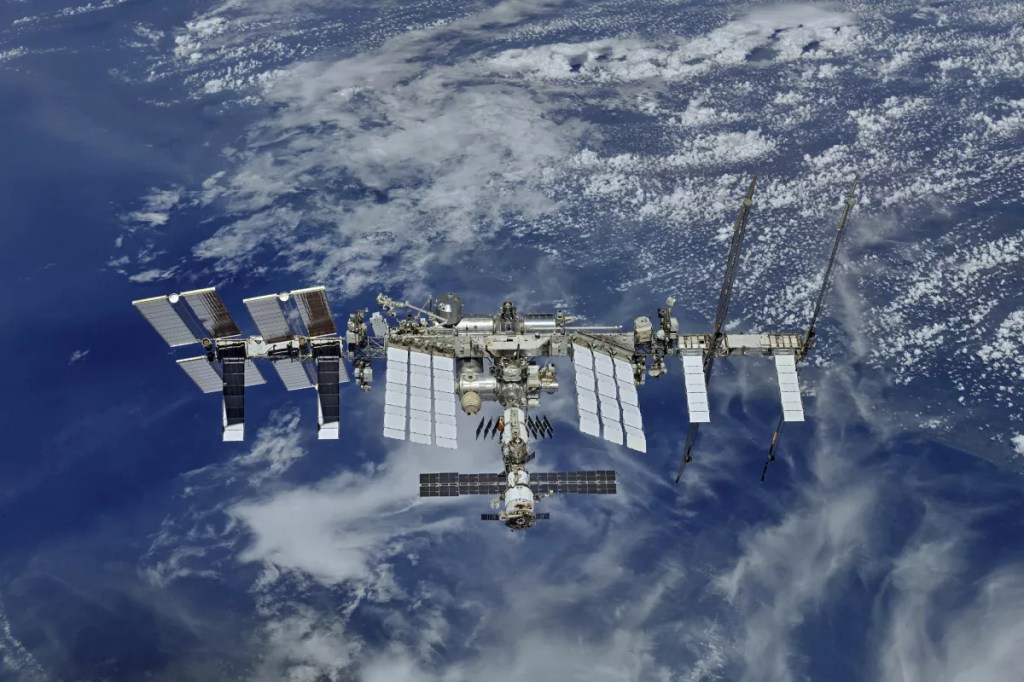
Russia said Wednesday it planned to use the International Space Station until 2028, an apparent reversal of an earlier announcement to quit the orbiting laboratory after 2024. On Wednesday, the head of Russian space agency Roscosmos, Yuri Borisov, said Moscow’s participation in the international space project had been extended. “By the decision of the government, the operation of the International Space Station has been extended until 2028,” Borisov told President Vladimir Putin during a televised meeting, referring to the Russian segment.
The Czech Republic became the 24th country to sign the Artemis Accords May 3, growing Europe’s presence in the U.S.-led agreement. In a brief ceremony at NASA Headquarters, Jan Lipavský, minister of foreign affairs for the Czech Republic, formally signed the accords in the presence of officials from NASA and the U.S. State Department. Representatives of several other countries who previously signed the Artemis Accords also attended…Neither U.S. nor Czech officials announced specific plans to cooperate on the Artemis lunar exploration campaign as a result of signing the accords, but suggested the signing opened the door for future discussions.
China will attempt to collect the first samples from the far side of the moon next year with its Chang’e 6 mission. The complex, four-spacecraft mission will launch on a Long March 5 rocket from Wenchang in May 2024, according to Wu Yanhua, chief designer of China’s Deep Space Exploration Major Project, speaking at a deep-space exploration conference on April 25 in the Chinese city of Hefei.



 Our Awesome Universe