Image (Credit): The ISS before the Sun. (Thierry Legault)
This week’s image was taken by French astrophotographer Thierry Legault. It shows the International Space Station (ISS) transiting the Sun on June 9th. The other three dark objects are sun spots.
At the time this image was taken, two NASA astronauts, Stephen Bowen and Warren “Woody” Hoburg, were installing a new solar array on the station.
In an earlier posting, I noted that the people at Cool Worlds Lab were planning to create a podcast to further share the Lab’s research. Well, that day has come and you can now listen to the first episode with Professor David Kipping interviewing Rebecca Charbonneau, who is a Janksy Fellow at the National Radio Astronomy Observatory (NRAO). She is a historian of astronomy who is writing a book on the history of the Search for Extraterrestrial Intelligence (SETI).
The conversation covers a number of SETI topics, including a young Carl Sagan’s collaboration with Soviet astronomer I.S. Shklovsky on an English translation of Shklovsky’s book Universe, Life, Intelligence. It was a chance to escape Soviet censors and bring new light to SETI ideas.
It’s a great start to a new series. I look forward to many more podcast episodes in addition to all of the other great media shared by Cool Worlds Labs.
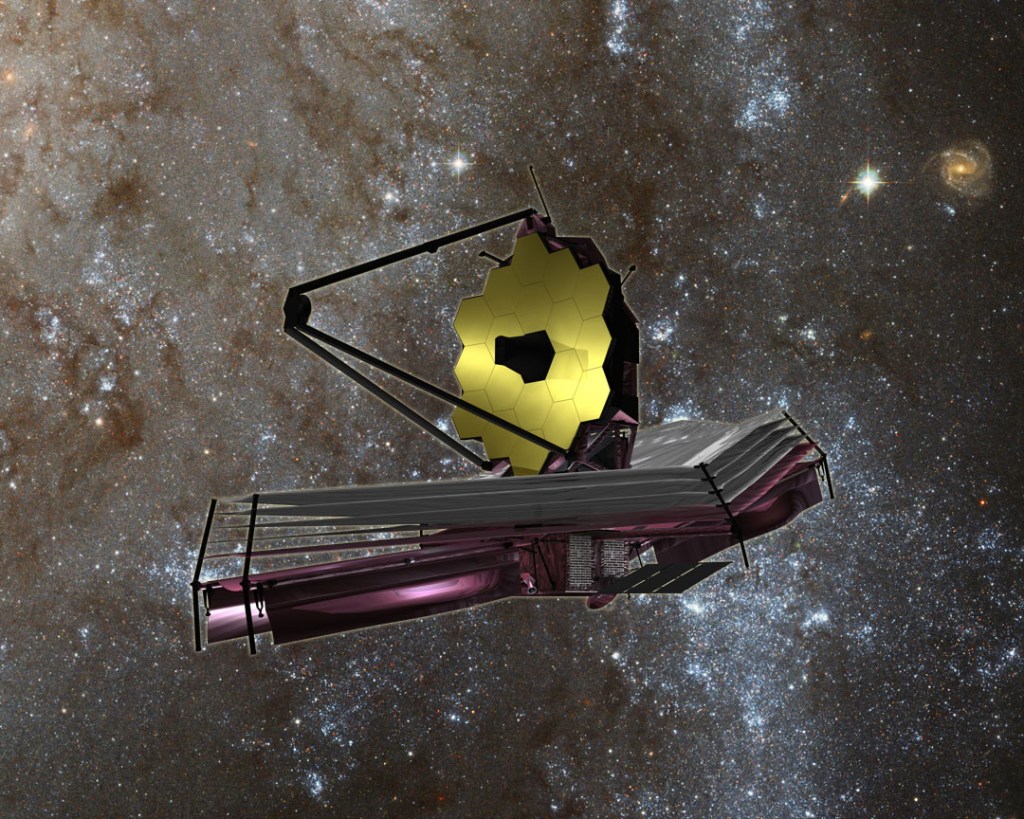
The space agency recently selected a toaster-sized cubesat that will become the much bigger telescope’s tiny, adorable “sidekick,” according to a statement. NASA chose the $8.5 million space mission, called the “Monitoring Activity from Nearby sTars with uv Imaging and Spectroscopy” (MANTIS), which will be designed and built by researchers at the University of Colorado Boulder. The diminutive but mighty spacecraft, scheduled to launch sometime in 2026, will make observations of the night sky in the full range of ultraviolet light, including extreme UV (EUV) light, a more energetic form.
Despite the enormous densities, the early universe didn’t collapse into a black hole because, simply put, there was nothing to collapse into…Even though the early universe was incredibly dense, it was also incredibly uniform. The average density throughout the universe was the same from place to place. There weren’t enough differences to trigger the formation of black holes.
In a study published in Nature Communications, scientists assess a new technique which could convert renewable, green energy from outside the Earth’s atmosphere. They are taking advantage of photosynthesis—the chemical process plants undergo every day to create energy—to help the space industry become more sustainable. The research led by the University of Warwick evaluates the use of a special device known as semiconductor to absorb sunlight on moon and Mars. It is hoped that the devices could promote Martian life support systems.
“With geopolitical tensions between Washington and Beijing extending into space, it is only to be expected that policymakers are looking back to the Cold War for helpful lessons. Unfortunately, it is far too easy to learn the wrong lessons from space cooperation during and immediately after the Cold War. Certainly, space cooperation was not a silver bullet to superpower problems on Earth and in space. The pattern of space cooperation between the United States and Russia is an important reminder that space cooperation has generally been the product of improving relations rather than the catalyst for change.”
-Statement by Aaron Bateman in his Bulletin of the Atomic Scientists’ article, “The Prospects for United States–China Space Cooperation are Limited.” The article suggests some ways that the two space-faring nations can find common ground even if they are not working on the same space missions as the American and Russians did in the past and still do today.
Image (Credit): A Tardigrade, or water bear, which may have landed on the Moon thanks to an Israeli mission. (NASA)
If we had a real chance of being harmed by life on the lunar surface, Covid 19 would be child’s play. The New York Times has an article, “Cosmic Luck: NASA’s Apollo 11 Moon Quarantine Broke Down,” indicates we were not really ready for any potential contamination during the Apollo program. The newspaper cites a recent study on the quarantine process, which noted:
As NASA prepared to land astronauts on the Moon in the 1960s, scientists and federal officials came to fear that they could bring lunar microorganisms back to Earth, with potentially grave consequences for human, plant, and animal life. To prevent this“back contamination,”representatives from NASA and a network of federal departments and services developed a protocol to quarantine astronauts, equipment, samples, and spacecraft exposed to lunar dust. Yetalthough NASA assured policy makers and an anxious public that it had implemented impermeable safeguards against the escape of lunar microorganisms, it had in fact prioritized likely risks to astronauts over unlikely risks to American society. To a degree previously unknown, the Apollo quarantine protocol suffered from numerous containment breaches that would likely have exposed the terrestrial biosphere to contamination—had lunar microorganisms actually existed.
Of course, now that we have landed on the moon and sent up multiple missions, the risk today is that we have contaminated the lunar surface, as noted in this second story from Futurism, “NASA Says There May Be Life on the Moon After All.” For instance, an earlier Israeli mission that crashed on the lunar surface was carrying thousands of microscopic Tardigrades. The story also cites meteors as a possible source of life that could have found refuge on the Moon.



 Our Awesome Universe