Queen’s Brian May and Bennu?

Credit: University of Arizona Press.

I was surprised to hear from Queen’s Brian May regarding the recent landing of the asteroid Bennu sample in the Utah desert. Here is what he posted and stated on his page:

“Today is the day – the long awaited day – when the sample of a piece of material From Bennu – the asteroid most likely to hit the Earth in the future, is recovered to Earth. This box when it is opened of material from the surface of Bennu can tell us untold secret of the origins of the universe, the origins or our planet and the origins of life itself. What an incredibly exciting day. Tune into Nasa TV. Go to the OSIRIS-REx website. Read my new book for the full story – Bennu 3-D – written with leader of the mission, Dante Lauretta. And enjoy this wonderful forward step in our knowledge of the universe.”

As you can see above, Brian May is named on the book about the asteroid. He is also credited with assisting NASA with the location of the sample landing. I was not aware of his deep involvement with the Bennu mission, or astronomy in general. In addition to the points above, it is worth noted that Mr. May (per Wikipedia):

  • earned a PhD degree in astrophysics from Imperial College London in 2007;
  • was a “science team collaborator” with NASA’s New Horizons Pluto mission;
  • is a co-founder of the awareness campaign Asteroid Day; and
  • has an asteroid named after him – Asteroid 52665 Brianmay.

Pretty impressive for a guy with a singing day job.
Space Missions: Good News for an Asteroid Sample, But Bad News for a Lunar Rover

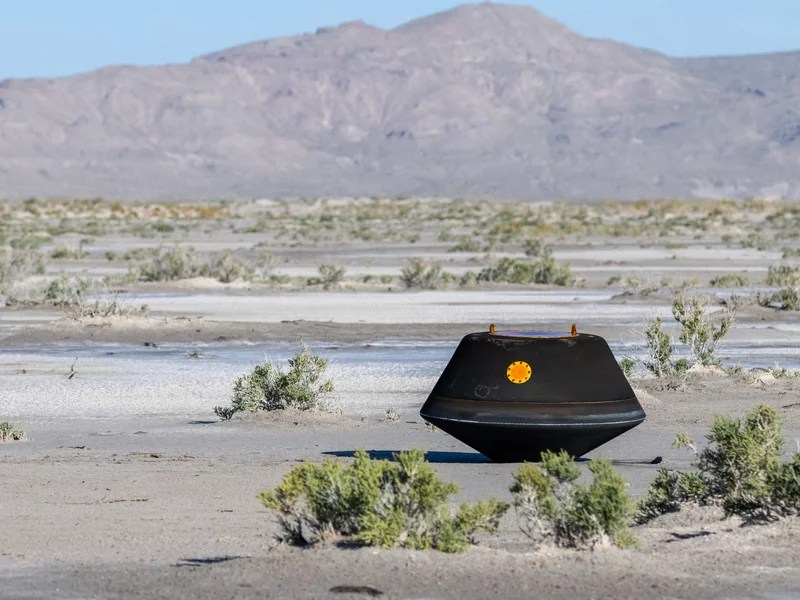
Image (Credit): NASA’s OSIRIS-REx sample capsule safely situated in the Utah desert earlier today. (Keegan Barber/NASA)

First, let discuss the good news. The capsule carrying the sample material from the asteroid Bennu successfully landed in the Utah desert earlier today, as planned. NASA’s Origins, Spectral Interpretation, Resource Identification, Security, Regolith Explorer (OSIRIS-REx) mission was a success. The space agency has plenty to celebrate.

And now for the bad news. India’s Chandrayaan-3 moon lander as well as its lunar rover were supposed to wake up around September 22 with the return of sunlight to the Moon’s South Pole. Unfortunately, neither craft showed any signs of coming back online. That said, the India space agency still has plenty to celebrate given its ability to successfully explore the South Pole before night set in.

A Day in Autonomy: The Discovery of Neptune

Image (Credit): Neptune as captured by Voyager 2 on August 31,1989. (NASA/JPL-Caltech/Kevin M. Gill)

On this day in 1846, astronomer Johann Gottfried Galle discovered the ice giant Neptune, the eighth and most distant planet in the solar system. Two other astronomers are credited with coming up with the mathematical calculations related to the discovery – France’s Urbain Le Verrier and England’s John Couch Adams.

Here are some interesting facts about the planet:

  • It is more than 30 times as far from the Sun as Earth;
  • It takes 165 Earth years to orbit the sun, meaning it has only completed one full orbit since it was discovered;
  • It is about four times wider than Earth;
  • It has at least five main rings and four prominent ring arcs; and
  • It lacks a solid surface.

Asteroid Sample Coming to Earth This Weekend

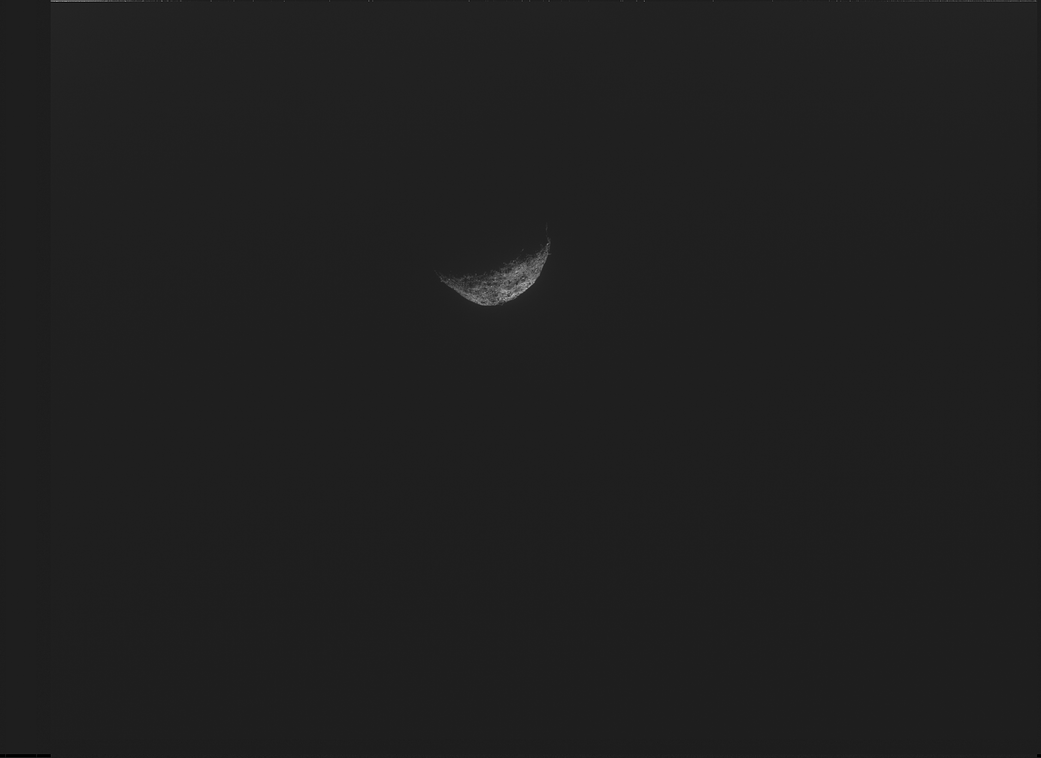
Image (Credit): Asteroid Bennu as seen by the OSIRIS-REx as it begins its return to Earth back in May 2021. (NASA/Goddard/University of Arizona; Writer Daniel Stolte, University of Arizona)

This weekend will should see the safe landing of a asteroid sample from far away. On Sunday, NASA’s Origins, Spectral Interpretation, Resource Identification, Security, Regolith Explorer (OSIRIS-REx) spacecraft will return to Earth with sample material from asteroid Bennu, which it encountered two years ago.

Launched on Sept. 8, 2016, the spacecraft spent about two years getting to Bennu and then more than two years studying the asteroid and collecting a 250-gram sample that should be in the hands of NASA scientists shortly. The graphic below shows the return path of the sample as it heads for the Utah desert. You can also watch this NASA video for more information on the overall mission and keep abreast of mission highlights via this mission blog. NASA also has a recent podcast discussing the spacecraft’s adventures and trip back to Earth.

And what about OSIRIS-REx after it makes this deposit? It will become OSIRIS-APEX (APEX for “Apophis Explorer”) and go back into the inner solar system before encountering asteroid Apophis in 2029.

We talk about rocket reuse, but this is a terrific example of spacecraft reuse.

The timing could not be better as NASA awaits 2024 budget decisions from Congress and further discussions about another sample return, this one from Mars.

Credit: NASA

Pic of the Week: Shackleton Crater

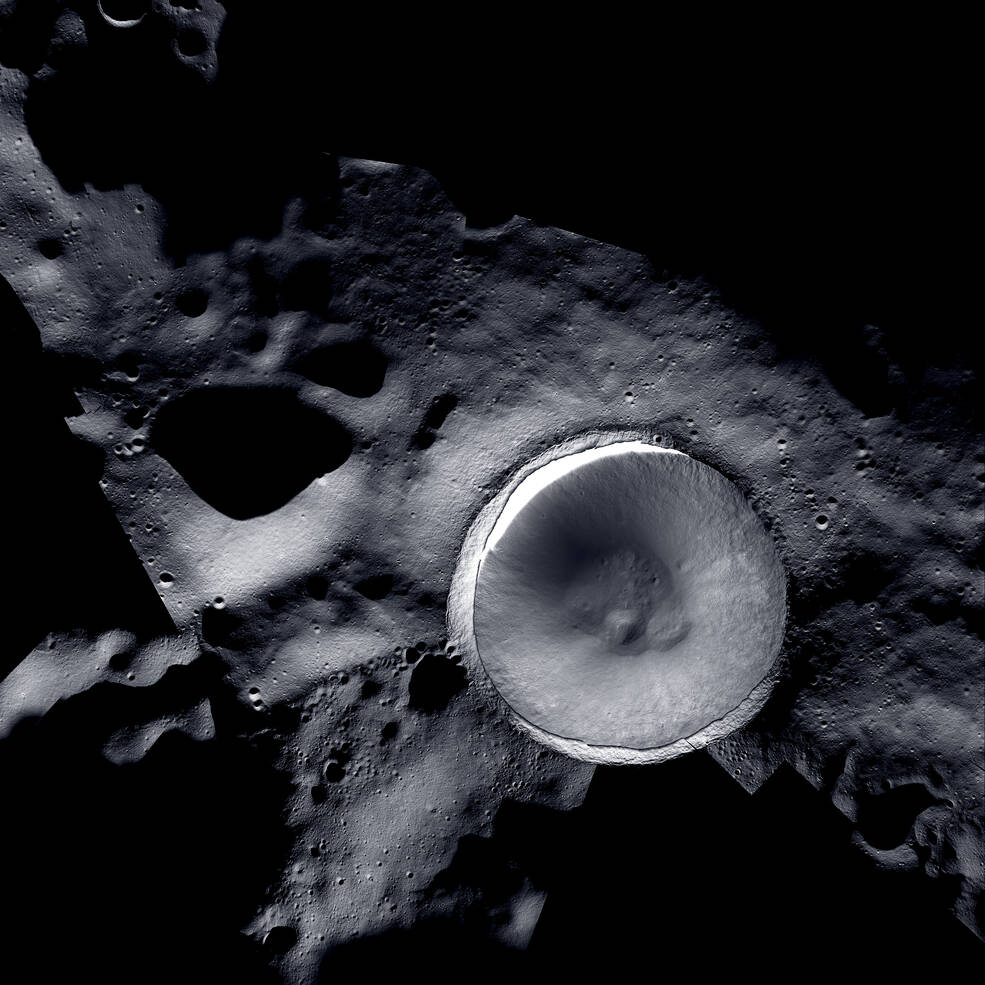
Image (Credit): Shackleton Crater on the lunar surface. (Mosaic created by LROC and ShadowCam teams with images provided by NASA/KARI/ASU)

This week’s image shows the Shackleton Crater located at the Moon’s South Pole. To create what you see above, an image from NASA’s Lunar Reconnaissance Orbiter Camera (LROC) was combined with another image from ShadowCam, a NASA instrument on board a KARI (Korea Aerospace Research Institute) spacecraft called Danuri,

Here is more information from NASA concerning the two cameras:

LROC can capture detailed images of the lunar surface but has limited ability to photograph shadowed parts of the Moon that never receive direct sunlight, known as permanently shadowed regions. ShadowCam is 200-times more light-sensitive than LROC and can operate successfully in these extremely low-light conditions, revealing features and terrain details that are not visible to LROC. ShadowCam relies on sunlight reflected off lunar geologic features or the Earth to capture images in the shadows.

ShadowCam’s light sensitivity, however, renders it unable to capture images of parts of the Moon that are directly illuminated, delivering saturated results. With each camera optimized for specific lighting conditions found near the lunar poles, analysts can combine images from both instruments to create a comprehensive visual map of the terrain and geologic features of both the brightest and darkest parts of the Moon. The permanently shadowed areas in this mosaic, such as the interior floor and walls of Shackleton Crater, are visible in such detail because of the imagery from ShadowCam. In contrast, the sunlit areas in this mosaic, like the rim and flanks of the crater, are a product of imagery collected by LROC.