Space Quote: Venezuela Aims for the Moon

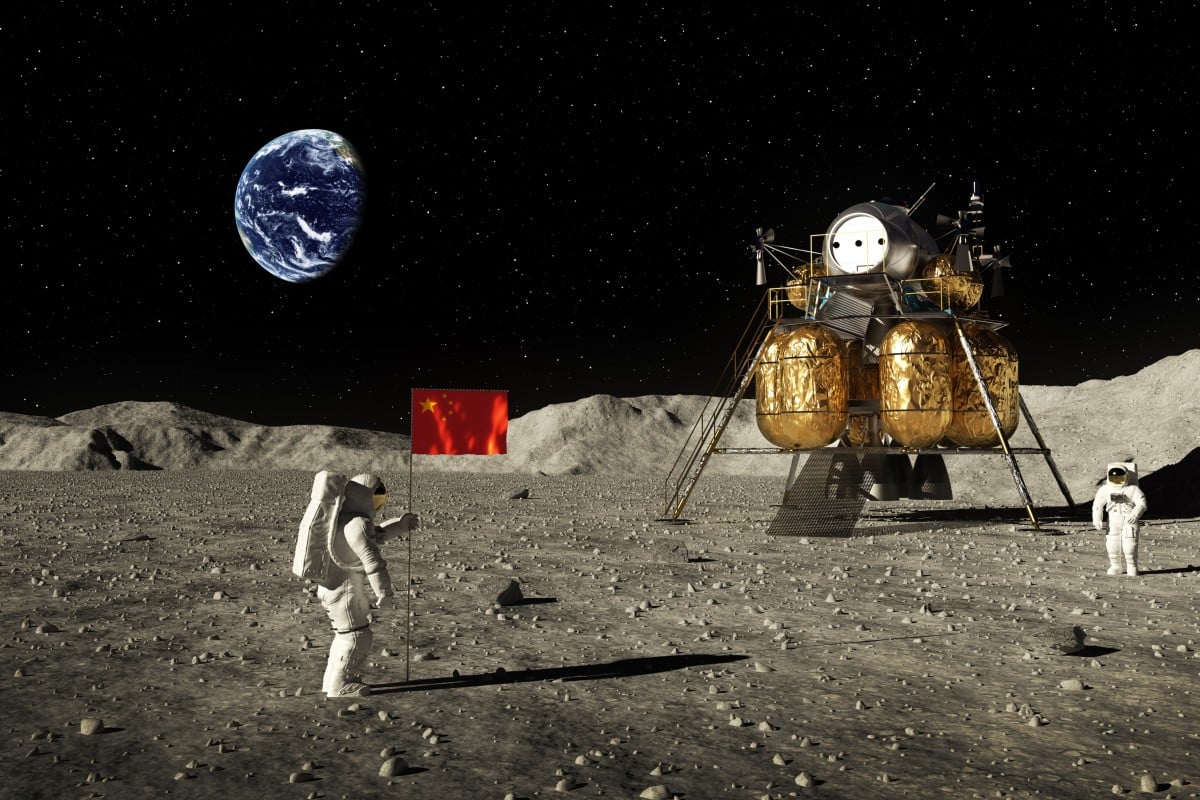
Image (Credit): Artist’s concept of a Chinese Moon base. (South China Morning Post)

“…scientific, technological, industrial and aerospace cooperation will sooner rather than later (send) the first Venezuelan man and woman to the moon in a Chinese spacecraft.”

Statement by Venezuelan President Nicolas Maduro in reference to an agreement with China that would train Venezuelan astronauts in China in preparation for a future Moon mission. China has previously stated its plans to land humans on the lunar surface by 2030 and establish a Moon base in the 2030s. Other countries have already signed agreements with China related to the lunar base, including Russia, Pakistan, and the United Arab Emirates.

Study Findings: Constraining Cosmological Parameters Using the Cluster Mass–Richness Relation

If you don’t understand the research title, you are not alone. The abstract is even worse:

The cluster mass–richness relation (MRR) is an observationally efficient and potentially powerful cosmological tool for constraining the matter density Ωm and the amplitude of fluctuations σ8 using the cluster abundance technique. We derive the MRR relation using GalWCat19, a publicly available galaxy cluster catalog we created from the Sloan Digital Sky Survey-DR13 spectroscopic data set. In the MRR, cluster mass scales with richness as $\mathrm{log}{M}_{200}=\alpha +\beta \mathrm{log}{N}_{200}$. We find that the MRR we derive is consistent with both the IllustrisTNG and mini-Uchuu cosmological numerical simulations, with a slope of β ≈ 1. We use the MRR we derived to estimate cluster masses from the GalWCat19 catalog, which we then use to set constraints on Ωm and σ8. Utilizing the all-member MRR, we obtain constraints of Ωm = ${0.31}_{-0.03}^{+0.04}$ and σ8 = ${0.82}_{-0.04}^{+0.05}$, and utilizing the red member MRR only, we obtain Ωm = ${0.31}_{-0.03}^{+0.04}$ and σ8 = ${0.81}_{-0.04}^{+0.05}$. Our constraints on Ωm and σ8 are consistent and very competitive with the Planck 2018 results.

Where is Carl Sagan when you need him? I know these are scientific journals, but plain language abstracts should be possible.

Luckily, the university released a press release on the study findings. Here is the bottom line:

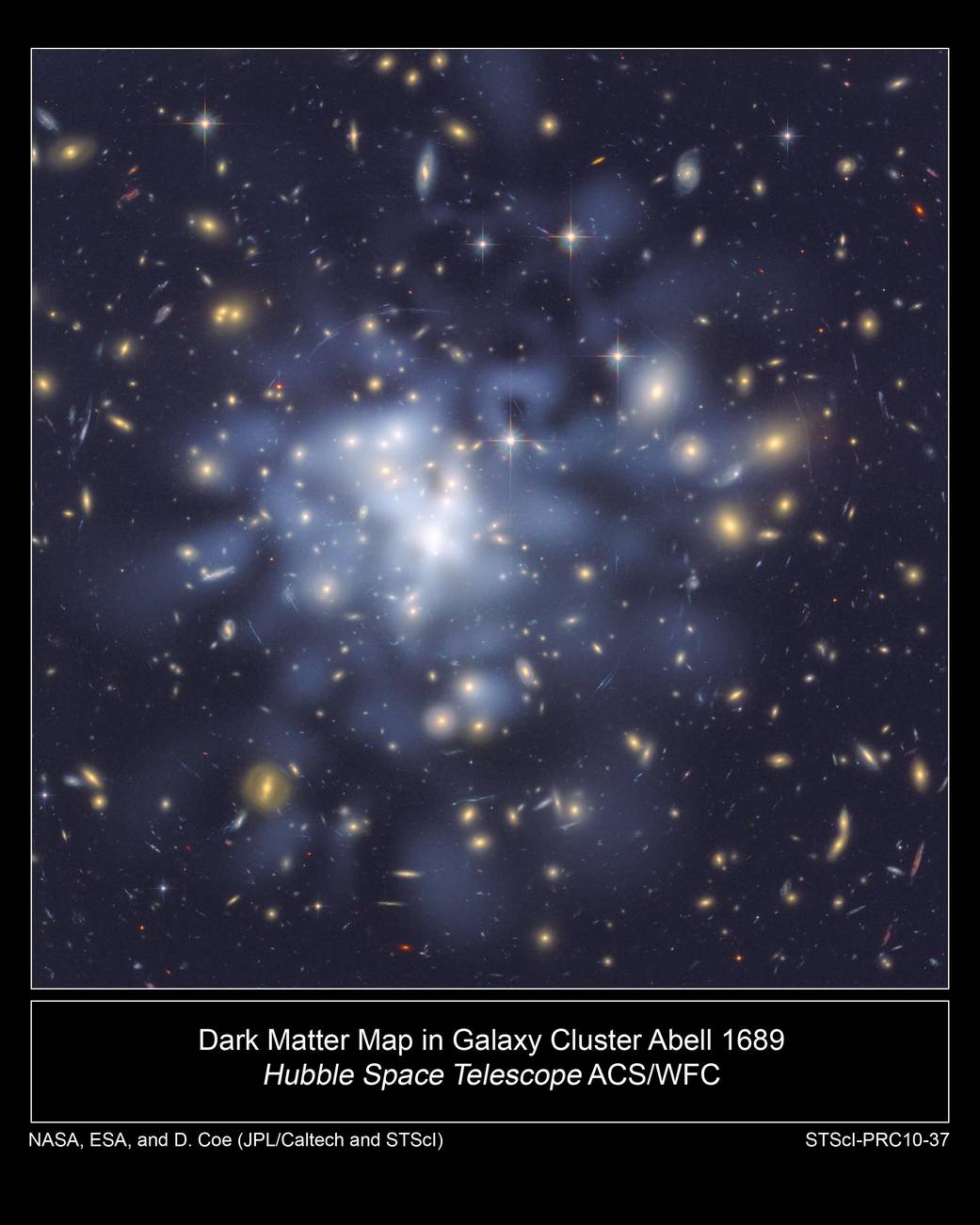
A UC Merced researcher and her teammates around the world have succeeded in measuring the total amount of matter in the universe for the second time. A new paper in the Astrophysical Journal, titled “Constraining Cosmological Parameters using the Cluster Mass-Richness Relation,” shows that matter makes up 31% of the universe, with the remainder consisting of dark energy — answering one of the most interesting and important questions in cosmology.

Now that wasn’t too hard. If you want to read the paper itself, you can find the details here.

Good luck.

Space Stories: New Lunar Water Estimates, Coronal Mass Ejection, and Oxygen on Mars

Image (Credit): Shadows on the Moon’s south pole. (NASA)

Here are some recent stories of interest.

Southwest Research Institute: “New Findings Suggest Moon May Have Less Water Than Previously Thought

A team recently calculated that most of the Moon’s permanently shadowed regions (PSRs) are at most around 3.4 billion years old and can contain relatively young deposits of water ice. Water resources are considered key for sustainable exploration of the Moon and beyond, but these findings suggest that current estimates for cold-trapped ices are too high.

Scientific American: “Massive Sun Outburst Smacks NASA Spacecraft

NASA’s Parker Solar Probe was built to withstand the ravages of the environment near our sun—and with good reason. The car-size spacecraft has now flown through a giant solar outburst of charged particles called a coronal mass ejection (CME). If that CME had it hit Earth instead, it may have caused vast, continent-wide blackouts, scientists say. Some of those searing particles whipped through space at about three million miles per hour.

BGR: “NASA Successfully Generated Oxygen on Mars

NASA’s Perseverance rover has done the unthinkable. Or, at least, a small device on the rover has. According to a tweet and article shared by NASA’s Perseverance team on Twitter, a device known only as MOXIE has proven that we can generate oxygen on Mars using the planet’s CO2-concentrated atmosphere. This tech is a huge boon, and the success of this story could help pave the way for future oxygen generation on the Red Planet, something that would make long-term exploration of the planet far more feasible.

Audit Results: SLS Program is Unaffordable

Image (Credit): Artist’s rendering of the SLS. (NASA)

The Government Accountability Office (GAO) recently completed a review of NASA’s Space Launch System (SLS), which is the cornerstone of the Artemis program. GAO assessed the extent to which (1) NASA has established plans to measure the SLS program costs post-Artemis I, and (2) the program has made progress with its plans to reduce projected SLS costs.

The GAO report, Space Launch System: Cost Transparency Needed to Monitor Program Affordability, highlights a number of continuing issues related to project costs and budgeting.

So what is the bottom line? This quote is most concerning: “Senior NASA officials told GAO that at current cost levels, the SLS program is unaffordable.”

The SLS is the vehicle that is supposed to demonstrate our ability to return to the Moon as well as our readiness for a Mars mission. But all of this is contingent on continued funding from Congress, and the congressional auditors have raised a red flag.

I expect you could find similar audit issues with the earlier Apollo missions as well as other space missions, yet NASA does not need to give Congress a reason to put money elsewhere. Let’s hope NASA’s leaders take the audit seriously and show some progress to keep all of the parties happy and the funding alive.