Planetary Society’s Day of Action

On September 17 and 18, the Planetary Society holds its Day of Action to advocate for space issues before Congress.

For those who already registered for the event, they can expect:

  • Online and in-person advocacy training from The Planetary Society’s space policy team;
  • A minimum of three meetings with congressional offices booked for you by The Planetary Society; and
  • Access to special events, social gatherings, and space-themed experiences for you and fellow members while you’re in D.C.

It is too late to sign up for the upcoming event, but you can still assist in other ways such as pledging to take online action:

By pledging, you commit to taking some form of individual advocacy action on the Day of Action. We will email you with a number of opportunities that can be done on your own schedule, including social media posts, prompts to call Congress (if you live in the United States), and online petitions and messages. We will email you updates and background information before the Day of Action itself; no prior training is required.

The Day of Action website has all of the details as well as a video from the 2020 Day of Action, which was on February 10, 2020 or about one month before COVID caused the Congress to abandon the office place. Fortunately, in-person meetings are possible again.

Check it out and see how you can help. Maybe you can attend next year if you missed the window for this year.
India Has Been Busy – It Now Heads for the Sun

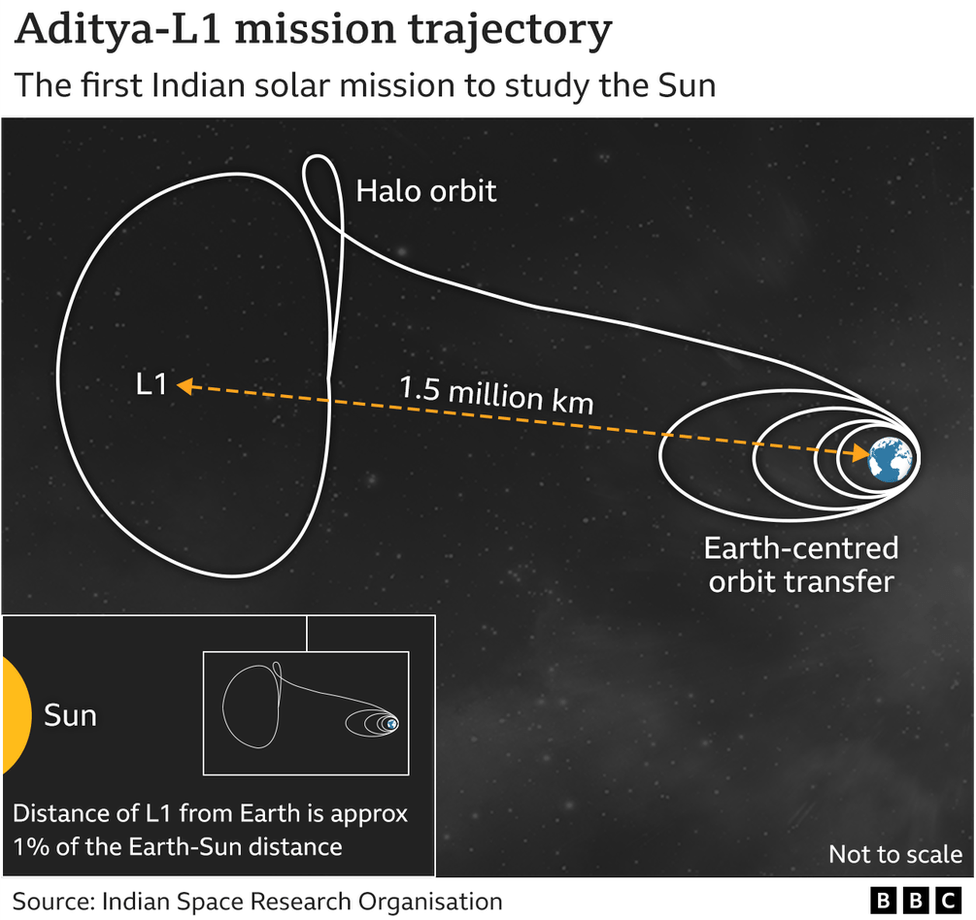
Over the weekend, India launched another important space mission. The mission of the Aditya-L1 spacecraft is to spend four months studying the outer layers of the Sun.

The Indian Space Research Organisation (ISRO) is overseeing the mission, which will come to rest at the L1 Lagrange point from where it will observe the Sun.

For more details on the mission, check out the ISRO website where you can find details about the spacecraft’s objectives and scientific equipment.

This latest mission comes right after India’s successful landing on the Moon, showing all of us that it is not resting on its laurels. The country clearly wants to be in the forefront of the space and science race.

Space Quote: Has the JWST Changed Astronomy Forever?

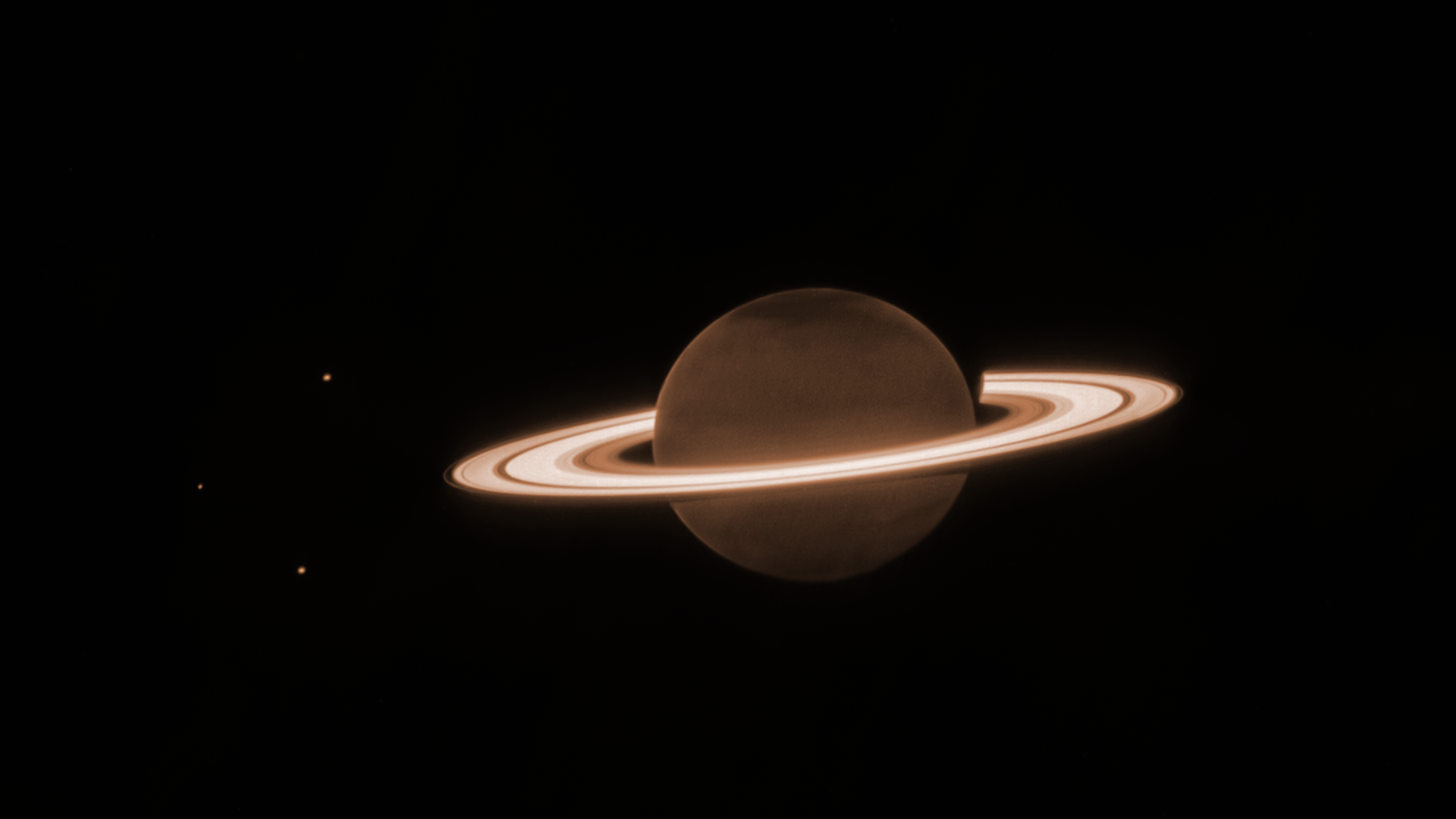
Image (Credit): On June 25, 2023, NASA’s James Webb Space Telescope conducted its first near-infrared observations of Saturn using its Near-Infrared Camera. (NASA, ESA, CSA, Matthew Tiscareno (SETI Institute), Matthew Hedman (University of Idaho), Maryame El Moutamid (Cornell University), Mark Showalter (SETI Institute), Leigh Fletcher (University of Leicester), Heidi Hammel (AURA))

“Physicists and astronomers are starting to get the sense that something may be really wrong. It’s not just that some of us believe we might have to rethink the standard model of cosmology; we might also have to change the way we think about some of the most basic features of our universe — a conceptual revolution that would have implications far beyond the world of science.”

-Statement by guess essayists Adam Frank and Marcelo Gleiser in a New York Times article about the James Webb Space Telescope titled “The Story of Our Universe May Be Starting to Unravel.” Dr. Frank is an astrophysicist at the University of Rochester. Dr. Gleiser is a theoretical physicist at Dartmouth College.

Video: More on the Importance of Exomoons

Image (Credit): Artist’s rendering of an exomoon. (Cool Worlds Lab)

If you watched my earlier post on Cool Worlds Lab’s missed opportunity on an exomoon proposal with the James Webb Space Telescope, then you will enjoy this updated video where Assistant Professor of Astronomy David Kipping provides five reasons that the study of exomoons is so important.

I do not want to give too much away, but one of the reasons is that the search for life on exoplanets needs to consider not only the chemical composition of the exoplanet, but the orbiting exmoon as well. If we assume everything we are seeing in the light from the observed exoplanet comes from only the exoplanet, we may experience a number of false positives because the life-affirming chemicals may not be combined in one object but instead come from two dead objects that only appear as one.

This makes sense, but it also throws a wrench into things. If we are struggling to build telescopes large enough to truly understand an exoplanet’s composition, we are now much farther away from a useful telescope because of the impact of exomoons. Of course, this is not the fault of the exomoons, but rather a reality that must be added to the equation.

Check out the video as Dr. Kipping makes his argument. It is pretty convincing.

The Moon Has One More Crater

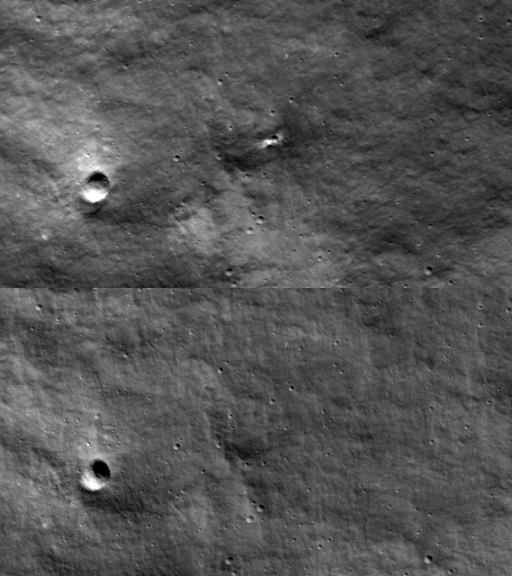
Image (Credit): Contrast between two views of the lunar surface from June 27, 2020, and Aug. 24, 2023, which is before and after the crash of Russia’s Luna-25 spacecraft. (NASA’s Goddard Space Flight Center/Arizona State University)

If President Putin wanted to leave a mark, he has done so on the Moon. NASA’s Lunar Reconnaissance Orbiter (LRO) has apparently located the spot where the Luna-25 spacecraft crashed, as shown in the before and after shot above.

Given that craters can last for billions of years on the Moon’s surface, we can rest assured that the Russians have made an indelible mark on a distant land.

Russia, let’s call it a win and recall those troops from Ukraine.

By the way, maybe we should call the new crater Putin’s Sunset.