

Last month there were a few podcasts worth checking out on our search for intelligent life elsewhere in the galaxy.
The first was an episode from The Planetary Society’s podcast Planetary Radio titled Alone but not lonely with Louis Friedman. Dr. Friedman, co-founder of The Planetary Society, is very skeptical about the Search for Extraterrestrial Life (SETI) efforts, believing we are most likely alone in the universe in terms of intelligent life and, even if there were other lifeforms out there, they are too far away for us to engage with it. That said, he does have ideas for studying exoplanets, such as a solar gravity lens that could significantly magnify the objects we are viewing.
He also discusses The Planetary Society’s solar sail spacecraft and how it could be left floating in our solar system awaiting and then inspecting incoming objects from outside our solar system. Its a great idea. You can read more about his ideas in his latest book (shown above).
The second episode is from Cool Worlds Lab titled Adam Frank – Technosignatures, Semantic Information, Galactic Colonization. Dr. Frank, a Professor of Physics and Astronomy at Rochester University, is much more optimistic about our ability to eventually find intelligent life in the galaxy and discusses the methods being used today to do so (going beyond the decades old SETI approach). He agrees with Dr. Friedman that we are dealing with great distances that may preclude human travel to these locations.
Dr. Frank even discusses the idea that maybe we were visited by alien civilizations in the past and we don’t know it because we were not here at the time. He discussed this very topic an much more in an earlier Scientific American article, “Alone in a Crowded Milky Way,” stating:
Perhaps long, long ago aliens came and went. A number of scientists have, over the years, discussed the possibility of looking for artifacts that might have been left behind after such visitations of our solar system. The necessary scope of a complete search is hard to predict, but the situation on Earth alone turns out to be a bit more manageable. In 2018 another of my colleagues, Gavin Schmidt of the NASA Goddard Institute for Space Studies, together with Frank, produced a critical assessment of whether we could even tell if there had been an earlier industrial civilization on our planet.
As fantastic as it may seem, Schmidt and Frank argue—as do most planetary scientists—that it is actually very easy for time to erase essentially all signs of technological life on Earth. The only real evidence after a million or more years would boil down to isotopic or chemical stratigraphic anomalies—odd features such as synthetic molecules, plastics or radioactive fallout. Fossil remains and other paleontological markers are so rare and so contingent on special conditions of formation that they might not tell us anything in this case.
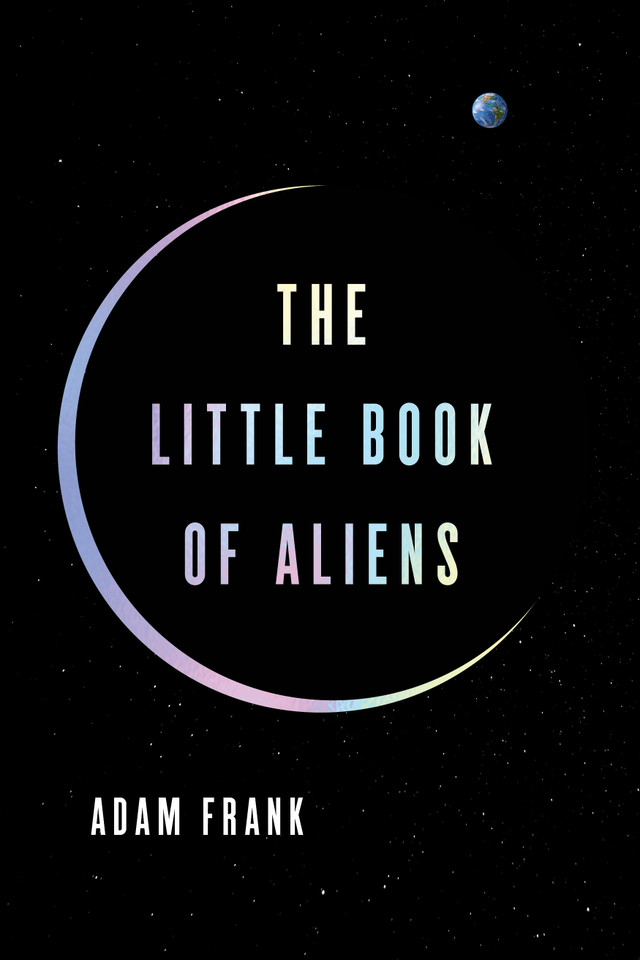
It’s a terrific article that also argues that we may be in a part of the galaxy that gets fewer visitors. I recommend listening to the podcast and then reading the article (or checking out his book on the topic, shown below).
 Our Awesome Universe