Image (Credit): Astronaut Thomas Kenneth Mattingly II. (NASA)
Last month we lost another astronaut who almost flew on the Apollo 13 mission and later flew on the Apollo 16 mission. Thomas Kenneth Mattingly II died on late last month at the age of 87 in Arlington, Virginia.
In addition to his work on the Apollo missions, he also flew on two space shuttle missions.
Mr. Mattingly is best remembered for his efforts to bring the Apollo 13 mission safely back to Earth after his lost his seat in that very mission when he was exposed to rubella. All of this was well documented in the 1995 Ron Howard film Apollo 13.
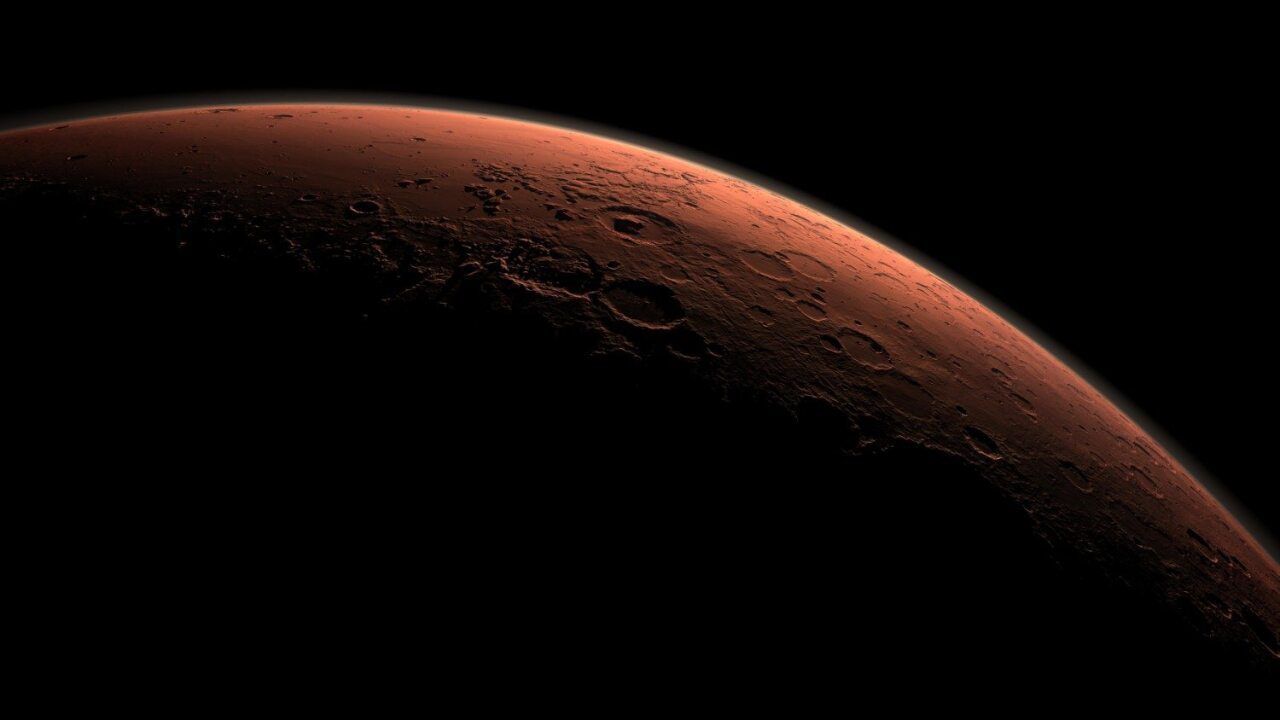
Okay, the plan is for Blue Origin to launch NASA satellites towards Mars, so don’t worry about Jeff Bezos and Elon Musk fighting it out on the Martian surface.
NASA has tapped Blue Origin to take two satellites worth about $79 into space, which will be the first use of the company’s New Glenn rocket. The launch is planned for next year, giving Blue Origin time to test the rocket and prepare for the mission.
The NASA mission, called the Escape and Plasma Acceleration and Dynamics Explorers (EscaPADE), involves two identical probes that were originally scheduled to fly with the Psyche mission.
The goals of the EscaPADE mission are to:
understand the processes controlling the structure of Mars’ hybrid magnetosphere and how it guides ion flows;
understand how energy and momentum are transported from the solar wind through Mars’ magnetosphere; and
understand the processes controlling the flow of energy and matter into and out of the collisional atmosphere.
Can Blue Origin be ready by next year when the window to Mars opens up? That is the big question given the continued delays with the New Glenn rocket.
It is good to see NASA spreading its launches into more hands. Now we just need the industry to meet the challenge.
Image (Credit): JWST’s view of the Milky Way. (NASA)
With the Thanksgiving holiday almost over, you may be thinking of Christmas lights after seeing the image above. Think larger, such as the size of a galaxy. You are looking at approximately 500,000 stars at the center of the Milky Way galaxy as seen by the James Webb Space Telescope (JWST), and it is pretty amazing.
The Webb telescope site has this to say about the image (and even more to say at the linked site):
A bright field of gas sweeps around the edge of a dark, dense cloud where young stars are bursting out to take their place in the universe. They join an estimated 500,000 other stars in the scene, of various ages, sizes, and colors. It’s the hub of our Milky Way galaxy, a city center at rush hour, making our solar system’s calm corner a frontier outpost by comparison. Discover the new features – and mysteries – NASA’s James Webb Space Telescope has revealed with its unprecedented infrared-light view of the chaotic region, and what it means for astronomy.
While NASA seeks to maintain an uninterrupted human presence in low Earth orbit, an agency official said a short-term gap between the International Space Station and commercial successors would not be “the end of the world.” NASA’s current approach to its future in LEO counts on supporting development of commercial space stations with the goal of having at least one such station ready to support NASA astronauts and research by 2030, when the ISS is scheduled for retirement. A key question, though, will be whether any of the several companies working on such concepts will be ready by the end of the decade.
Hundreds of tech and science jobs will be lost in California if NASA moves forward with a plan to cut funding from the Mars Sample Return (MSR) mission, according to state lawmakers. U.S. Senator Alex Padilla (D-Calif.) and Representative Adam Schiff (D-Calif.-30), sent a letter on Wednesday to NASA Administrator Bill Nelson to reverse a decision to slash the mission’s funding. The funding cut would “result in the loss of hundreds of California jobs, prevent the Jet Propulsion Laboratory (JPL) from making its 2030 launch window, and lead to the cancellation of billions of dollars in contracts supporting American businesses,” the lawmakers wrote.
The Canadian Space Agency announced two astronauts will fly to space in the coming years on Wednesday (Nov. 22) as the country continues a historic ramp-up of its human space program in 2023. François-Philippe Champagne, the Minister of Innovation, Science and Industry of Canada, announced the assignments in front of a crowd of hundreds gathered in the lobby of Canadian Space Agency headquarters in Longueuil, Quebec.
“Is it easy to convince people? People want resources spent on things where they see the immediate benefit…And space exploration is something where the benefits, while they are current, a lot of what we’ll see is what’s anticipated in the future.”
–Statement by U.S. Senator Jerry Moran, the top Republican appropriator for NASA in the Senate, regarding NASA’s 2024 budget. He supports funding for NASA to ensure the US wins the space “marathon” with China. Like all federal agencies at this time, NASA is under a continuing resolution until the Congress votes on a final budget for this fiscal year.




 Our Awesome Universe