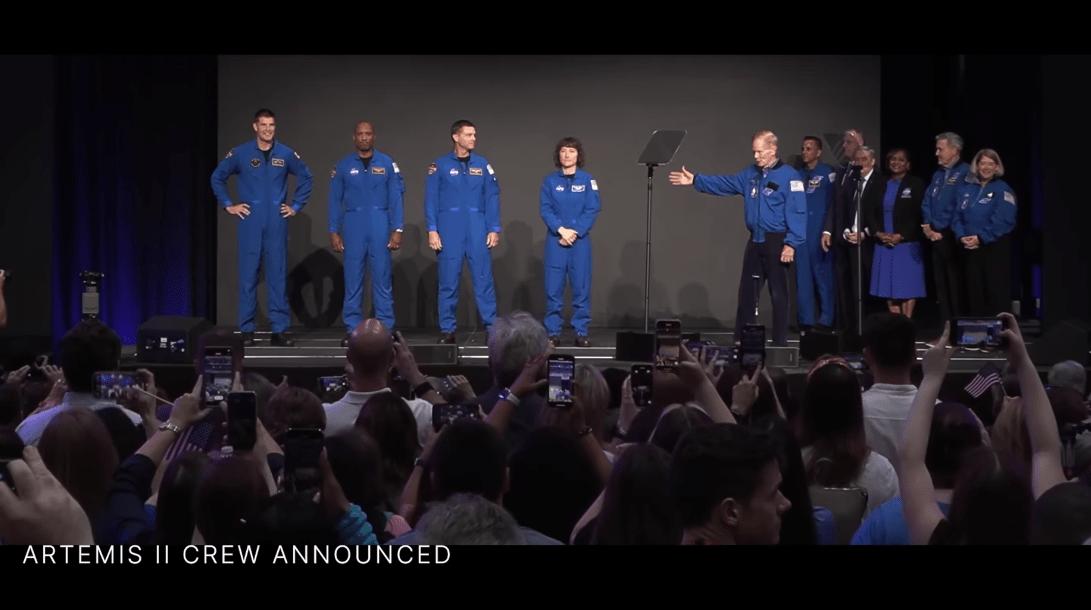
NASA Had a Busy Year

Image (Credit): The introduction of the Artemis II crew, just one of many items highlighted in NASA’s new video summarizing 2023. (NASA)

This is the time of year for lists, so I wanted to highlight one of the more important lists, at least in the opinion of this writer. That’s right, we need to remember the important space milestones from this year.

Fortunately, NASA recently summed up its successes in 2023 with a new video titled NASA 2023: Nothing is Beyond Our Reach. The video highlights many of the Agency’s accomplishments this year, including the launch of the Psyche mission, the announcement of a crew for the Artemis II mission, and the OSIRIS-REx capsule retrieval.

It is quite a list. Luckily, NASA provided a list of links so you can read more about the various efforts:

Time to read up on 2023 before we dive into more activities in 2024.

Note: You can read a more detailed list of accomplishments at this NASA site.
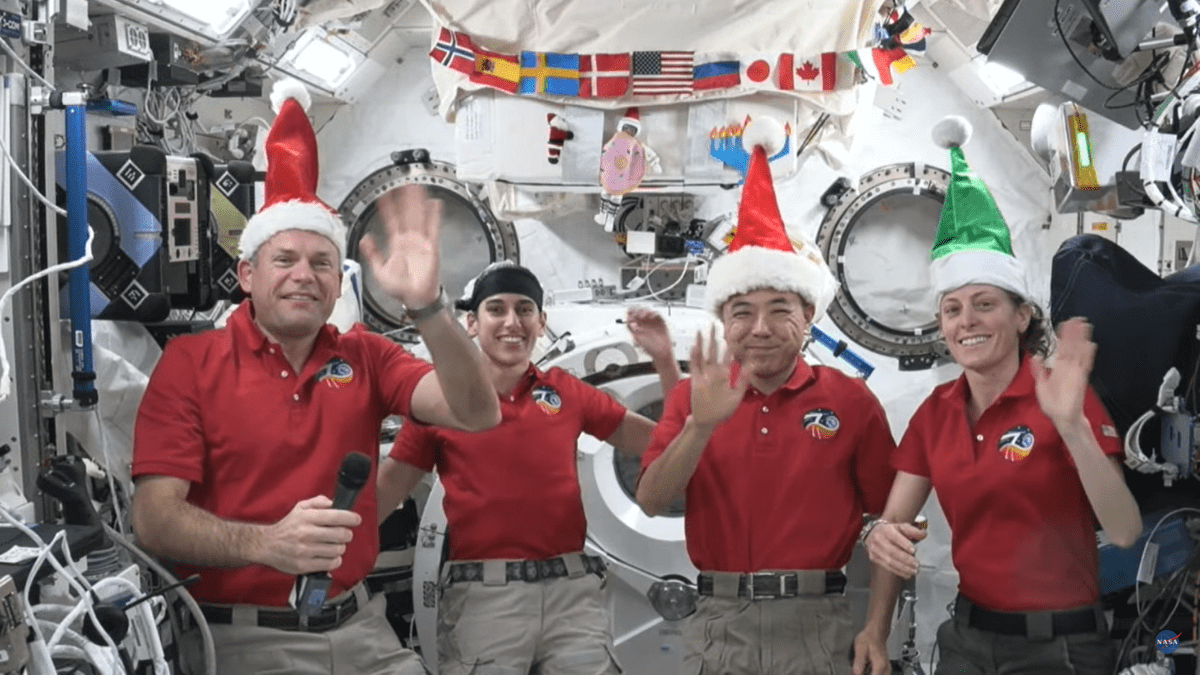
Holiday Wishes from the Crew on the ISS

Image (Credit): Expedition 70 astronauts from left: Andreas Mogensen of ESA, Jasmin Moghbeli of NASA, Satoshi Furukawa of JAXA,and Loral O’Hara of NASA. (NASA)

You can watch a holiday video from International Space Station astronauts associated with three space programs provide greetings in three languages. They are away from family during the holidays, yet on the job to keep our space program going.

Merry Christmas from NASA

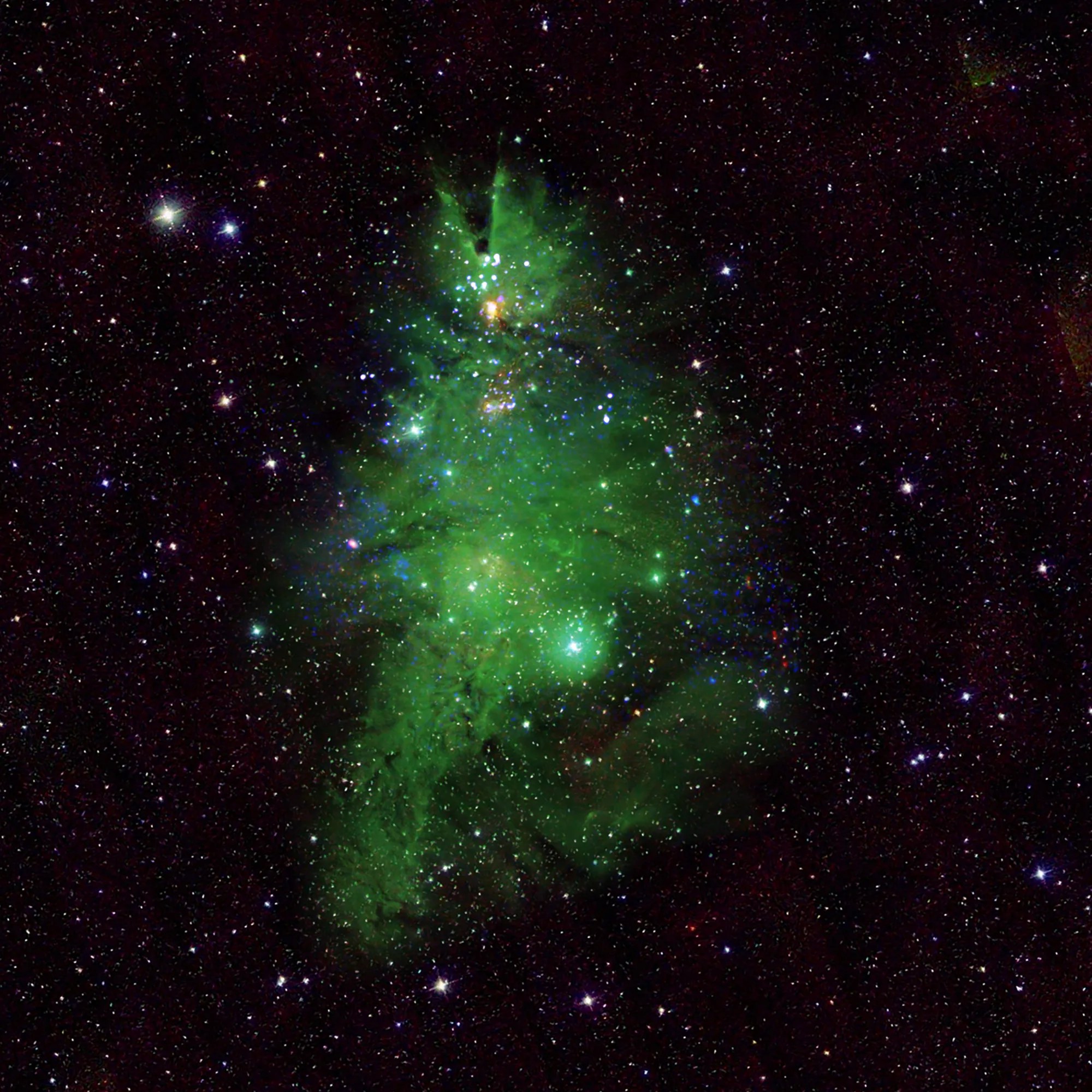
Image (Credit): NGC 2264, also known as the “Christmas Tree Cluster.” (X-ray: NASA/CXC/SAO; Optical: T.A. Rector (NRAO/AUI/NSF and NOIRLab/NSF/AURA) and B.A. Wolpa (NOIRLab/NSF/AURA); Infrared: NASA/NSF/IPAC/CalTech/Univ. of Massachusetts; Image Processing: NASA/CXC/SAO/L. Frattare & J.Major)

NASA shared this image of NGC 2264, also known as the “Christmas Tree Cluster,” to brighten everyone’s holiday.

You can read more about this image on this NASA page. You will also find an animated version of the “Tree” on the same NASA page.

Merry Christmas to all!

Martian Habitat: One More Try

The image above is one more attempt with an AI program to create a Martian habitat. As with the images in my last post, I asked the AI image program Freepik to respond to the following request: “Realist painting, surface of Mars, rocket and habitat in the foreground, ultra detailed.”

The image generated was better than either DALL-E 2 or Microsoft’s Image Creator (DALL-E 3) in terms of a semi-realistic and clearly planned habitat on Mars. Of course, an even more likely habitat would be below the surface, but I do not want to be too picky. But like the Microsoft program, Freepik added a moon that does not exist in the real world (or the real Mars, I should say).

I tried a different request to see it this would continue to happen. My request was: “Martian colony in the year 2400.” In this case, I was more satisfied with the result. In two of the four images, Freepik provided a viable habitat and did not display a moon. One of the images is displayed below. Unfortunately, the other two still has moons.

It will be hit or miss with many of these programs. You will need to know more than the program in terms of context. We are still early in the game and it is likely the AI programs will slowly remove these make-believe elements. But until then, don’t start using these images in any official publications or you will be spending a lot of time explaining yourself.

AI Images: Habitat on Mars

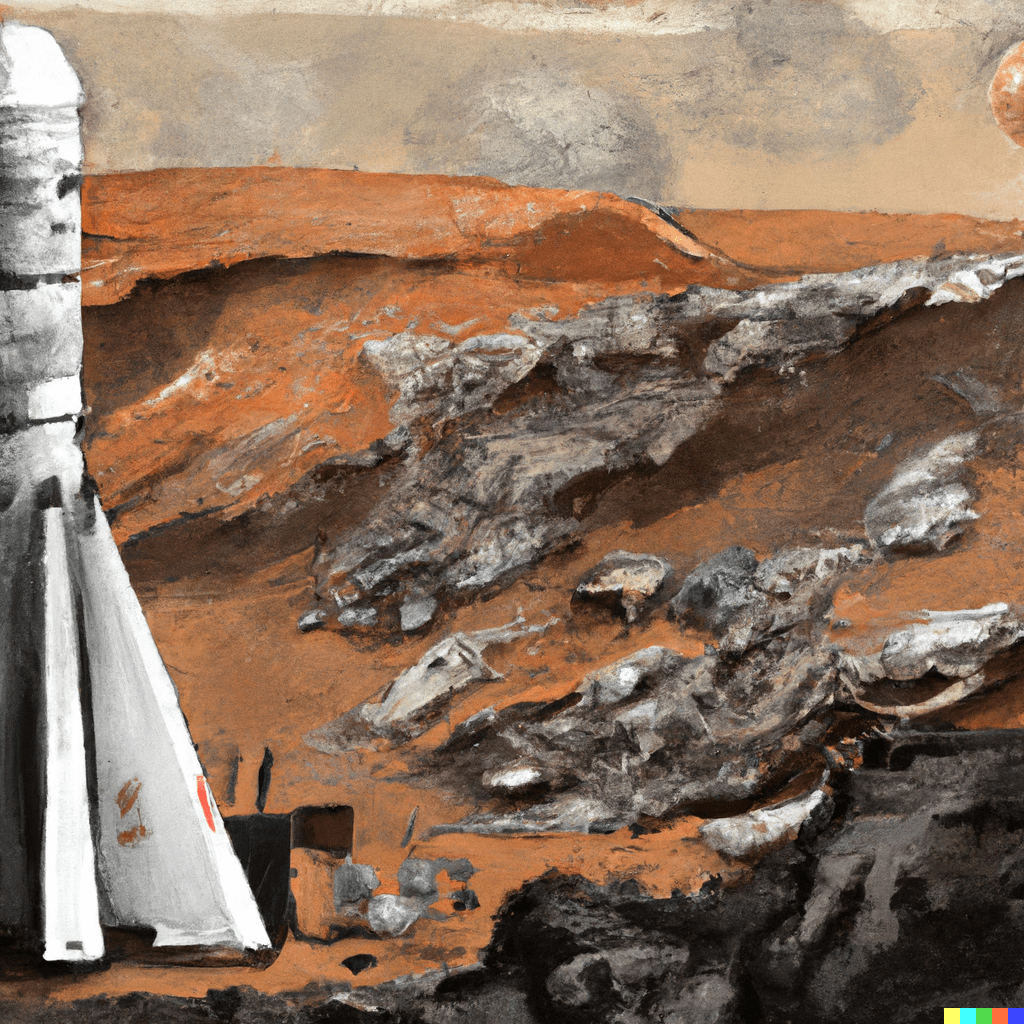
I was recently using OpenAI’s DALL-E 2 to test what it would provide if I was looking for examples of a Martian colony. I put in the following request: “Realist painting, surface of Mars, rocket and habitat in the foreground, ultra detailed.”

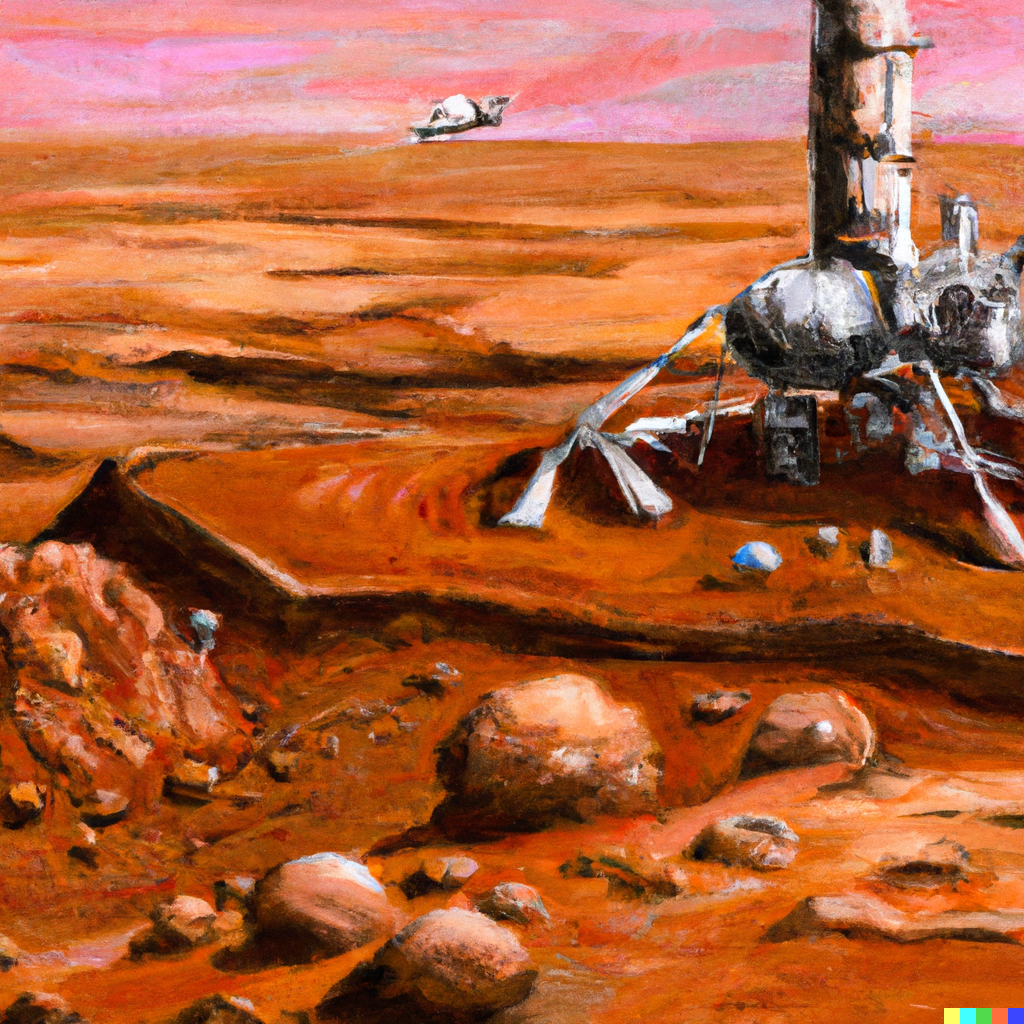
One of the images, shown above, clearly shows the rocket yet the habitat may be the ruins next to it. If so, this is an interesting perspective on the human endeavor. Maybe I should just assume the rocket is the habitat. Another image from DALL- E 2, shown as the next image below, is a little better with a spacecraft in the background and apparently a habitat in the foreground. Not necessarily inspirational, yet funtional.

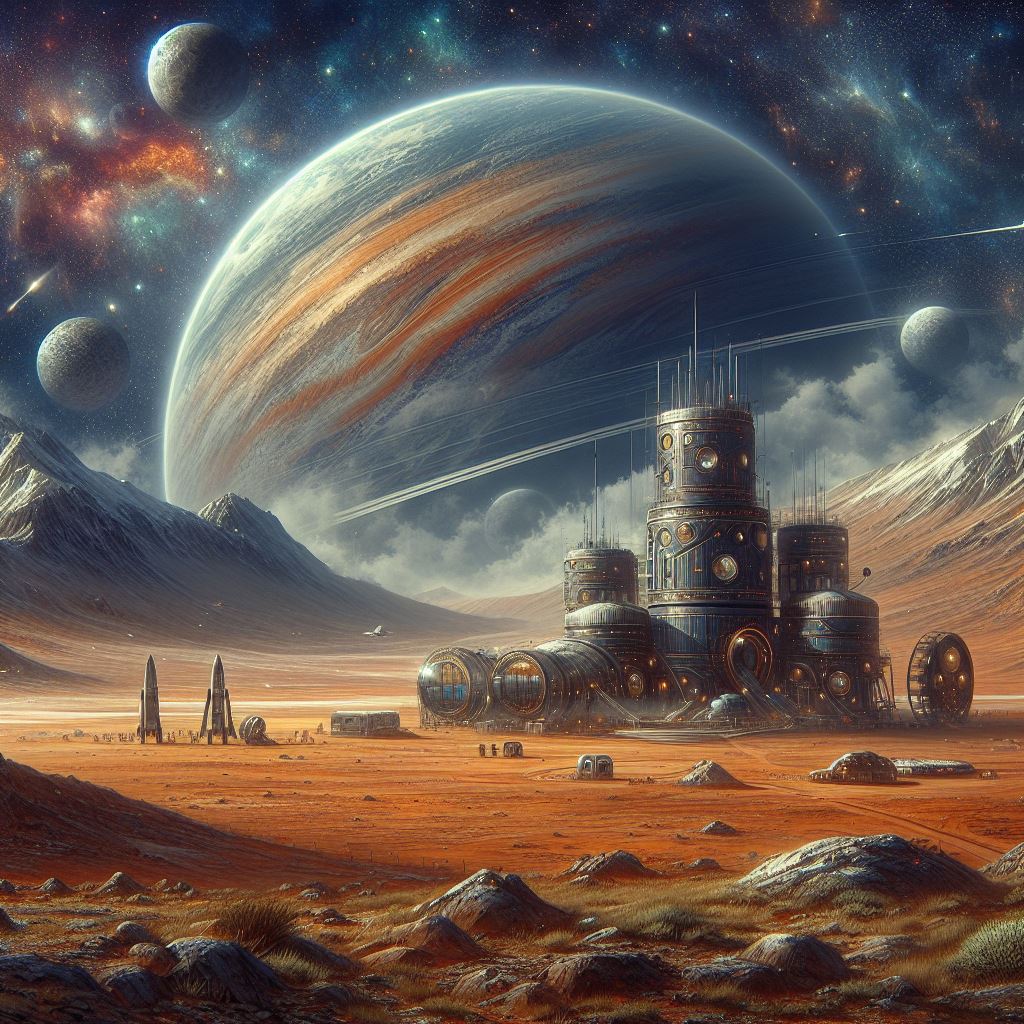
After this I decided to see what Microsoft’s Image Creator (DALL-E 3) would produce. This was the opposite of the grainy, somewhat dismal images from the earlier version. As shown below, the updated program provided me with a colorful, sleek image that seemed more fantastical than real. Is that a Ferris wheel on the right of the structure? And since when did Mars have at least five moon orbiting it? At least the surface is reddish, but what is this craziness?

Microsoft has certainly upgraded the imagery, but what does it represent? Is it pure science fiction with little regard for the location being named. I would rather kids using AI software see the DALL-E 2 images as a starting point rather than the Microsoft Image Creator images representing nothing slightly realistic on a planet that cannot be Mars.

Maybe this is the hallucination problem cited with ChatGPT. I had not heard that the problem spread to AI imagery, but it makes sense. I will need to keep this in mind as I play with these new programs.