Podcast: Romans in Space

If you are searching for a good podcast to listen to on your next drive, you might enjoy a recent podcast from The Rest is History discussing the ideas of the early Roman Republic that may have informed George Lucas and his Star Wars films.

In the episode, “Romans in Space: Star Wars, Dune and Beyond…,” the narrators also discuss the influence of Rome on other popular series, from earlier stories, such as Issac Asimov’s Foundation, Frank Herbert’s Dune, and Star Trek, to more recent tales, such as Battlestar Galactica and The Hunger Games. The discussion also touches on the role of the Nazis, the American Revolution, Islam, and even the story of King Arthur in these science fiction stories.

No stone is left unturned in this 55 minute episode, with plenty of ideas to keep your head spinning and your mind guessing. After listening, I bet you will play it a second time just to be sure you took it all in (and wrote down some references you might want to research on your own).

Northrop Grumman Cargo Ship Heads to ISS

Image (Credit): Launch of the Cygnus spacecraft earlier today on its way to the ISS. (NASA)

Earlier today, Northrop Grumman launched a resupply spacecraft via a SpaceX Falcon 9 rocket to the International Space Station (ISS). The Cygnus spacecraft is conducting its 20th mission to the station, making it reliable workhorse as NASA awaits even more commercial partners to come online.

According to NASA, the resupply spacecraft contains numerous experiments, including:

  • the first surgical robot on the space station;
  • an orbit re-entry platform that collects thermal protection systems data;
  • a 3D cartilage cell culture that maintains healthy cartilage in a lower gravity; and
  • a metal 3D printer, an autonomous semiconductor manufacturing platform.

A surgical robot you ask? You can read more about this Miniaturized In-vivo Robotic Assistant (MIRA) by visiting this Gizmodo site.

Space Stories: The ISS Succession Plan, Privately-built Moon Landers, and Working with Moonquakes

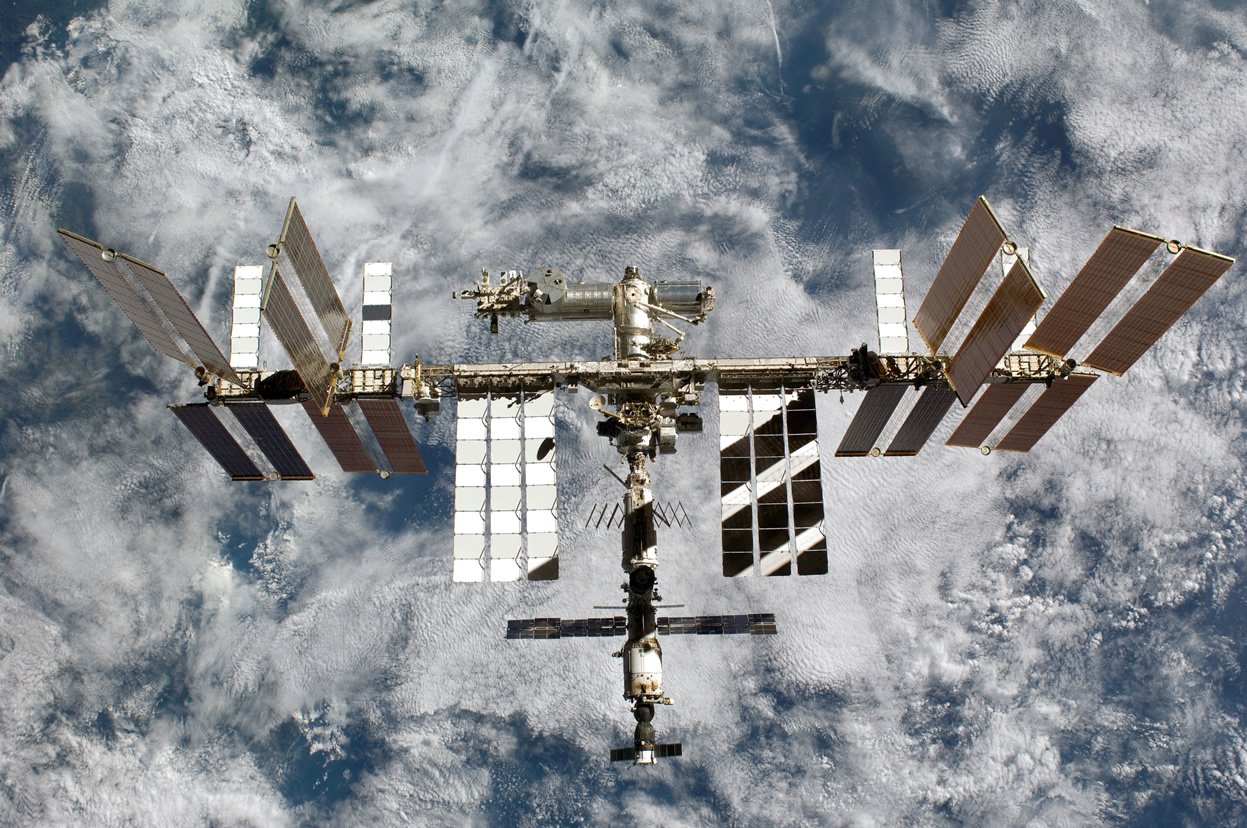
Image (Credit): View of the International Space Station. (NASA)

Here are some recent stories of interest.

Aviation Week Network: Safety Panel Raises Commercial Space Station Transition Concerns

Concerns over a “very tight” timeline for NASA to transition human low-Earth-orbit operations from the International Space Station (ISS) to commercial successors tops a list of seven concerns raised by an agency safety panel. The latest annual report by NASA’s Aerospace Safety Advisory Panel’s (ASAP) was released Jan. 25. The 56-page report expresses concerns over sufficient evidence of a viable business case to make NASA one of multiple tenants of at least one ISS successor. The effort is currently supported by NASA and the European, Japanese, Russian and Canadian space agencies.

Astronomy.com: Vertex Moon Mission Getting Closer to Launch

 A new era in lunar research is coming, and Lunar Vertex is getting ready to lead the way. Lunar Vertex is NASA’s first so-called PRISM mission (Payloads and Research Investigations on the Surface of the Moon). PRISM taps into the Commercial Lunar Payload Services program that uses privately built landers to deliver NASA science and other payloads to the lunar surface. PRISM missions are meant to be lower-cost, faster-to-flight programs. There is a mass limit of just over 100 pounds (45 kilograms) — so the science instruments have to be small — and the budget for the first PRISM suite is just $30 million (excluding the lander and the launch vehicle). Lunar Vertex is first in line, and recently has hit a number of major milestones on its way to a June 2024 launch.

NASA: Shrinking Moon Causing Moonquakes and Faults Near Lunar South Pole

As NASA continues to make progress toward sending astronauts to the lunar South Pole region with its Artemis campaign, data from a NASA-funded study is helping scientists better understand this strategic part of the Moon. The study presents evidence that moonquakes and faults generated as the Moon’s interior gradually cools and shrinks are also found near and within some of the areas the agency identified as candidate landing regions for Artemis III, the first Artemis mission planned to have a crewed lunar landing.

Space Quote: Hubble Detects Water on an Exoplanet

Image (Credit): Artist’s rendering of exoplanet exoplanet GJ 9827d. (NASA/ESA/Leah Hustak (STScI)/Ralf Crawford (STScI))

“This would be the first time that we can directly show through an atmospheric detection, that these planets with water-rich atmospheres can actually exist around other stars…This is an important step toward determining the prevalence and diversity of atmospheres on rocky planets.”

Statement by Björn Benneke of the Trottier Institute for Research on Exoplanets at Université de Montréal. He was referring to the Hubble space telescope’s detection of water vapor in the atmosphere of exoplanet GJ 9827d. The exoplanet is about twice the Earth’s diameter and approximately 97 light-years from Earth. You can read more about the Hubble discovery here.

A Day in Astronomy: Loss of the Apollo 1 Astronauts

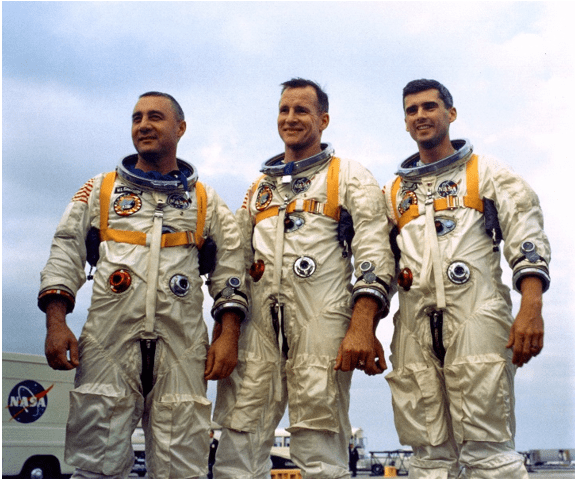
Image (Credit): Apollo 1 astronauts Virgil I. “Gus” Grissom, left, Edward H. White, and Roger B. Chaffee. (NASA)

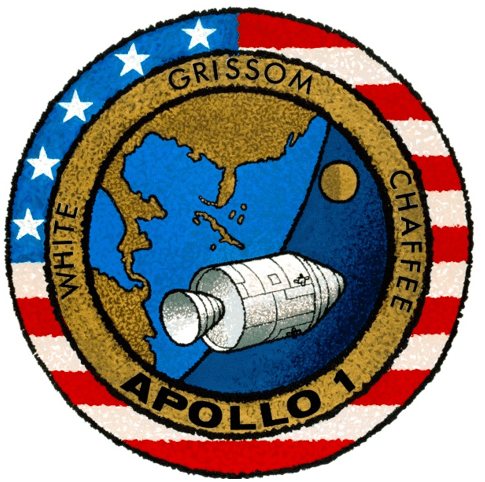
On this day in 1967, the Apollo 1 capsule caught fire on the launchpad, killing the three astronauts in the capsule – Virgil “Gus” Grissom, Ed White, and Roger Chaffee.

A frustrated Gene Kranz, NASA flight director, had this to say shortly after the fire and tragic loss of three astronauts:

Spaceflight will never tolerate carelessness, incapacity, and neglect. Somewhere, somehow, we screwed up. It could have been in design, build or test. Whatever it was, we should have caught it. We were too gung-ho about the schedule, and we locked out all of the problems we saw each day in our work. Every element of the program was in trouble and so were we. The simulators were not working, Mission Control was behind in virtually every area, and the flight and test procedures changed daily. Nothing we did had any shelf life. Not one of us stood up and said, “Dammit, stop!” I don’t know what Thompson’s committee will find as the cause, but I know what I find. We are the cause! We were not ready! We did not do our job. We were rolling the dice, hoping that things would come together by launch day, when in our hearts we knew it would take a miracle. We were pushing the schedule and betting that the Cape would slip before we did.

Did the Apollo space program recover? Absolutely. Did NASA avoid deaths on future space missions. Not at all. Do we give up on human space missions or keep moving forward? I think you know the answer to that one.

Credit: NASA