
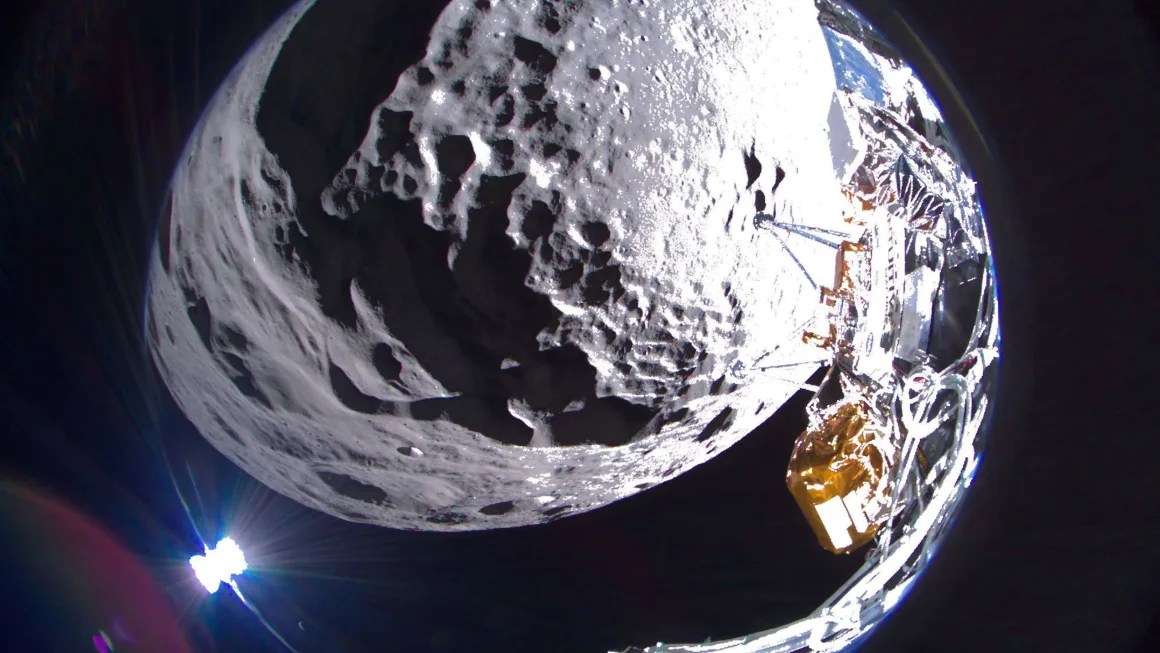
The United States is back on the Moon, even if the trip was bumpy. Plans to have pictures of the landing via the EagleCam were affected by a last minute switch to a NASA instrument that allowed Odysseus to safely land. The seems to be a fair trade, and the EagleCam can still be used to take pictures now that the lunar lander is stationary on the surface.
Embry‑Riddle Aeronautical University, which created the EagleCam, later noted:
…both the Intuitive Machines and EagleCam teams still plan to deploy EagleCam and capture images of the lander on the lunar surface as the mission continues. The time of deployment is currently unknown.
More importantly, Odysseus stumbled during the landing and is now tipped to one side. A tilted landing disabled the Japanese lunar lander earlier this year. Fortunately, the Odysseus’s solar panels are still catching the Sun’s rays and charging. This should allow the lander to conduct its work for about nine days until the Sun’s location will no longer charge the panels.
It seems the third try this year for the Moon’s south pole was precarious yet ultimately successful. That said, we are finding that the past successes are no guarantee of future success. This is the same region where NASA will be sending the Artemis astronauts. We need to get this right before we drop a crew on the Moon.
 Our Awesome Universe