Upcoming Exhibits at the Smithsonian National Air and Space Museum

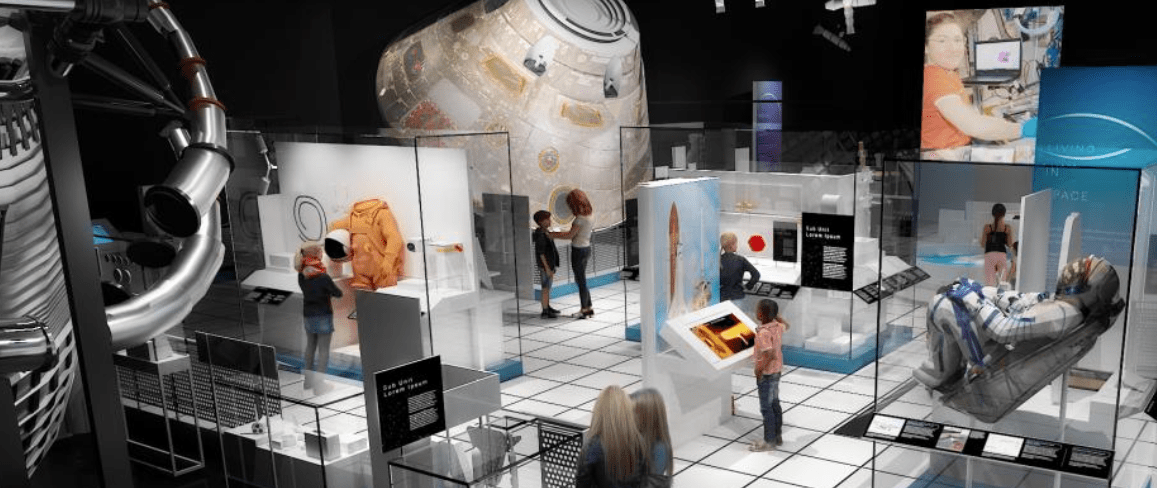
Image (Credit): Artist’s rendering of the planned At Home in Space exhibit. (National Air and Space Museum)

If you are planning your next vacation, keep the Smithsonian Museums in Washington, DC in mind, particularly the National Air and Space Museum. The updated museum has plenty of impressive exhibits to keep you and your family busy and informed. You can also travel to the Steven F. Udvar-Hazy Center in Chantilly, Virginia for even more great exhibits.

Here is a list some of the upcoming exhibits related to the space program:

  • Boeing Milestones of Flight Hall: The Boeing Milestones of Flight Hall will showcase some of the museum’s most iconic objects. With artifacts arrayed along walls and suspended from the ceiling—and interpretive displays that provide background and context—this central gallery of the National Mall building will invite visitors to explore the diverse and rich collections that make up the rest of the Museum’s exhibits, both in Washington, D.C., and at the Steven F. Udvar-Hazy Center in Chantilly, Virginia. Banners featuring important individuals in aviation and spaceflight, as well as a large media screen, will help bring these historic figures to life. (Opening in Spring 2024)

  • At Home in Space: An immersive, highly interactive exhibition, At Home in Space takes visitors along a 40+ year journey of learning how humans can live and work in space continuously and venture beyond Earth orbit. (Opening by 2026)

  • Futures in Space: The Futures in Space exhibition will explore the potential near- and long-term futures that may emerge with advances in space exploration technology and enterprise. The gallery will feature developing technologies that bring down the cost of space, aim to inaugurate the era of commercial and tourist spaceflight, expand robotic planetary exploration and resource extraction, and keep humans alive in new environments. Futures in Space will also explore the as-yet unanswered social, political, and economic questions that emerge along with these new activities: Who decides who goes to space? Why do we go? And what will we do when we get there? (Opening by 2026)

  • National Science Foundation Discovering Our Universe: Discover the history of modern astronomy and where the field is headed. Explore how we find answers in astronomy, how that process has changed over time, and how those answers tend to raise deeper questions. (Opening by 2026)

  • RTX Living in the Space Age Hall: The RTX Living in the Space Age Hall will provide insight into space technologies and infrastructure that are largely invisible to the public but have a profound impact on our daily lives. The exhibition will cover topics from the beginning of the Space Age in the mid-20th century to the present and beyond. Visitors can explore these stories through Space Age objects and the people who build, maintain, and use them. The content will include the development of rocket technology that has enabled access to space, missile development, space systems for Earth observation, communication, and navigation, and the threats to these systems. (Opening by 2026)

Pic of the Week: Launch of the PACE Mission

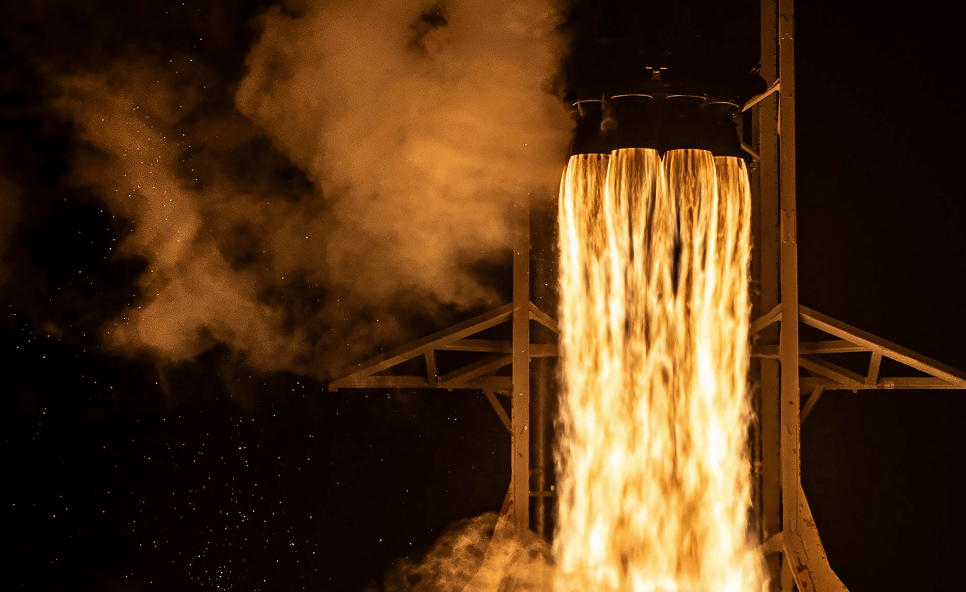
Image (Credit): Engines of the SpaceX rocket carrying the PACE spacecraft into orbit. (SpaceX)

This week’s image is from SpaceX, which launched NASA’s Plankton, Aerosol, Cloud, ocean Ecosystem (PACE) mission into orbit earlier today (the Falcon 9 rocket engines are shown above). 

The spacecraft is designed to monitor the Earth from orbit. NASA explains the mission is this way:

Information collected throughout PACE’s mission will benefit society in the areas of ocean health, harmful algal bloom monitoring, ecological forecasting, and air quality. PACE also will contribute new global measurements of ocean color, cloud properties, and aerosols, which will be essential to understanding the global carbon cycle and ocean ecosystem responses to a changing climate.

The PACE’s mission is designed to last at least three years, though the spacecraft is loaded with enough propellant to expand that timeline more than three times as long.

Bad News for NASA’s JPL and the Mars Sample Return

NASA has started to crack under budget uncertainty.

The Washington Post has reported that NASA’s Jet Propulsion Laboratory (JPL) is laying off 530 employees and another 40 contractors. Overall, this is an eight percent drop in JPL staffing, most of it related to the Mars Sample Return (MSR) efforts that have been facing cost overruns and questions from Congress.

JPL management explained the reduction in a memo to employees:

I am writing to share as much detail and clarity on our actions as I can, including reviewing the factors that have led to this decision, and our next steps. First, how we got here. Without an approved federal budget including final allocation for MSR FY24 funding levels, NASA previously directed JPL to plan for an MSR budget of $300M. This is consistent with the low end of congressional markups of NASA’s budget and a 63% decrease over the FY23 level. In response to this direction, and in an effort to protect our workforce, we implemented a hiring freeze, reduced MSR contracts, and implemented cuts to burden budgets across the Lab. Earlier this month, we further reduced spending by releasing some of our valued on-site contractors.

This may be a short layoff should NASA get more funding from Congress, but even then it is possible that some of the great talent associated with the program will head off into the sunset to find more secure employment.

Will we ever get a sample back from Mars? Can we get the information we need via other means for now until the budget situation improves (as well as more partner funding)? Will the Chinese or another party find the means to do something we cannot?

NASA has a lot of balls in the air and may lack the necessary funding to keep them all afloat, as was highlighted in an earlier post.

It appears one of the balls has dropped.

Space Stories: Preparing for a Commercial Space Station, Ukraine Protests New ISS Crew, and Metal 3D Printing in Space

Image (Credit): Artist’s rendering of the Starlab commercial space station in orbit. (Starlab Space)

Here are some recent stories of interest related to space stations.

SpaceNews: Starlab Commercial Space Station to Launch on Starship

Starlab Space, the joint venture developing the Starlab commercial space station, has selected SpaceX’s Starship to launch the station on a single flight. Starlab Space, a joint venture of Voyager Space and Airbus Space and Defence, announced Jan. 31 it reached an agreement with SpaceX to launch the Starlab station on Starship. The companies did not disclose terms of the agreement or a projected launch date, although a spokesperson for Starlab Space said the company was confident that Starlab would be launched before the decommissioning of the International Space Station, currently scheduled for 2030.

Kyiv Post: Ex-Russian Military Officer Joins NASA for ISS Mission; Ukrainian Outrage Follows

Alexander Grebenkin, a former Russian military officer and current Roscosmos cosmonaut, is set to travel to the International Space Station as part of the NASA team, as announced on the NASA website, where Ukrainians have commented their outrage. NASA, in collaboration with SpaceX, plans to launch Crew-8 to the International Space Station no earlier than Thursday, Feb. 22.

Aviation Week Network: European Space Agency Launches ‘First’ Metal 3D Printer To ISS

The European Space Agency (ESA) has launched what it says is the “first metal 3D printer” to be hosted on the International Space Station (ISS). While plastic 3D printers have been used aboard the ISS since 2014, a machine that prints stainless steel would be new and could allow astronauts greater self-sufficiency, including the ability to make complex metallic structures in orbit, as well as at future Moon and Mars bases, ESA said Jan. 30.

Cosmonaut Surpasses Earlier Days in Space Record

Image (Credit): Roscosmos cosmonaut and Expedition 70 Flight Engineer Oleg Kononenko (Andrey Shelepin NASA)

Just yesterday, Russian cosmonaut Oleg Kononenko surpassed an earlier record for the amount of time a human has spent in space. He has now been in orbit more than 878 days, this being his fifth rotation on the International Space Station. The earlier record was set in 2015 by cosmonaut Gennady Padalka.

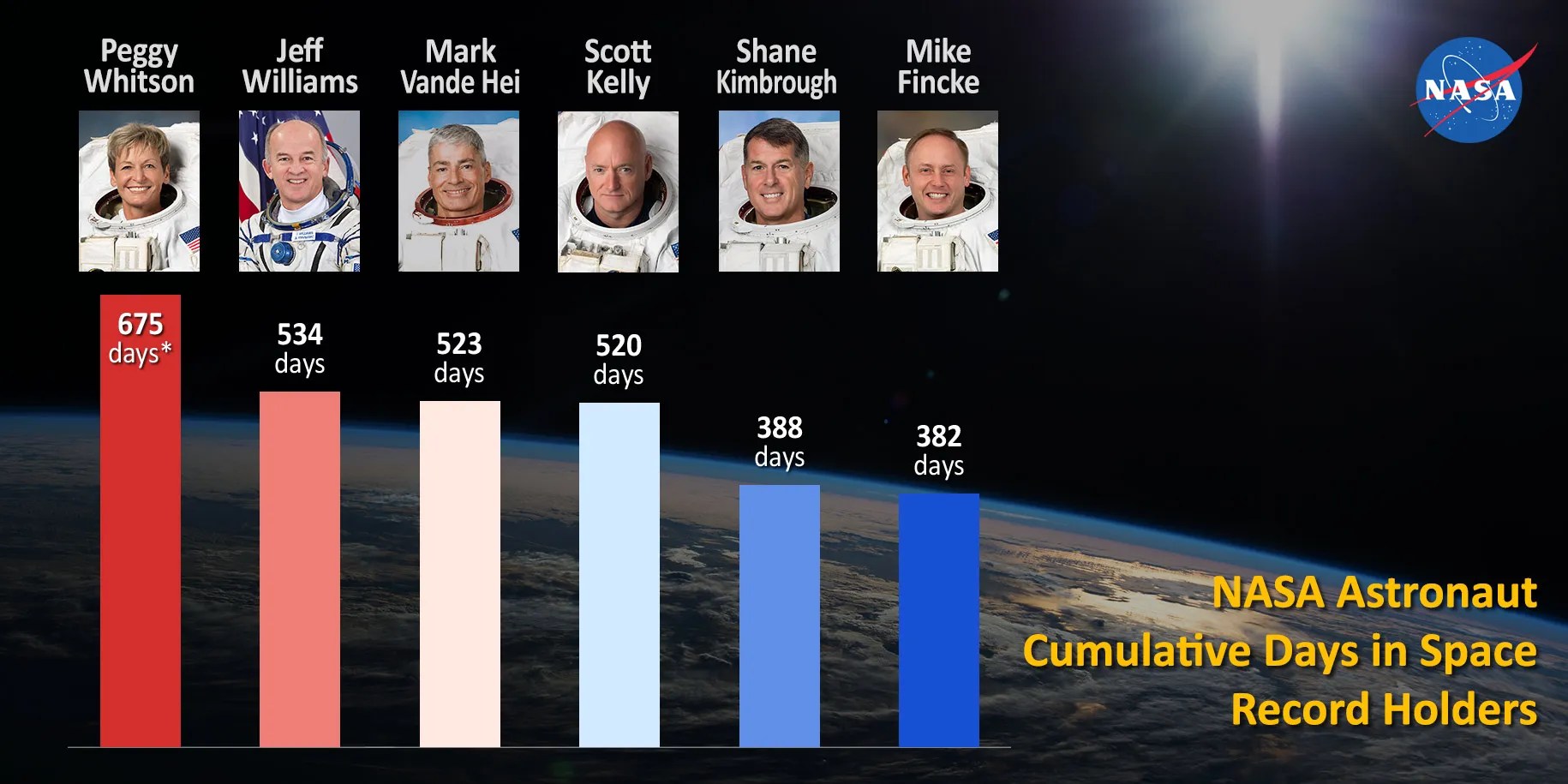
American astronauts have a ways to go before approaching this record. To date, the record for cumulative days in space is held by a NASA astronaut Peggy Whitson at 675 days.

*Peggy Whitson extended her record cumulative time in space by nine days as an Axiom Space astronaut during Axiom Mission-2 from May 21 through May 30, 2023.
Credit: NASA