
Here are some recent stories of interest.
—Tohoku University: “Biomolecules from Formaldehyde on Ancient Mars“
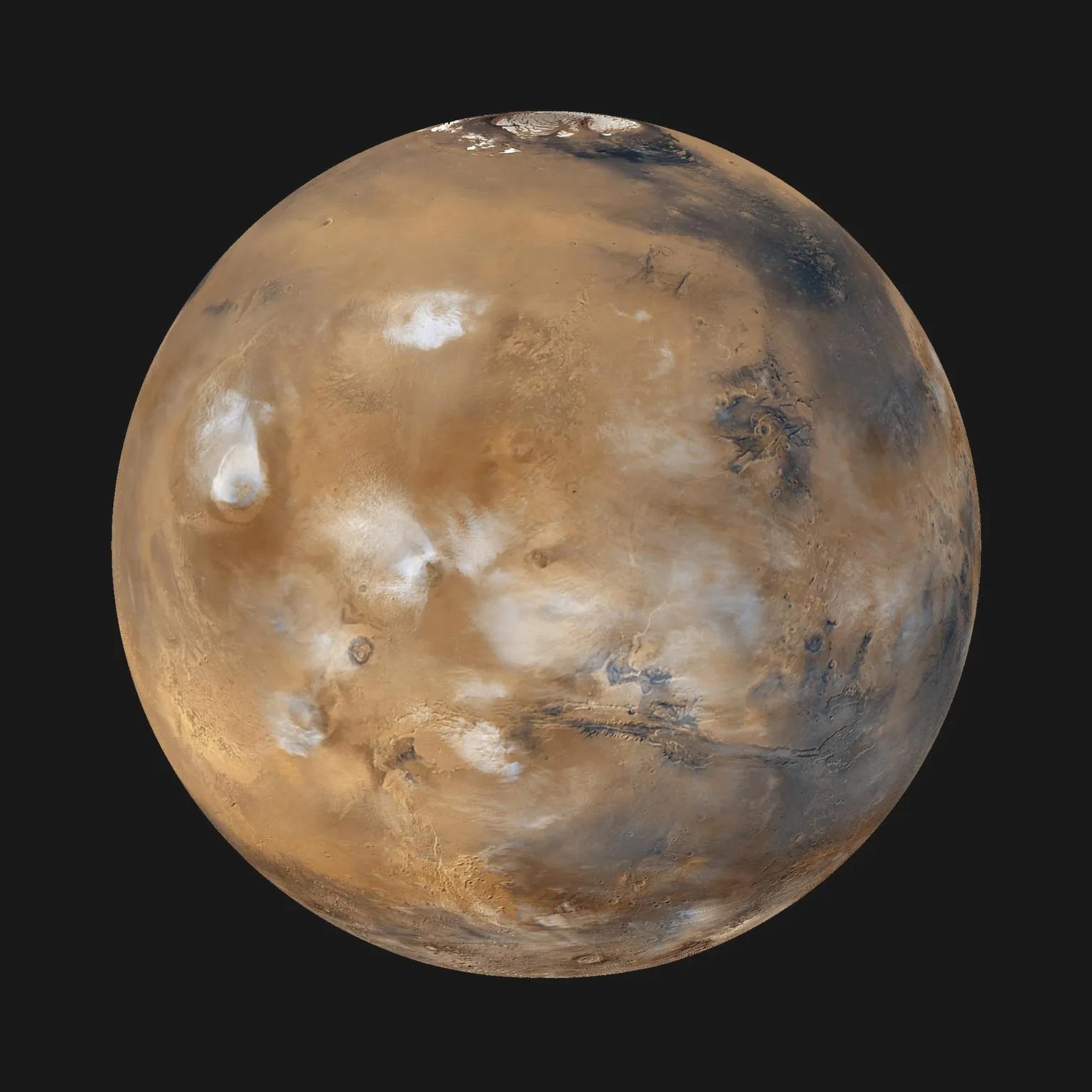
Organic materials discovered on Mars may have originated from atmospheric formaldehyde, according to new research, marking a step forward in our understanding of the possibility of past life on the Red Planet. Scientists from Tohoku University have investigated whether the early atmospheric conditions on Mars had the potential to foster the formation of biomolecules – organic compounds essential for biological processes. Their findings, published in Scientific Reports, offer intriguing insights into the plausibility of Mars harboring life in its distant past.
—University of Cambridge: “Astronomers Spot Oldest “Dead” Galaxy Yet Observed“
A galaxy that suddenly stopped forming new stars more than 13 billion years ago has been observed by astronomers. Using the James Webb Space Telescope, an international team of astronomers led by the University of Cambridge has spotted a ‘dead’ galaxy when the universe was just 700 million years old, the oldest such galaxy ever observed. This galaxy appears to have lived fast and died young: star formation happened quickly and stopped almost as quickly, which is unexpected for so early in the universe’s evolution. However, it is unclear whether this galaxy’s ‘quenched’ state is temporary or permanent, and what caused it to stop forming new stars.
—Webbtelescope.org: “Webb Unlocks Secrets of One of the Most Distant Galaxies Ever Seen“
Delivering on its promise to transform our understanding of the early universe, the James Webb Space Telescope is probing galaxies near the dawn of time. One of these is the exceptionally luminous galaxy GN-z11, which existed when the universe was just a tiny fraction of its current age. One of the youngest and most distant galaxies ever observed, it is also one of the most enigmatic. Why is it so bright? Webb appears to have found the answer. Scientists using Webb to study GN-z11 have also uncovered some tantalizing evidence for the existence of Population III stars nestled in the outskirts of this remote galaxy. These elusive stars — the first to bring light to the universe — are purely made of hydrogen and helium. No definitive detection of such stars has ever been made, but scientists know they must exist. Now, with Webb, their discovery seems closer than ever before.
 Our Awesome Universe