
Here are some recent stories of interest.
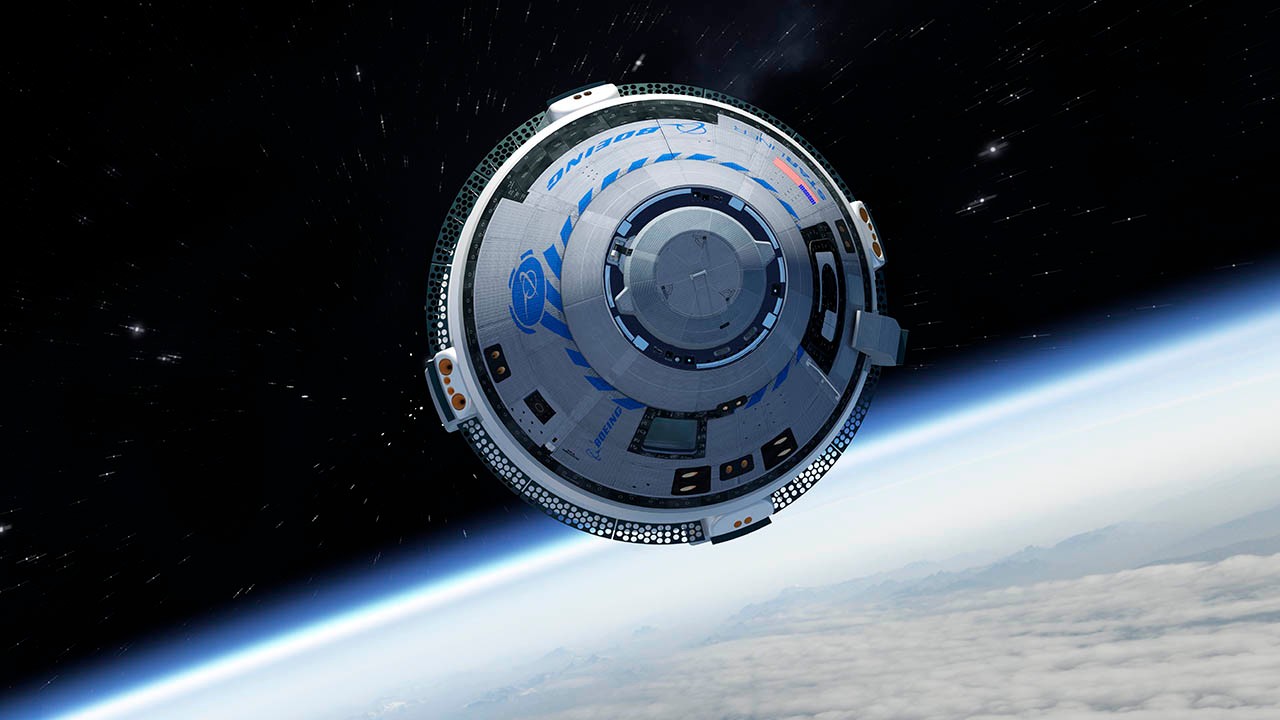
—Space.com: “New NASA Astronauts ‘Thrilled’ to See 1st Boeing Starliner Crew Launch in May“
A new spacecraft will at last launch its first crew in May, and a fresh group of NASA astronauts say they’re excited to support it. NASA’s newest astronaut group graduated from basic training on March 5, just in time for the first Boeing Starliner test launch with astronauts, which is now expected in May…When it’s up and running, Starliner will regularly carry astronauts to and from the ISS alongside SpaceX’s Crew Dragon vehicle, which began its own astronaut flights in 2020. The newest astronaut cohort can’t wait to climb on board the Boeing craft.
—Sky & Telescope: “Giant Ancient Volcano Discovered on Mars“
It’s not every day that a giant volcano is discovered hiding in plain sight. By reviewing satellite imagery from many missions, scientists have spotted the remains of a colossal volcano on Mars. The volcano, provisionally named “Noctis Mons,” had been imaged repeatedly since the early 1970s, but extensive erosion had concealed it from view. Researchers have also spotted hints at an adjacent glacier buried underneath the volcanic slopes. Noctis Mons is located near the Martian equator, in the eastern part of the Tharsis volcanic province, sandwiched between the vast canyons of Valles Marineris and the fractured maze-like terrain of Noctis Labyrinthus.
—University of Ottawa: “New Research Suggests that Our Universe has No Dark Matter“
The current theoretical model for the composition of the universe is that it’s made of ‘normal matter,’ ‘dark energy’ and ‘dark matter.’…A University of Ottawa study published today challenges the current model of the universe by showing that, in fact, it has no room for dark matter...This discovery challenges the prevailing understanding of the universe, which suggests that roughly 27% of it is composed of dark matter and less than 5% of ordinary matter, remaining being the dark energy.
 Our Awesome Universe