Podcast: Crash Course Pods – The Universe

If you are looking for another podcast on astronomy with some deep ideas, then you will want to tune into Crash Course Pods: The Universe. It’s a discussion between author John Green (Looking for Alaska, The Fault in Our Stars) and Dr. Katie Mack, a theoretical astrophysicist and author of The End of Everything (Astrophysically Speaking). It is not your usual combination for such a show, but it works.

Only one episode has been release to date, but it is enough to keep your head spinning. It may also merit another listen just to be certain you heard what you think you heard. The topic is the beginning of the universe, which is not the straightforward tale I have been hearing for the past number of years. The Big Bang is much more complex, and her statement about hydrogen goes beyond that of Carl Sagan, who said we are all “Star Stuff.” She notes that we are still mostly made of hydrogen atoms that were created in the first two minutes of the universe, so a lot of us precedes the stars.

Dr. Mack noted that her students sometimes find it difficult to follow her stories, so this is your warning that you are jumping into the deep end with this podcast. The only saving grace is John Green’s questions and humor to keep us afloat.

Just try it our for yourself. I think you will want to stick around for the second episode.
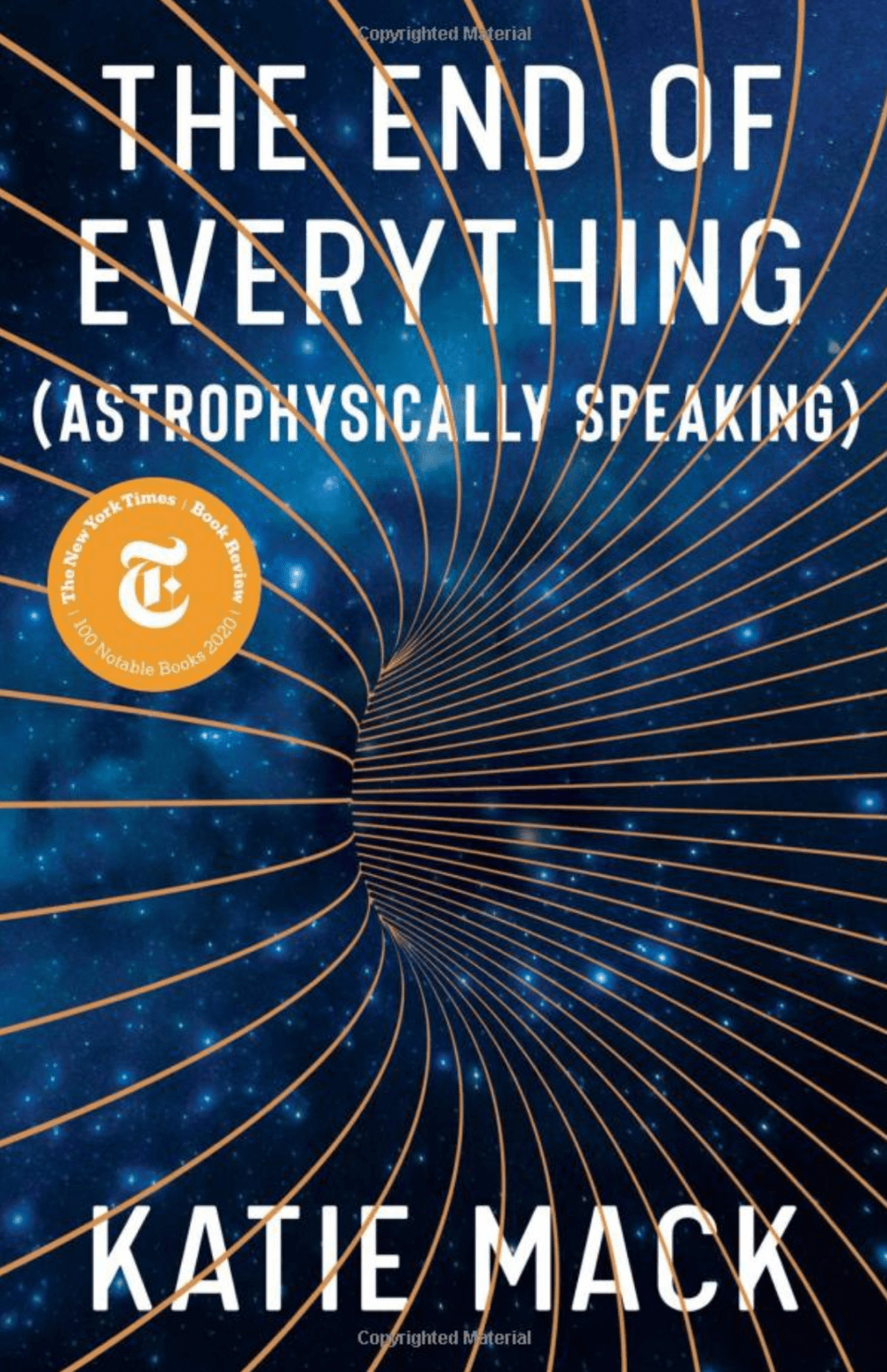
Credit: Scribner

Original U.S.S. Enterprise Reappears

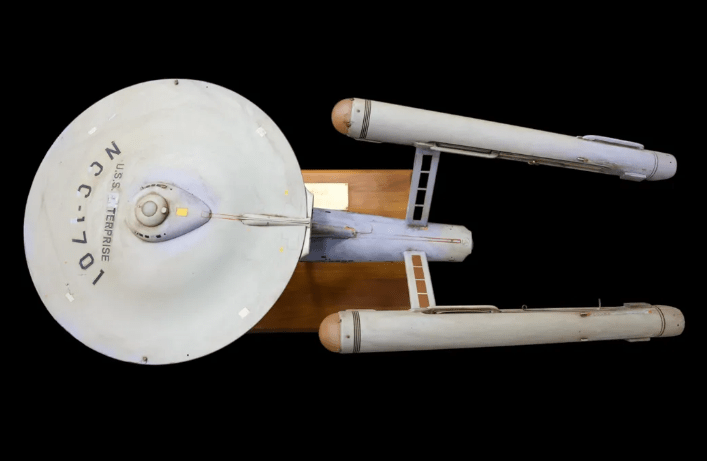
Image (Credit): The original Enterprise model, which is made from solid wood. (Heritage Auctions)

You may have thought the original USS Enterprise from the Star Trek series was at the Smithsonian Museum, and you are right. Mostly.

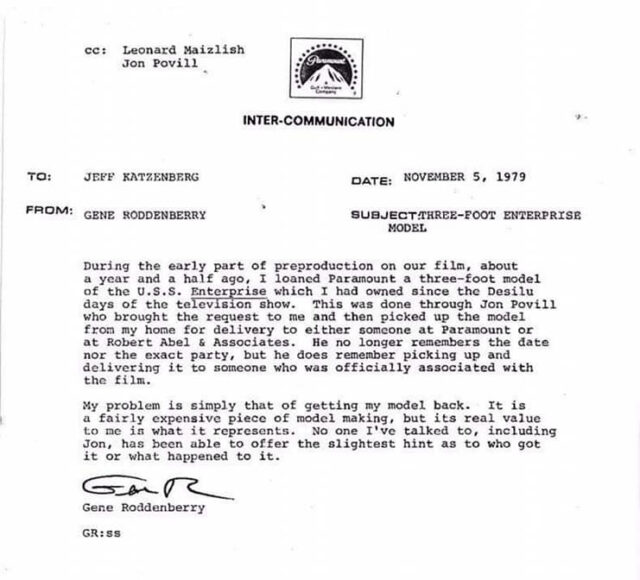
In 1974, the Smithsonian’s National Air and Space Museum became the proud owner of the 11-foot long USS Enterprise model used in the television series. However, there was another model that was used in the opening credits. This other model was only three feet long and made of wood. And, most importantly, it disappeared year’s ago when it was loaned to the studio making the first Star Trek movie (see letter below).

The smaller model then reappeared recently, but this time priced at $1,000 on eBay. After a lot of questions (the model was said to have been in a storage unit that was auctioned off) , it was eventually returned to Eugene “Rod” Roddenberry Jr., the son of the creator of Star Trek.

All is well that ends well. The USS Enterprise model is back with the Roddenberry family and a piece of science fiction history can be shared with public. Mr. Roddenberry said he plans to display this smaller model at the Smithsonian as well:

I firmly believe that a piece of such importance should not be confined to any private collection. This iconic artifact should be enshrined along side the 12-foot shooting model at the Smithsonian’s National Air and Space Museum, where it can serve to help tell the story of television history, the history of space exploration and ultimately, a beacon of hope for the future.

Image (Credit): Letter from Gene Roddenberry to Paramount Studios regarding his lost USS Enterprise model (therpf.com)

Space Quote: Preparing for the Boeing Starliner’s Crewed Mission

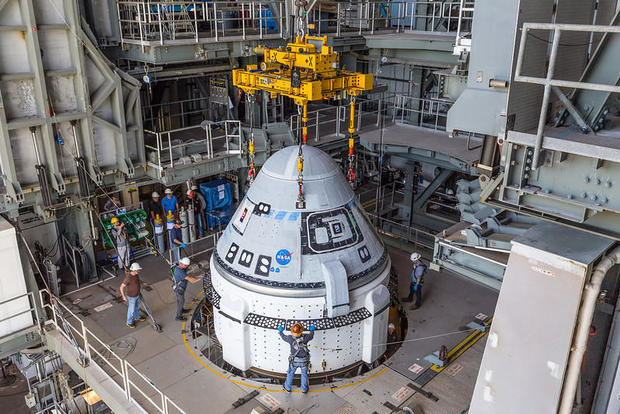
Image (Credit): Boeing’s Starliner spacecraft being placed atop an Atlas 5 rocket at the Cape Canaveral Space Force Station. (United Launch Alliance)

“Today was a was a huge day for our Commercial Crew Program…All the (international) partners and then our whole team polled ‘go’ to proceed to the launch on May 6. Not only that, but we (signed) what we call an interim human rating for Starliner for this crewed flight test. … It was a was a huge deal for NASA and our entire team.”

-Statement by Steve Stich, manager of the Commercial Crew Program for NASA, as quoted by CBS News. After numerous delays, the Starliner’s first Crew Flight Test will take place on May 6. If successful, the Starliner will start bringing astronauts to the International Space Station (ISS) in 2025. This will provide NASA with greater redundancy in its ISS resupply runs.

NASA Experiences Early Success with its Solar Sail

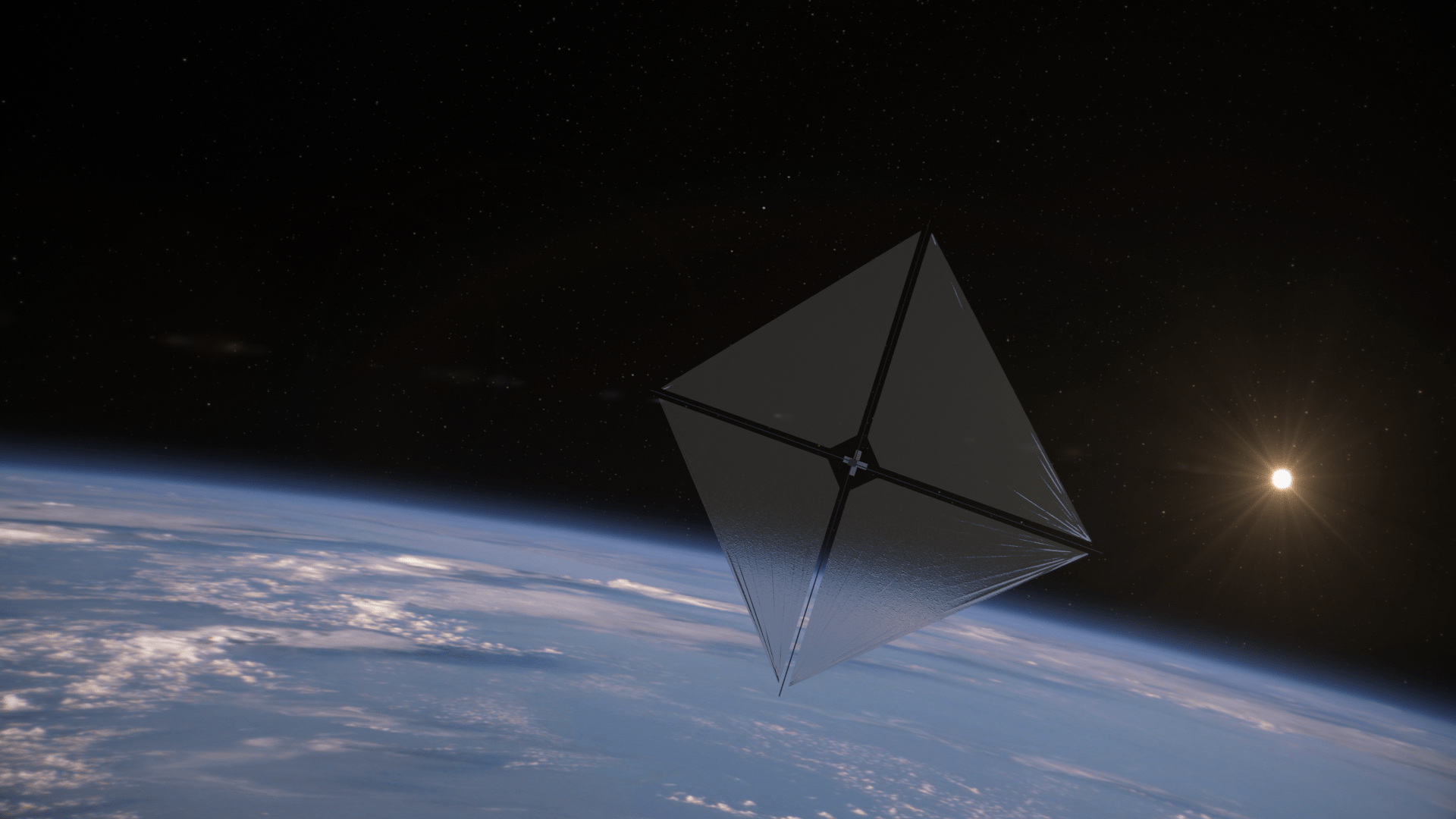
Image (Credit): Artist’s rendering of NASA’s Advanced Composite Solar Sail System spacecraft in Earth Orbit. (NASA/Aero Animation/Ben Schweighart)

On Tuesday, NASA’s Advanced Composite Solar Sail System was launched from New Zealand aboard a Rocket Lab’s Electron rocket. The successful launch was followed shortly thereafter by the deployment of an 80 square meter experimental solar sail.

In describing the mission, NASA noted:

Like a sailboat turning to capture the wind, the solar sail can adjust its orbit by angling its sail. After evaluating the boom deployment, the mission will test a series of maneuvers to change the spacecraft’s orbit and gather data for potential future missions with even larger sails.

If all goes well, larger sails will be developed to potentially replace large rocket engines and accompanying fuel tanks for future trips to the Moon, Mars, other parts of the solar system, and even interstellar locations.

You might be able to see the solar sail in the night sky as it orbits the Earth, so keep looking up.