A UFO on the Moon?

Image (Credit): View of the KPLO above the lunar surface. (NASA/GSFC/Arizona State University)

The grainy image above may remind you of some of the UFO images that circulated years ago. However, in this case, the image is from the Moon as captured by NASA’s Lunar Reconnaissance Orbiter.

What you are seeing is a Korean spacecraft going thousands of miles per hour (hence the blurred, elongated image). Named the Korea Pathfinder Lunar Orbiter (KPLO), or the Danuri, the spacecraft is part of South Korea’s first lunar mission launched in August 2022. Korea is the seventh nation to send an orbiter to the Moon.

Below is an image of the KPLO minus the blurring speed. The spacecraft was designed to orbit the Moon for one year collecting data, though it is still going strong after hitting its year anniversary back in December. As part of its mission, it is carrying a NASA camera, the ShadowCam, to observe shadowed areas on the Moon.

The Moon is a busy place these days.
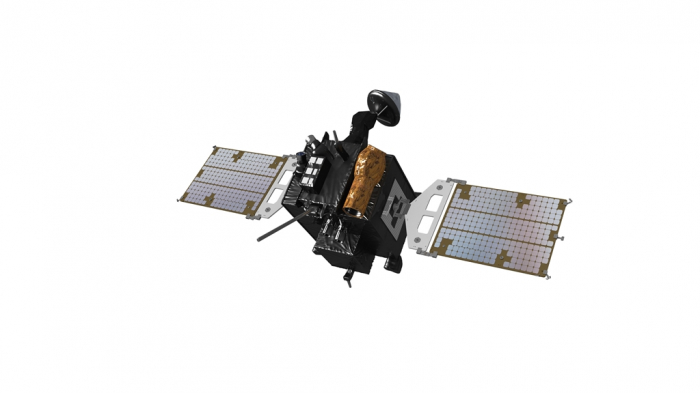
Image (Credit): Illustration of the KPLO. (The Korean Economic Daily)

Space Stories: Voyager 1 Gibberish, Lunar Rovers Underway, and the Largest Digital Camera

Image (Credit): Artist’s rendering of the Voyager 1 spacecraft. (NASA)

Here are some recent stories of interest.

ScienceAlert: NASA Has Finally Identified The Reason Behind Voyager 1’s Gibberish

For months now, the most distant spacecraft to Earth – Voyager 1 – has been talking gibberish on the interplanetary ‘radio’. The repetitive jumble of 1s and 0s it’s sending back to our planet, 24 billion kilometers (15 billion miles) away, has made no sense to scientists until now. Turns out, officials at NASA just needed to give the oh-so-distant craft a bit of a ‘poke’ to ask it how it was feeling. The system returned a software readout to Earth that scientists have now used to confirm about 3 percent of its memory is corrupted. Which is why turning the FDS on and off didn’t resolve the issue back in November of 2023.

CBS News: 3 Companies Win NASA Contracts to Develop New Artemis Moon Rover Designs

Along with funding the commercial development of new rockets, Artemis moon landers and new spacesuits, NASA is pressing ahead with plans to buy an unpressurized moon rover that can carry astronauts, science payloads — or both — across the rugged terrain of the lunar south pole, officials said Wednesday. The agency announced contract awards to three companies to develop competing designs for a Lunar Terrain Vehicle, or LTV, similar in concept to the rovers that carried the last three Apollo crews across the moon’s surface more than 50 years ago.

NOIRLab: Construction of Largest Digital Camera Ever Built for Astronomy Completed

After two decades of work, scientists and engineers at the Department of Energy’s SLAC National Accelerator Laboratory and their collaborators are celebrating the completion of the LSST Camera. Once mounted on Vera C. Observatory’s Simonyi Survey Telescope, the 3200-megapixel camera will help researchers observe our Universe in unprecedented detail. During its ten-year Legacy Survey of Space and Time, the LSST Camera will generate an enormous trove of data on the southern night sky that researchers will mine for new insights into dark energy, dark matter, the changing night sky, the Milky Way and our Solar System.

Telescopes Caught the Eclipse From Across the Country

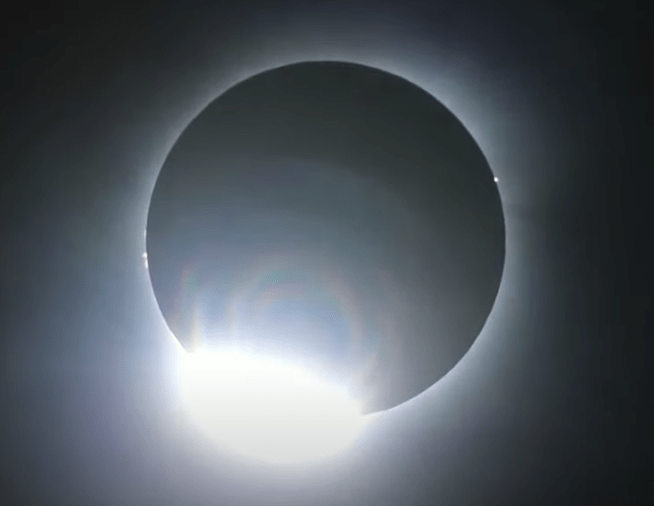
Image (Credit): TheTotal Solar Eclipse as seen in Houlton, Maine. (David Bowman of NASA Langley Research Center)

If you missed the Total Solar Eclipse or just want to see what it looked like in other parts of the country, NASA and other observatories have you covered. Check out the NASA video, “2024 Total Solar Eclipse: Through the Eyes of NASA (Telescope Feed),” showing the eclipse from Texas to Maine.

The Total Solar Eclipse Mayhem is Underway

No good astronomical event happens without accompanying pain, or so it would seem given all of the news stories about tomorrow’s eclipse. We are hearing plenty of stories about overpriced hotels, traffic jams, and even the intervention of FEMA. Just wait until you hear all of the stories about people who paid a fortune to find the eclipse blocked by clouds.

Here are a few of the crazy headlines from the areas impacted by the pending eclipse:

As far as hotel rooms, The Guardian news story above states:

Amid the clamor for accommodation, one travel agency said it had been forced to rearrange lodging for more than 150 people after bookings made two years earlier at two Buffalo hotels were canceled. Rooms that had cost $129 to $159 were canceled and resold at $450 or more, according to Sugar Tours, owner, Chris Donnelly, who said it was “total price gouging”.

It is all pretty silly, but no one wants to be left out. NASA will have the better pictures and eclipse details, given its planned rocket launches, yet these folks need something for Facebook or Instagram.

I do not really care for the crowds, so I will await the press stories and NASA images. Nonetheless, for those who feel the need to be on the front lines, I wish them a safe trip with clear skies.

Have You Heard of Orbital Drug Factories?

Credit: Varda Space Industries

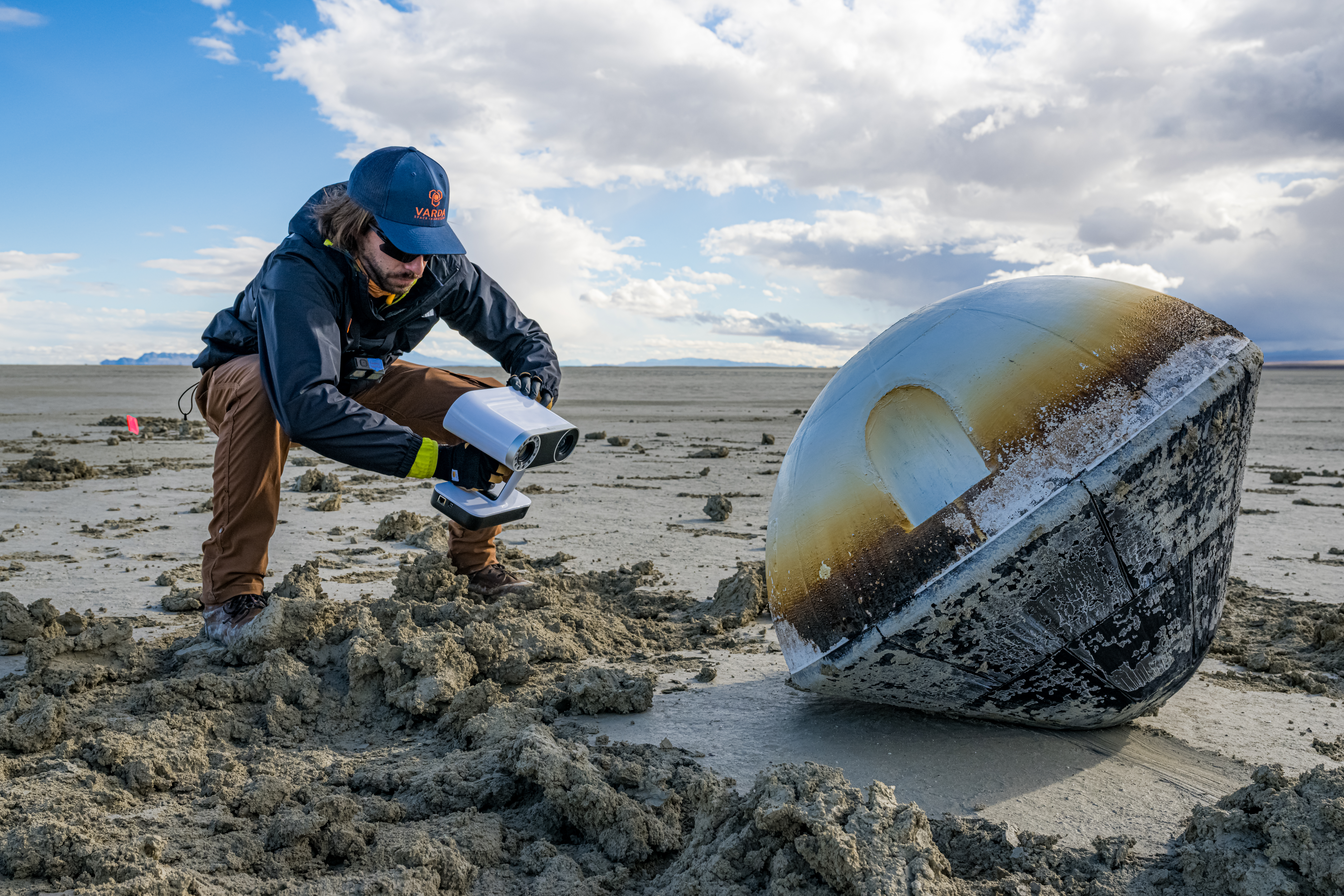
The International Space Station is not the only orbiting platform for experiments. Varda Space Industries has its own orbiting facility, or at least it had one in orbit for 10 months until it returned to Earth in February (shown below). And now the company has another $90 million in funding to continue to develop its capsules.

Varda, founded in 2020, represents the next phase of the space industry, where lower cost launches allow companies to be creative with their own spacecraft. In this case, biopharma is being asked to consider the advantages of a launches that remove gravity from the equation:

While gravitational forces do not directly impact thermodynamic properties of systems, they do significantly impact kinetic and hydrodynamic processes. Microgravity suppresses convection and sedimentation, resulting in more uniform supersaturation, as well as diffusion-driven transport. The resulting environment enables crystallization outcomes that lead to improvements in bioavailability, enhanced physicochemical properties, differentiated intellectual property, and new routes of administration — all realized by conducting research in microgravity.

While Varda is taking advantage of the lower launch costs made available by reusable rockets, it too wants to have reusable capsules down the line to reduce costs even further. Of course, it is not as glamorous as a permanently manned space station, but these crewless capsules should be sufficient for the needs of many if not most companies.

Note: Varda is also the name of a dwarf planet, which took its name from JRR Tolkien’s Middle Earth.

Image (Credit): The W-1 capsule after landing in the Utah desert. (Varda Space Industries/John Kraus)