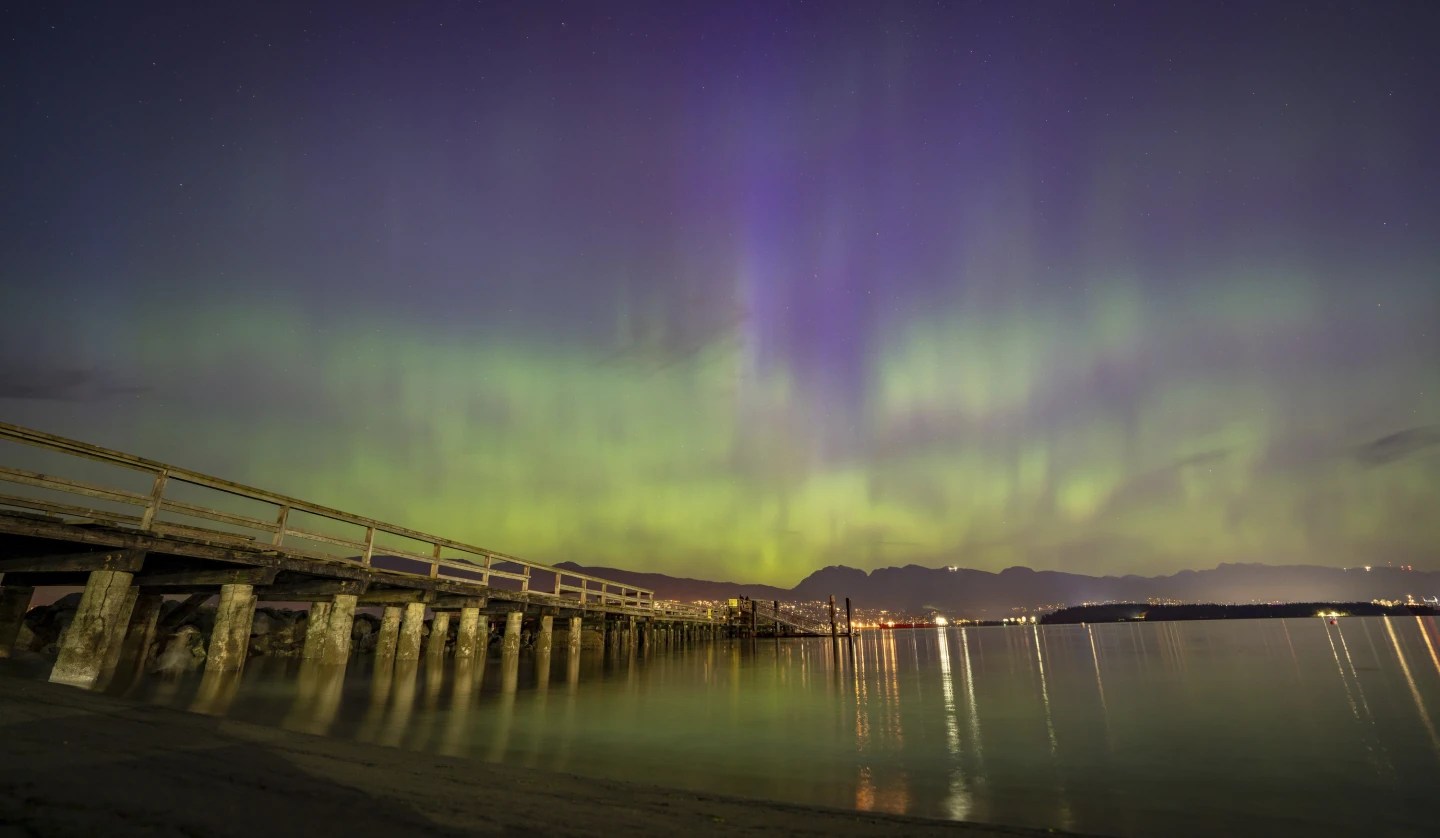
Image (Credit): Northern Lights in Vancouver, British Columbia on May 11. (Ethan Cairns/The Canadian Press via AP)
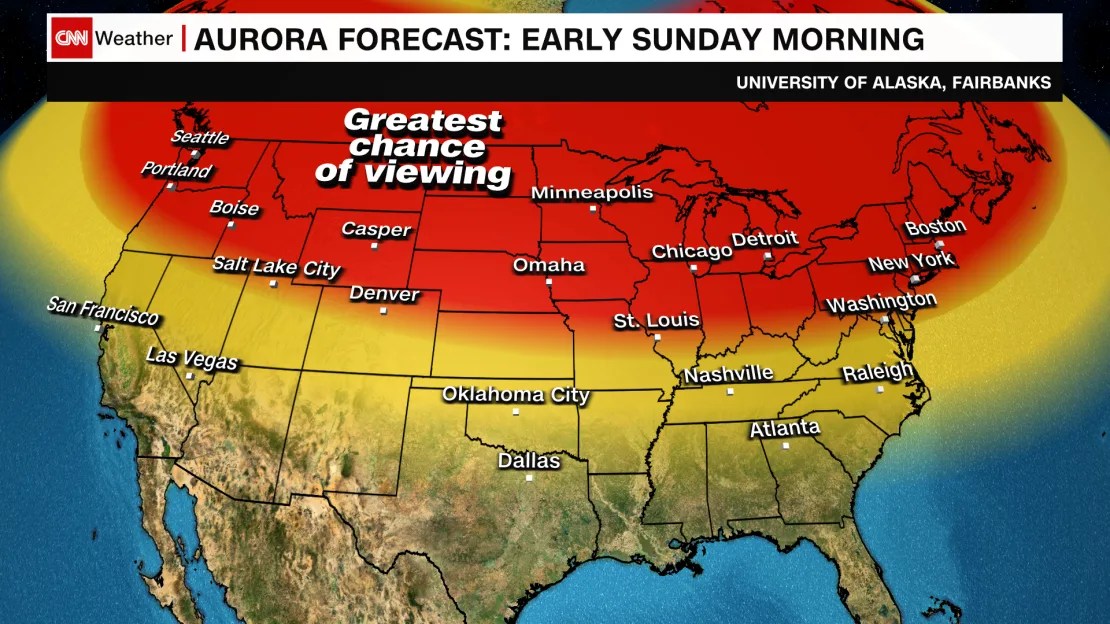
Tonight you can still capture the Northern Lights here in the U.S. After an 11-year absence. The solar event will have the greatest show in the Ohio River Valley through the Midwest and into the Pacific Northwest (see CNN map below). Amazingly, the show was seen as far south as Florida yesterday evening.
“An improved appropriation for FY 2025 of $9 billion for SMD will give the agency the necessary resources to pursue Decadal priorities such as the Earth System Observatory, Geophysical Dynamics Constellation, Habitable Worlds Observatory, and Mars Sample Return, while maintaining our nation’s highly-skilled workforce and fleet of operating and developing spacecraft including the Chandra X-Ray Observatory, Hubble Space Telescope, Perseverance and Curiosity rovers, among others. These investments in our high-tech STEM workforce and university systems will provide positive value to every congressional district.”
-Statement in a May 1, 2024 letter to the House Appropriations Subcommittee on Commerce, Justice, Science, and Related Agencies from 44 Members of Congress regarding increased funding to NASA related to its Science Mission Directorate (SMD). The letter notes that “…the FY 2025 President’s Budget Request of $7.6 billion for NASA Science represents a $1.1 billion decrease in purchasing power from its peak in FY 2020 and would be the smallest budget in eight years when adjusted for inflation.”
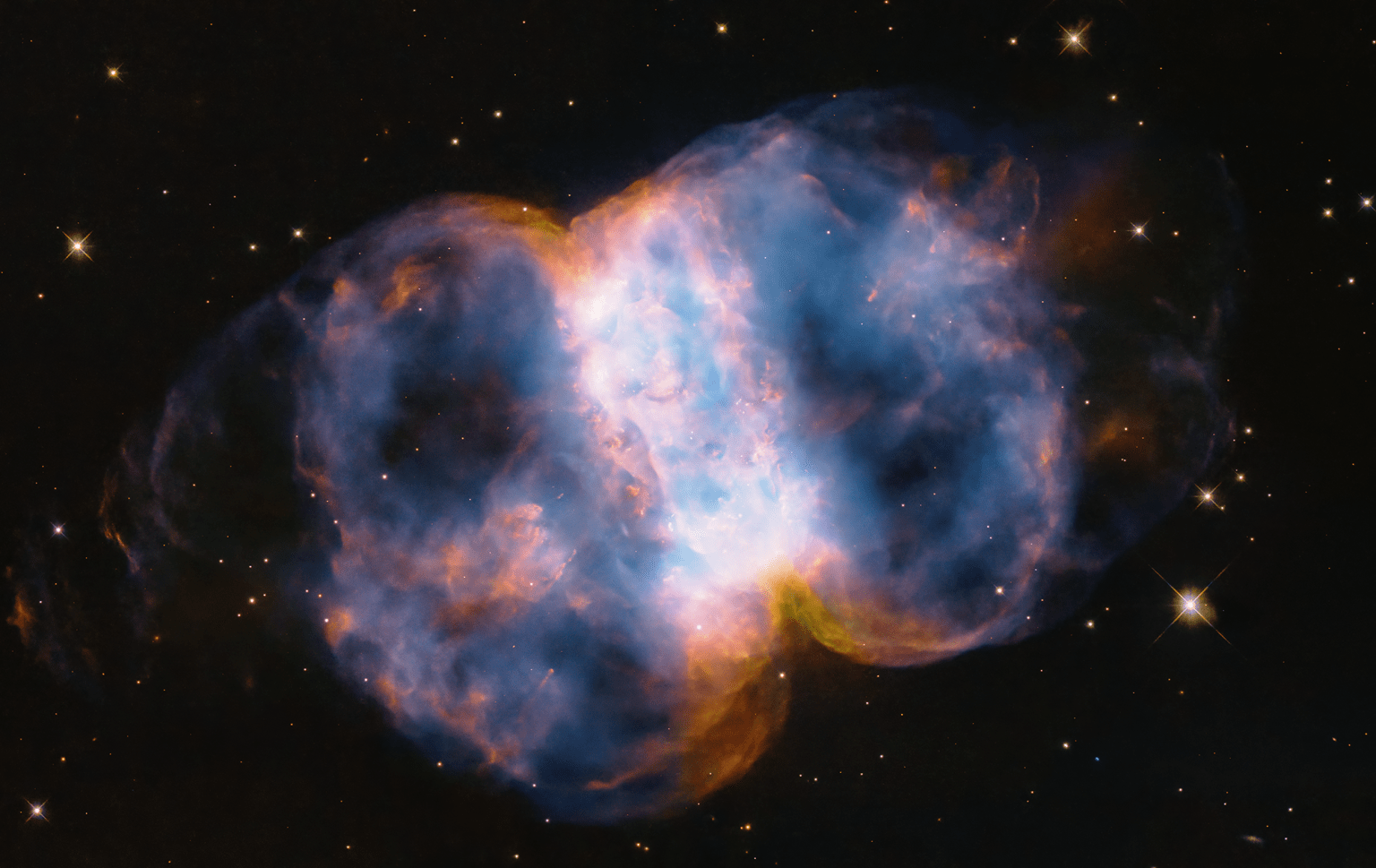
Image (Credit): The Little Dumbell Nebula as captured by the Hubble Space Telescope. (NASA, ESA, STScI)
This week’s image comes from the NASA/European Space Agency’s Hubble Space Telescope. It shows what is called the Little Dumbbell Nebula, more formally called Messier 76, M76, or NGC 650/651, which is about 3,400 light-years away. The image is being shared as part of the celebration of Hubble’s 34th anniversary, which is discussed in this video.
M76 is classified as a planetary nebula, an expanding shell of glowing gases that were ejected from a dying red giant star. The star eventually collapses to an ultra-dense and hot white dwarf. A planetary nebula is unrelated to planets, but have that name because astronomers in the 1700s using low-power telescopes thought this type of object resembled a planet.
M76 is composed of a ring, seen edge-on as the central bar structure, and two lobes on either opening of the ring. Before the star burned out, it ejected the ring of gas and dust. The ring was probably sculpted by the effects of the star that once had a binary companion star. This sloughed off material created a thick disk of dust and gas along the plane of the companion’s orbit. The hypothetical companion star isn’t seen in the Hubble image, and so it could have been later swallowed by the central star. The disk would be forensic evidence for that stellar cannibalism.
The primary star is collapsing to form a white dwarf. It is one of the hottest stellar remnants known at a scorching 250,000 degrees Fahrenheit, 24 times our Sun’s surface temperature. The sizzling white dwarf can be seen as a pinpoint in the center of the nebula. A star visible in projection beneath it is not part of the nebula.
Pinched off by the disk, two lobes of hot gas are escaping from the top and bottom of the “belt,” along the star’s rotation axis that is perpendicular to the disk. They are being propelled by the hurricane-like outflow of material from the dying star, tearing across space at two million miles per hour. That’s fast enough to travel from Earth to the Moon in a little over seven minutes! This torrential “stellar wind” is plowing into cooler, slower-moving gas that was ejected at an earlier stage in the star’s life, when it was a red giant. Ferocious ultraviolet radiation from the super-hot star is causing the gases to glow. The red color is from nitrogen, and blue is from oxygen.
Given our solar system is 4.6 billion years old, the entire nebula is a flash in the pan by cosmological timekeeping. It will vanish in about 15,000 years.
The operations team determined this latest safe mode was triggered by a failure to properly unload momentum from the spacecraft’s reaction wheels, a routine activity needed to keep the satellite properly oriented when making observations. The propulsion system, which enables this momentum transfer, had not been successfully repressurized following a prior safe mode event April 8. The team has corrected this, allowing the mission to return to normal science operations. The cause of the April 8 safe mode event remains under investigation.
TESS is currently on an extended mission after accomplishing it primary two-year mission that located 66 confirmed exoplanets and 2,100 exoplanet candidates. Click here for a story about exoplanet HD 21749c, the first Earth-sized exoplanet discovered by TESS.
Based on NASA’s latest information, TESS has already located 440 confirmed exoplanets and 7,147 exoplanet candidates. And now that its back online, the search can continue.
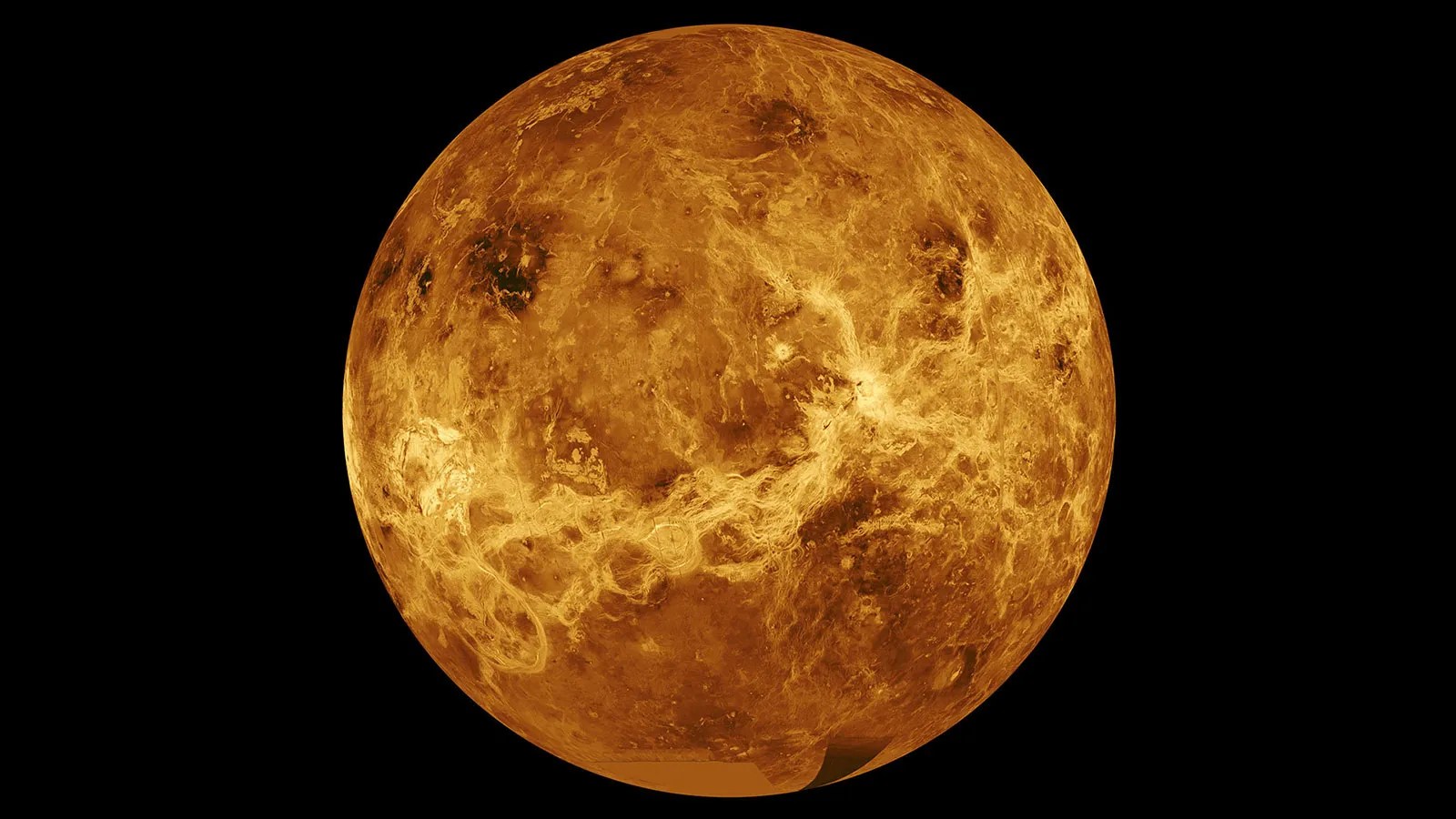
Planetary scientists at the University of Colorado Boulder have discovered how Venus, Earth’s scalding and uninhabitable neighbor, became so dry.The new study fills in a big gap in what the researchers call “the water story on Venus.” Using computer simulations, the team found that hydrogen atoms in the planet’s atmosphere go whizzing into space through a process known as “dissociative recombination” — causing Venus to lose roughly twice as much water every day compared to previous estimates.
Does another undetected planet languish in our Solar System’s distant reaches? Does it follow a distant orbit around the Sun in the murky realm of comets and other icy objects? For some researchers, the answer is “almost certainly.” The case for Planet Nine (P9) goes back at least as far as 2016. In that year, astronomers Mike Brown and Konstantin Batygin published evidence pointing to its existence. Along with colleagues, they’ve published other work supporting P9 since then. Now, they’ve published another paper along with colleagues Alessandro Morbidelli and David Nesvorny, presenting more evidence supporting P9. It’s titled “Generation of Low-Inclination, Neptune-Crossing TNOs by Planet Nine.” It’s published in The Astrophysical Journal Letters.
Data from the James Webb Space Telescope (JWST) has shown that an exoplanet around a star in the constellation Leo has some of the chemical markers that, on Earth, are associated with living organisms. But these are vague indications. So how likely is it that this exoplanet harbours alien life? …The planet in question is named K2-18b. It’s so named because it was the first planet found to orbit the red dwarf star K2-18.


 Our Awesome Universe