Image (Credit): A current map showing the location of the Tunguska Event in Russia. (Wikipedia)
It was on this day in 1908 that about 800 square miles of forest in Siberia were decimated in what was later attributed to an meteor exploding 3 to 6 miles above the Tunguska River area. As a result of the aerial explosion, no impact crater was created from what was called the Tunguska Event.
The meteor that hit Russia has been estimated top be 160–200 feet wide. The asteroid that passed by the Earth yesterday, 2024 MK, has been estimated to be 400 and 850 feet wide. We are lucky that we did not need to go through this again more than 100 years later.
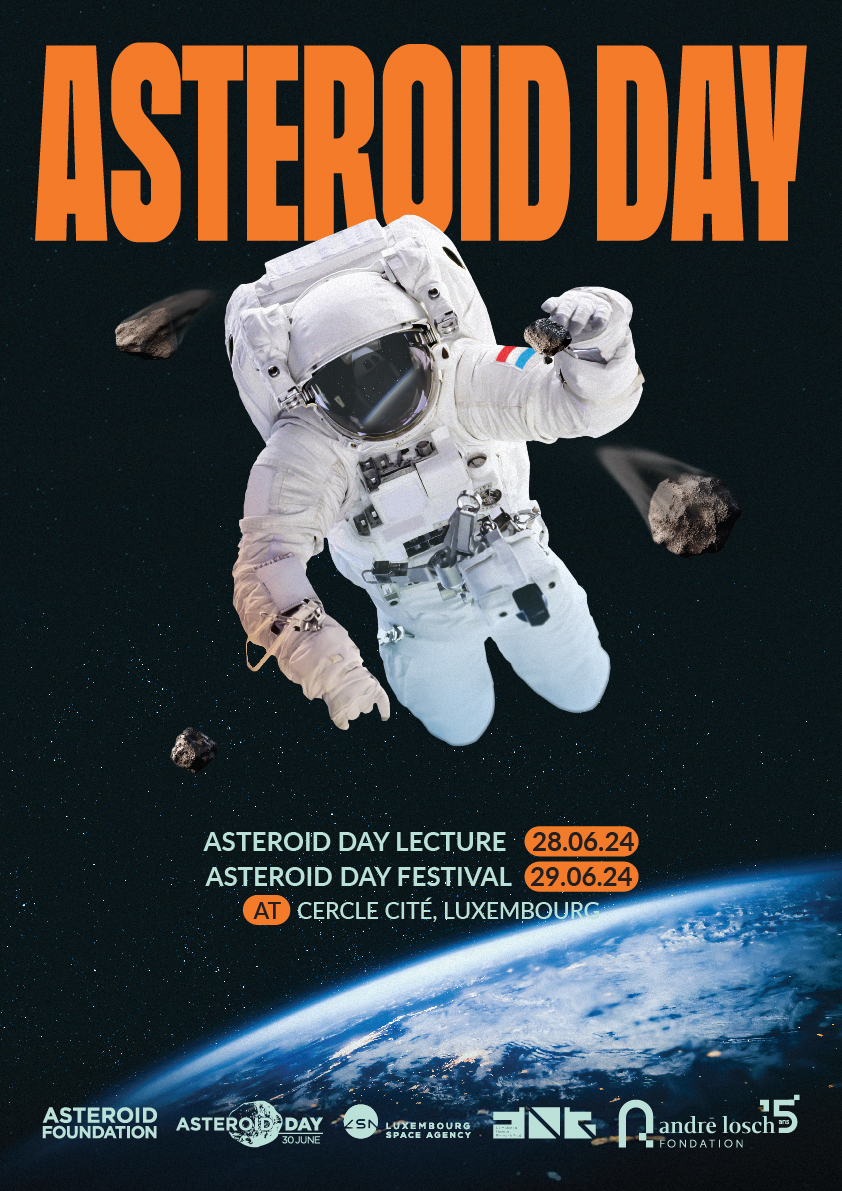
The Tunguska Event is the largest impact event in recorded history. It was this event that later inspired what we celebrate today – Asteroid Day.
Tomorrow we recognize Asteroid Day around the world, but today we witnessed an asteroid coming so close to the Earth that it was within the Moon’s orbit.
Asteroid 2024 MK flew past the Earth earlier today with no incident, but it was pretty close. Its closest approach was about 75 percent of the distance between Earth and the Moon. The asteroid, about the size of a skyscraper, would have made quite a mess had it hit us.
What is somewhat disturbing is that we have set up systems and processes to detect Near Earth Objects (NEO) to better prepare for potential collisions, yet this particular asteroid was first detected this month. Had it been on a collision course, we would have had less than two weeks to prepare.
NASA and others continue with efforts to step up NEO detection. One planned improvement is the NEO Surveyor, which will be the first space telescope specifically designed to locate potentially hazardous NEOs. The NEO Surveyor is scheduled to launch in June 2028.
Better detection, as well as defenses, can help to ensure we have many more Asteroid Days far into the future.
Take a look at the image above. Can you determine where this image originated? Take a guess and then check your answer by going to the “Where is This? The Answer Sheet” page.
What is that strange brown ribbon on the sky? When observing the star cluster NGC 4372, observers frequently take note of an unusual dark streak nearby running about three degrees in length. The streak, actually a long molecular cloud, has become known as the Dark Doodad Nebula. (Doodad is slang for a thingy or a whatchamacallit.) Pictured here, the Dark Doodad Nebula sweeps across the center of a rich and colorful starfield. Its dark color comes from a high concentration of interstellar dust that preferentially scatters visible light. The globular star cluster NGC 4372 is visible as the fuzzy white spot on the far left, while the bright blue star gamma Muscae is seen to the cluster’s upper right. The Dark Doodad Nebula can be found with strong binoculars toward the southern constellation of the Fly (Musca).
SpaceX successfully launched its first Falcon Heavy of the year on Wednesday evening, the triple-barreled booster lifting the 11,000-pound (5,000-kilogram) Geostationary Operational Environmental Satellite (GOES-U) almost to Geostationary Earth Orbit (GEO) on behalf of the National Oceanic and Atmospheric Administration (NOAA). The Heavy—flying for the first time since November 2022 with a brand-new center core and pair of side-mounted strap-on boosters—went airborne from historic Pad 39A at Florida’s Kennedy Space Center (KSC) at 5:26 p.m. EDT, ten minutes after the opening of a two-hour “launch window”.
The Great Red Spot of Jupiter was observed by Webb’s Near-InfraRed Spectrograph (NIRSpec) in July 2022, using the instrument’s Integral Field Unit capabilities. The team’s Early Release Science observations sought to investigate if this region was in fact dull, and the region above the iconic Great Red Spot was targeted for Webb’s observations. The team was surprised to discover that the upper atmosphere hosts a variety of intricate structures, including dark arcs and bright spots, across the entire field of view. “We thought this region, perhaps naively, would be really boring,” shared team leader Henrik Melin of the University of Leicester in the United Kingdom. “It is in fact just as interesting as the northern lights, if not more so. Jupiter never ceases to surprise.”
Gravitational wave detectors, LIGO and Virgo, have detected a population of massive black holes whose origin is one of the biggest mysteries in modern astronomy. According to one hypothesis, these objects may have formed in the very early Universe and may compose dark matter, a mysterious substance filling the Universe. A team of scientists from the OGLE (Optical Gravitational Lensing Experiment) survey from the Astronomical Observatory of the University of Warsaw have announced the results of nearly 20-year-long observations indicating that such massive black holes may comprise at most a few percent of dark matter. Another explanation, therefore, is needed for gravitational wave sources. The results of the study were published in two articles, in Nature and the Astrophysical Journal Supplement Series.




 Our Awesome Universe

.jpg)