NASA Exploring Mars Sample Return Options

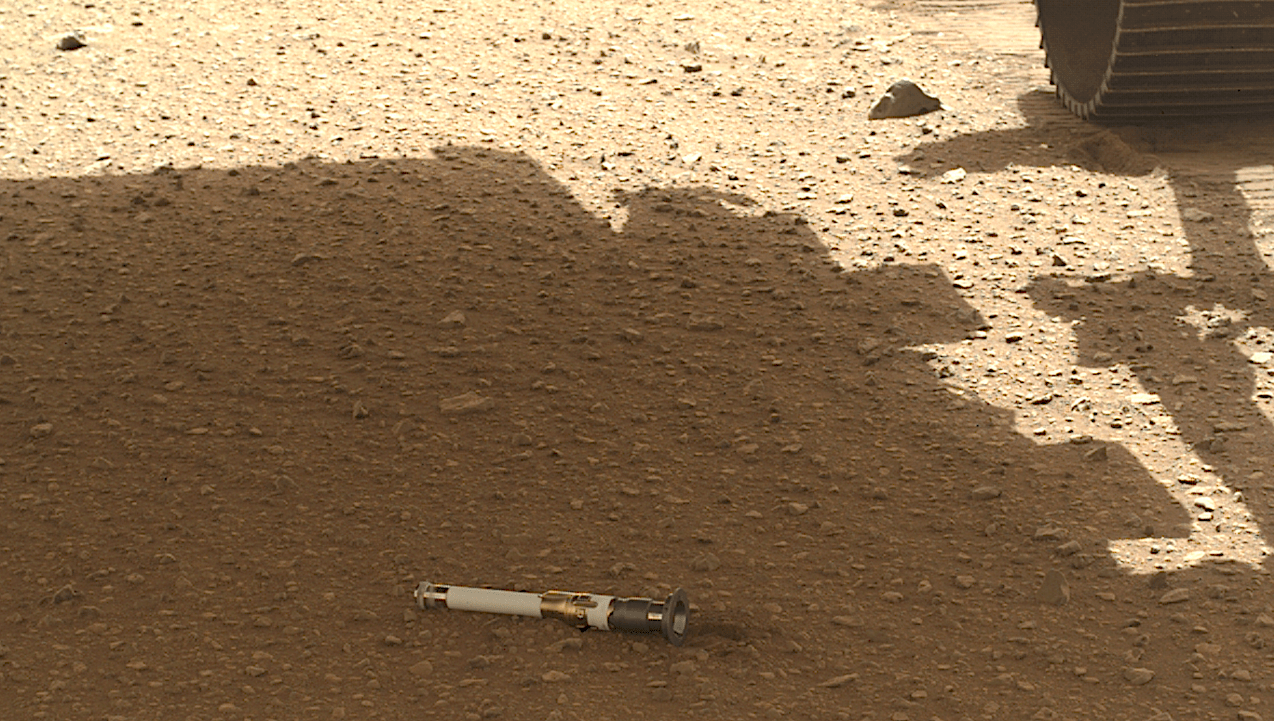
Image (Credit): One of the sample return canisters on the surface of Mars. (NASA)

With the pending budget cuts at NASA, the space agency is exploring new options for getting soil and rock samples back to Earth from MARs. To do this, NASA is setting it sights on 10 studies to identify new approaches to accomplish this mission, 7 of which come from private contractors and the other 3 from NASA centers, the Jet Propulsion Laboratory in Southern California, and Johns Hopkins’ Applied Physics Laboratory.

The seven private sector parties of interest and related proposals from earlier this year are as follows:

  • Lockheed Martin in Littleton, Colorado: “Lockheed Martin Rapid Mission Design Studies for Mars Sample Return”
  • SpaceX in Hawthorne, California: “Enabling Mars Sample Return With Starship”
  • Aerojet Rocketdyne in Huntsville, Alabama: “A High-Performance Liquid Mars Ascent Vehicle, Using Highly Reliable and Mature Propulsion Technologies, to Improve Program Affordability and Schedule”
  • Blue Origin in Kent, Washington: “Leveraging Artemis for Mars Sample Return”
  • Quantum Space in Rockville, Maryland: “Quantum Anchor Leg Mars Sample Return Study”
  • Northrop Grumman in Elkton, Maryland: “High TRL MAV Propulsion Trades and Concept Design for MSR Rapid Mission Design”
  • Whittinghill Aerospace in Camarillo, California: “A Rapid Design Study for the MSR Single Stage Mars Ascent Vehicle”

It is not clear why such a review needed to wait until so late in the game. NASA is always facing budget crunches. Maybe this can be a model for other ventures in the future as well.

Video: Cool Worlds Labs Emphasizes the Need for Greater NASA Funding

Image (Credit): A graphic explaining the various instruments on the Chandra X-ray Observatory. (NASA)

Even with a good space week in hand, we still need to keep an eye on NASA’s budget to maintain a robust set of programs to explore the cosmos. A recent Youtube video by Cool Worlds Labs, “NASA’s in Trouble,” highlights those budgetary issues and focuses on what individuals can do as well, such as visiting https://www.savechandra.org/ and asking Congress to restore funds cut from the Chandra X-ray Observatory.

Professor David Kipping makes it clear he is not going to remain silent while these cuts are being considered. He and his team demonstrate their love for astronomy in every video and podcast, making them great ambassadors in this debate for continued NASA funding.

The video is forthright about the internal issues creating budgetary issues. For example, the considerable cost overruns and delays prior to the launch of the now successful James Webb Space Telescope came at a cost to other NASA programs over many years. And similar overruns are expected with future large projects as well, further squeezing other line items in the budget.

The video also highlights some promising developments that could help to lower costs in the future, though the issue on the table now is NASA’s FY 2025 budget.

View the video for yourself to learn more about the proposed budget cuts as well as what you can do to help.

RIP: Bill Anders, Apollo 8 Astronaut

Image (Credit): The Earth and Moon as captured by Apollo 8 in 1968. (NASA)

This week Apollo astronaut Bill Anders, age 90, passed away. He died during a plane crash in Washington state.

He was part of an Apollo team that was the first humans to leave low Earth orbit in 1968. He was best known for his Christmas Eve photo of the Earth rising over the surface of the Moon (shown above).

Born in Hong Kong on October 17, 1933, he would graduate from the Naval Academy in 1955, obtain a masters in nuclear engineering, and then serve as a fighter pilot in the US Air Force. In 1964, he was selected by NASA to be an astronaut, serving as a backup pilot for both the Gemini XI and Apollo 11 flights, and most famously serving as lunar module pilot for Apollo 8.

Regarding his “Earthrise” image, Mr. Anders said:

The only color that we could see and contrasted by this really unfriendly, stark lunar horizon, made me think, ‘You know, we really live on a beautiful little planet.’

You can watch a NASA video on Mr. Stafford’s accomplishments here as well as more information on his life here.

You can also read more on Mr. Anders’ life and career at these sites:

Rest in peace.

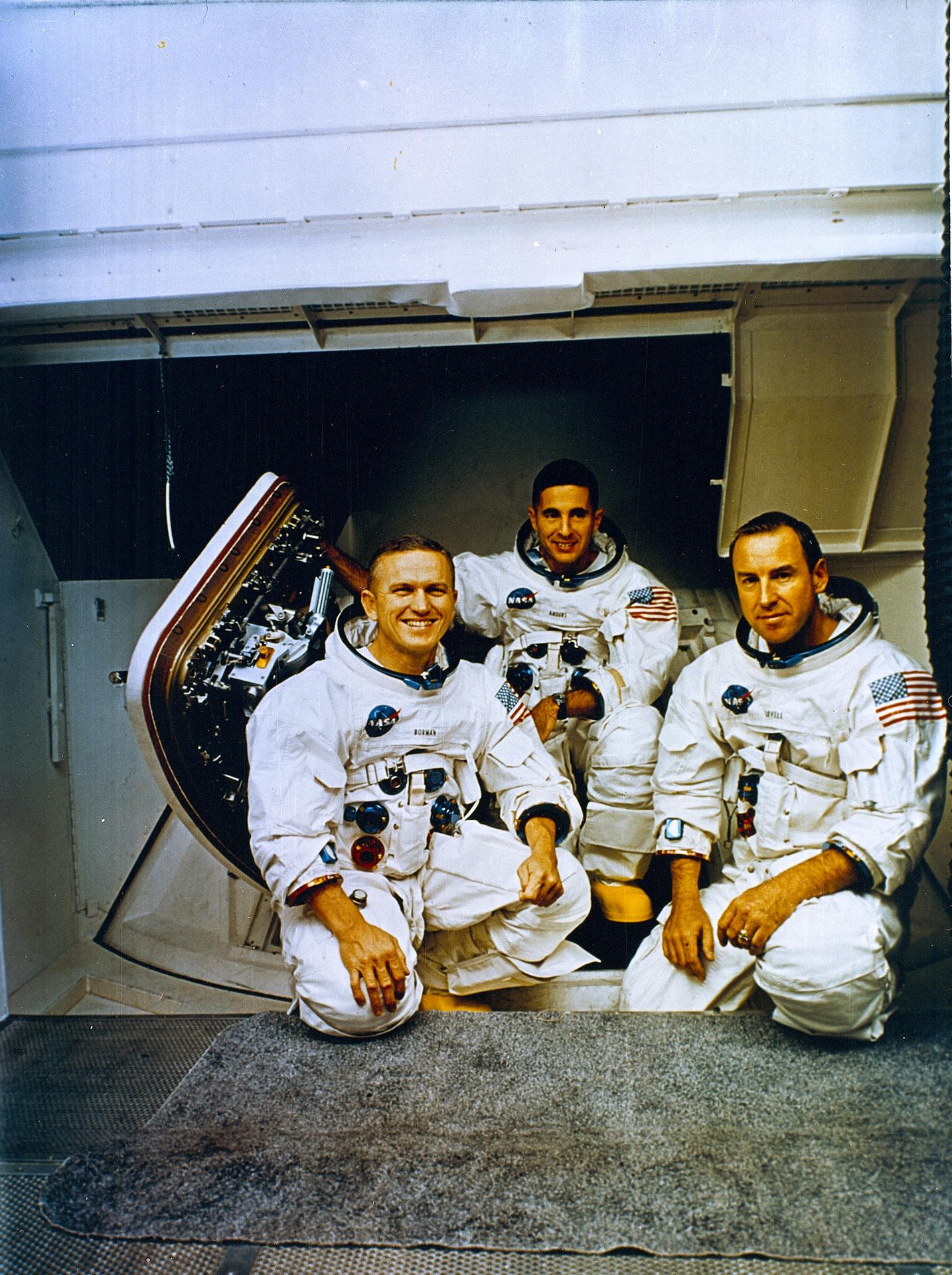
Image (Credit): The Apollo 8 Crew (left to right) Frank Borman, commander; William Anders, Lunar Module Pilot; and James Lovell, Command Module pilot pose in front of the Apollo mission simulator during training. (NASA)

Not Everyone Needs to be Part of the Space Age

With the recent success of Boeing’s Spaceplan and SpaceX’s Starship, we need to remember that not every country needs to be part of the space age.

Fortunately, less that two weeks ago we learned that lesson when North Korea flubbed it launch of a spy satellite that was sure to cause problems. The rocket did not even make it past it’s first stage.

Unfortunately, North Korea already has a single spy satellite in orbit.

North Korea appears to be having much better luck launching rubbish-filled balloons and sending them into South Korean airspace. The South Korean government called the gesture ““unimaginably petty and low-grade behaviour.”

Pic of the Week: Forth Starship Test is a Success

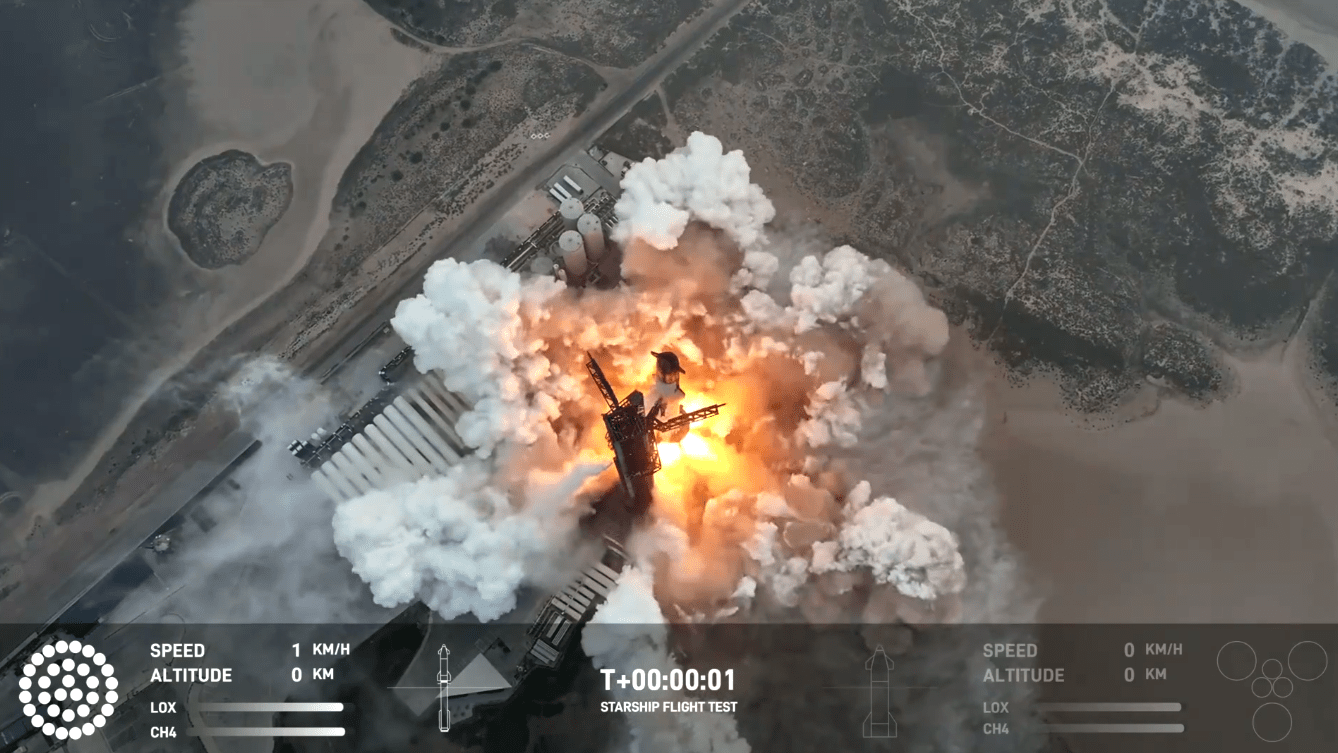
Image (Credit): The Starship rocket lifting off its launch pad in Texas earlier today. (SpaceX)

This week’s image shows the launch of the forth test of SpaceX’s Starship, which went further than any of the tests to date. In it’s summary of the flight, SpaceX noted:

Flight 4 ended with Starship igniting its three center Raptor engines and executing the first flip maneuver and landing burn since our suborbital campaign, followed by a soft splashdown of the ship in the Indian Ocean one hour and six minutes after launch.

You can see the full flight in this video.

As with yesterday’s successful launch of Boeing’s Starliner, today’s successful flight gave NASA greater assurance that the commercial sector is picking up the pace to assist the U.S. with both the International Space Station and Artemis program to the Moon (and eventually Mars).

Note: I like The Economist’s headline on the mission: “Elon Musk’s Starship Makes a Test Flight Without Exploding.”