
Here are some recent stories of interest.
—Live Science: “Why the 1st Week of August is the Best Time to See ‘Shooting Stars’ and the Milky Way — No Telescope Required“
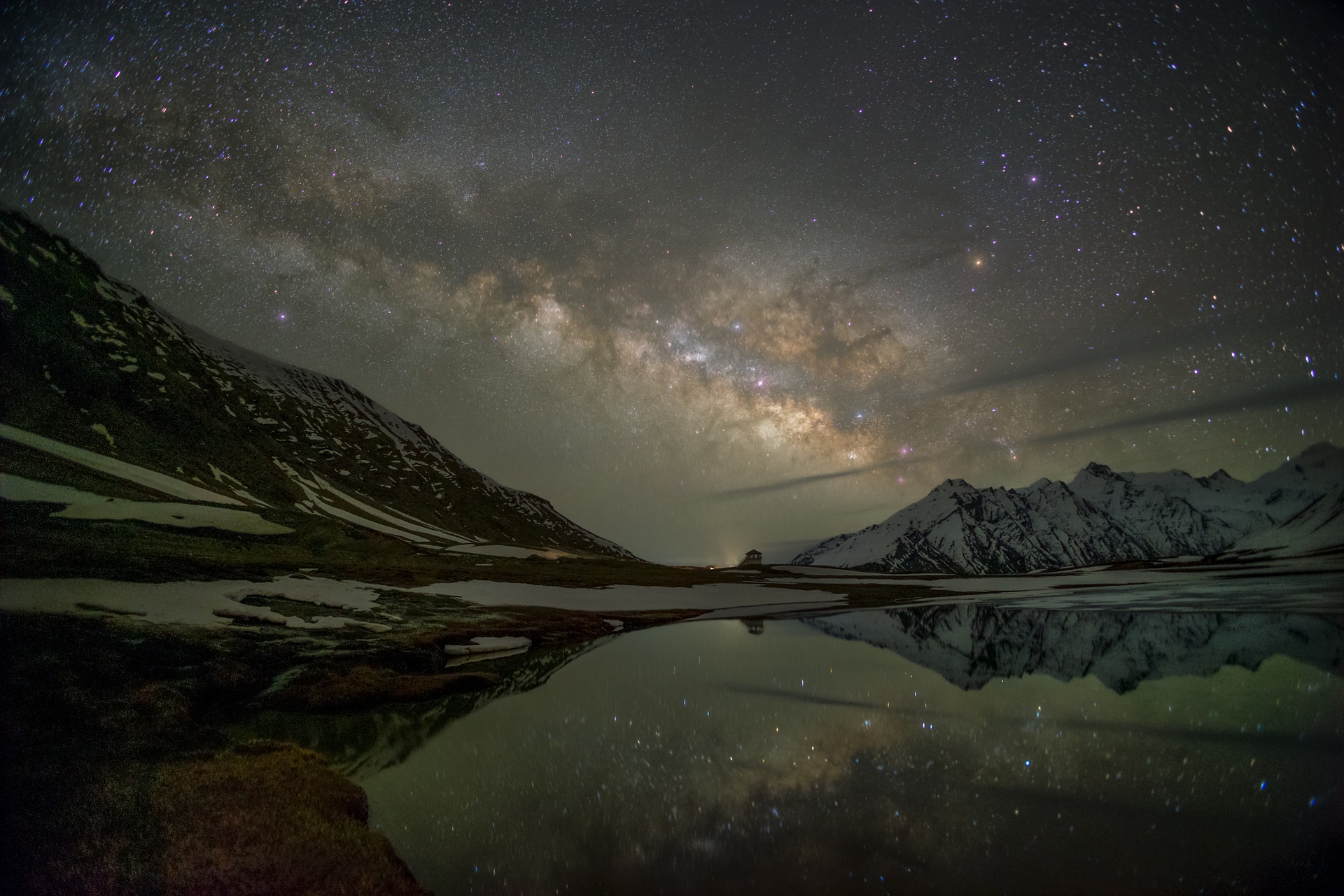
The arrival of August means two things for stargazers — “shooting stars” and the Milky Way. In 2024, you can see both at the same time if you know exactly where and when to look…This month, there’s a new moon on Aug. 4, which will keep the post-sunset sky dark until about Aug. 8. That makes the first week of August ideal for spotting “shooting stars” — while you also look for the Milky Way. True darkness won’t come until midnight for most of the Northern Hemisphere, but look to the southeast after dark, and you’ll have a chance of seeing the Sagittarius arm of the Milky Way arching across the night sky.
—Max Planck Institute for Astronomy: “Webb Images Nearest Super-Jupiter, Opening a New Window to Exoplanet Research“
Using the James Webb Space Telescope (JWST), an MPIA-led team of astronomers imaged a new exoplanet that orbits a star in the nearby triple system Epsilon Indi. The planet is a cold super-Jupiter exhibiting a temperature of around 0 degrees Celsius and a wide orbit comparable to that of Neptune around the Sun. This measurement was only possible thanks to JWST’s unprecedented imaging capabilities in the thermal infrared. It exemplifies the potential of finding many more such planets similar to Jupiter in mass, temperature, and orbit. Studying them will improve our knowledge of how gas giants form and evolve in time.
—Nature: “AI ‘Deepfake’ Faces Detected Using Astronomy Methods“
Researchers are turning to techniques from astronomy to help spot computer-generated ‘deepfake’ images — which can look identical to genuine photographs at first glance. By analysing images of faces using methods that are usually used to survey distant galaxies, astronomers can measure how a person’s eyes reflect light, which can reveal telltale signs of image manipulation.
 Our Awesome Universe