Study Findings: Which Caves on Mars are Safe to Live In?

Image (Credit): A region in Chryse Planitia where Tiu, Ares, and Kasei Valles end, which is pockmarked by impact craters large and small. (HiRISE/The University of Arizona)

Here are some highlights from the paper presented at the 55th Lunar and Planetary Science Conference:

For reliable protection against cosmic radiation, living and working spaces for colonists are best built below the surface. These colonies also need to be provided with energy. And solar panels are not the best option because the solar radiation flux is much lower on Mars and the panels will be constantly dusted with dust due to frequent dust storms. A nuclear reactor may be the best option.

Humans also need constant access to water resources. From the point of view of the reliability of the future housing, a lava tube with strong walls best meets these requirements. It is a hollow formation in the crust, formed as a result of the release of volcanic lava. And based on the need to provide settlements with water, a more suitable case should be considered underground caves in glacial cracks with a gentle horizontal entrance. After all, there are already significant deposits of water ice under the surface. But the walls of such settlements will be less strong, and they will require more careful preparatory work.

Publication: 55th Lunar and Planetary Science Conference, held 11-15 March, 2024 at The Woodlands, Texas/Virtual. LPI Contribution No. 3040, id.1028

Contact Info: A. P. Vidmachenko, National University of Life and Environmental Sciences of Ukraine, Str. Heroyiv Oborony, 12, Kyiv, 03041, Ukraine, avidmachenko@gmail.com.

Link to paper: https://www.hou.usra.edu/meetings/lpsc2024/pdf/1028.pdf

Study-related stories:

More on the Recent Asteroid Flybys

Image (Credit): Asteroid 2024 MK captured by NASA’s Goldstone Solar System Radar. (NASA, JPL-Caltech)

Remember asteroid 2024 MK from last Saturday? Well, NASA has some nice shots (shown above) of the asteroid as it made it close approach to the Earth. It shows the 500 foot-wide asteroid in all of its scary glory. We were lucky to be nothing but observers that day.

Another asteroid that shot by the Earth on June 27th at a distance that was about 17 time the distance between the Earth and the Moon was asteroid UL21. This asteroid was not a surprise, having been spotted back in 2011. However, it had a surprise when viewed up close. The asteroid had its own moon (shown below).

I’m impressed we have these amazing images, but if they price for these images is a risky rendezvous then I can live without them.

Note: Another asteroid is coming our way next week – asteroid 2024 MT1. The asteroid is 260 feet in diameter and will be come much closer than UL21, or about four times the distance between the Earth and the Moon.

Image (Credit): Asteroid UL21 captured by NASA’s Goldstone Solar System Radar. You can see its moon as the small speck at the bottom of the image. (NASA, JPL-Caltech)

Pic of the Week: Happy Fourth of July!

Image (Credit): Six U.S. astronauts currently aboard the ISS. From left to right they are Jeanette Epps, Tracy Dyson, Butch Wilmore, Mick Barratt, Suni Williams, and Matt Dominick. The are holding copies of the Declaration of Independence, U.S. Constitution, and Bill of Rights. (NASA)

This week’s image comes from the International Space Station (ISS) where the U.S. astronauts have a message for all of us regarding the Fourth of July. You can watch the entire video here and hear a message from each of the astronauts – Mike Barratt, Matt Dominick, Tracy Caldwell Dyson, Jeanette Epps, Suni Williams and Butch Wilmore.

Space Quote: Turning the ISS into Very Expensive Space Junk

“Selecting a U.S. Deorbit Vehicle for the International Space Station will help NASA and its international partners ensure a safe and responsible transition in low Earth orbit at the end of station operations. This decision also supports NASA’s plans for future commercial destinations and allows for the continued use of space near Earth…The orbital laboratory remains a blueprint for science, exploration, and partnerships in space for the benefit of all.”

Statement by Ken Bowersox, associate administrator for Space Operations Mission Directorate at NASA Headquarters in Washington, regarding NASA announcement that SpaceX has been selected to develop and deliver the U.S. Deorbit Vehicle under a contract worth $843 million. This expensive Deorbit Vehicle should help to avoid problems on the ground as well as orbiting debris impacting space missions, as was the case on the International Space Station (ISS) a few days ago. The ISS is expected to continue operation until 2030.

Space Stories: Moss for Mars, Martian Space Rocks, and a Red Planet Practice Habitat

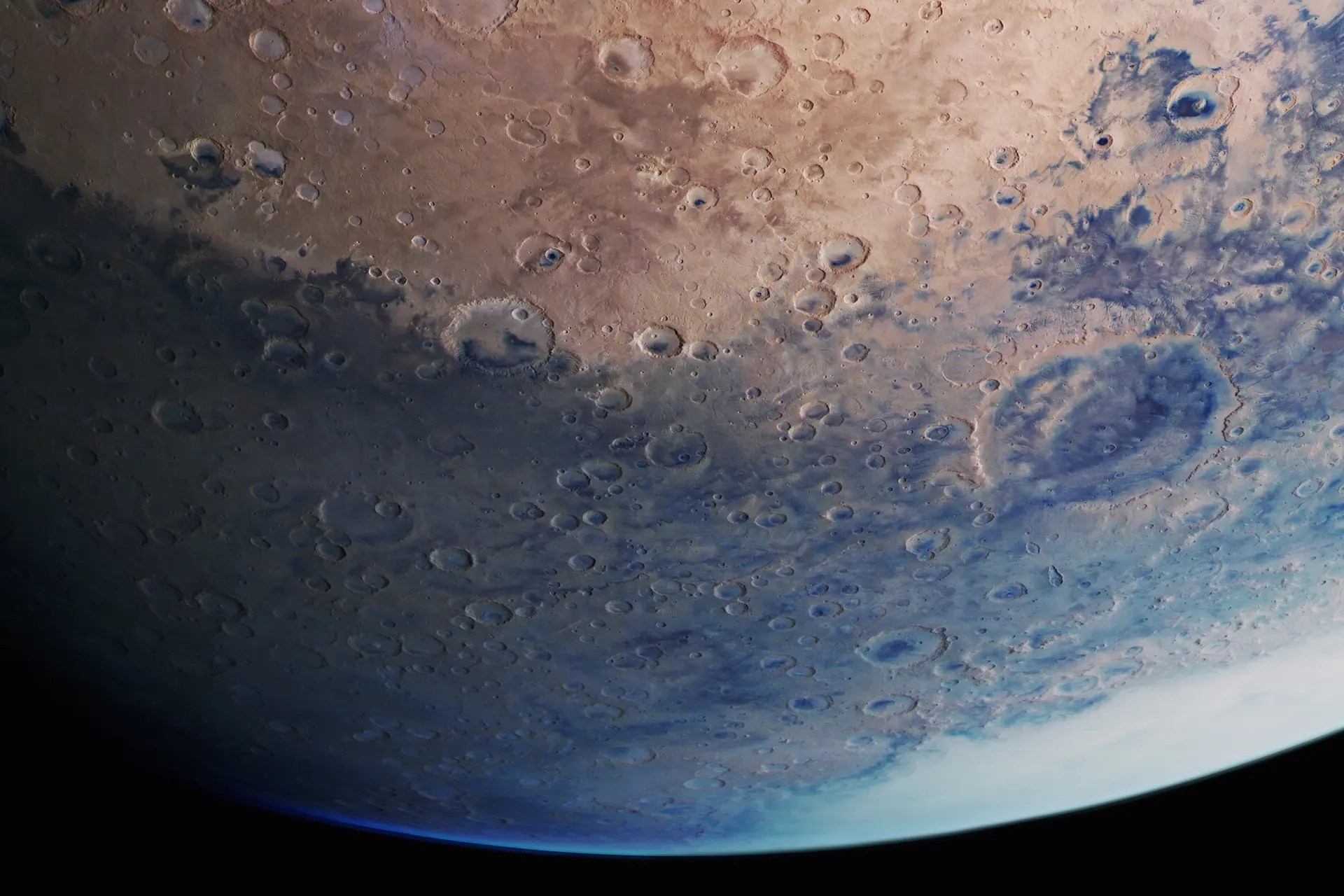
Image (Credit): A detailed view of the Martian surface. (ESA/DLR/FU Berlin)

Here are some recent Mars-related stories of interest.

The Guardian: Scientists Find Desert Moss ‘That Can Survive on Mars’”

While Matt Damon relied on potatoes cultivated in crew biowaste to survive in the hit film The Martian, researchers say it is a humble desert moss that might prove pivotal to establishing life on Mars. Scientists in China say they have found Syntrichia caninervis – a moss found in regions including Antarctica and the Mojave desert – is able to withstand Mars-like conditions, including drought, high levels of radiation and extreme cold.

CNN: Mars Gets Hit by Hundreds of Basketball-size Space Rocks Every Year

Hundreds of basketball-size space rocks slam into Mars each year, leaving behind impact craters and causing rumblings across the red planet, according to new research. Mission planners could use the revelations, recorded in data collected by a now-retired NASA mission, as they determine where to land future robotic missions as well as astronaut crews on the red planet. NASA’s InSight mission ended when the stationary lander lost a battle to an accumulation of Martian dust on its solar panels in December 2022, but the wealth of data the spacecraft collected is still fueling new research.

UPI: Crew Inside NASA’s Mars Habitat Simulator to Exit After More Than a Year

The first volunteer crew, to live for more than a year inside NASA’s Mars habitat at the Johnson Space Center in Houston, will exit the simulated Red Planet ground mission on Saturday…The crew entered CHAPEA on June 25, 2023, and enacted Mars mission operations, including virtual reality “Mars-walks” while growing and harvesting vegetables to supplement their shelf food. They also spent their time maintaining equipment while being tested with stressors, including isolation and communication delays with Earth.