
Here are some recent stories of interest.
—NBC News: “NASA Inspector General Gives Damning Assessment of Boeing’s Quality Control in New Report“
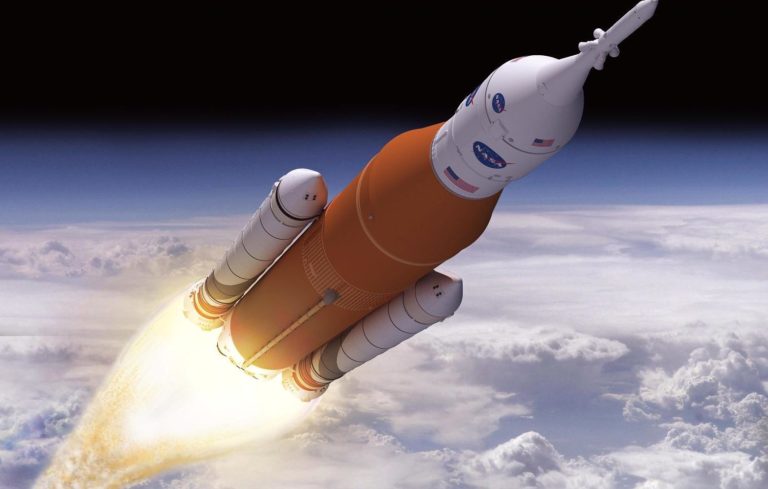
The report, released Thursday by NASA’s Office of Inspector General, calls into question Boeing’s standards and quality control for its part in NASA’s efforts to return astronauts to the moon. In NASA’s development of its next-generation megarocket, known as the Space Launch System, it gave Boeing the contract to build the rocket system’s powerful upper stage. But according to the report, Boeing’s quality control systems fall short of NASA’s requirements, and some known deficiencies have gone unaddressed. What’s more, the workers on the project are not, as a whole, sufficiently experienced or well trained, according to the inspector general.
—Space News: “NASA Payload to Fly on First Blue Origin Lunar Lander Mission“
A NASA payload will hitch a ride to the moon on Blue Origin’s first lunar lander mission, scheduled to launch as soon as next March. In an Aug. 6 procurement filing, NASA revealed it selected Blue Origin to fly a camera system to study how engine plumes interact with regolith at south polar regions of the moon, collecting data to support future crewed landing missions. The payload, called Stereo Cameras for Lunar Plume Surface Studies (SCALPSS), will fly through NASA’s Commercial Lunar Payload Services (CLPS) program.
—NASA: “How NASA Citizen Science Fuels Future Exoplanet Research“
NASA’s upcoming flagship astrophysics missions, the Nancy Grace Roman Space Telescope and the Habitable Worlds Observatory, will study planets outside our solar system, known as exoplanets. Over 5,000 exoplanets have been confirmed to date — and given that scientists estimate at least one exoplanet exists for every star in the sky, the hunt has just begun. Exoplanet discoveries from Roman and the Habitable Worlds Observatory may not be made only by professional researchers, but also by interested members of the public, known as citizen scientists.
 Our Awesome Universe