
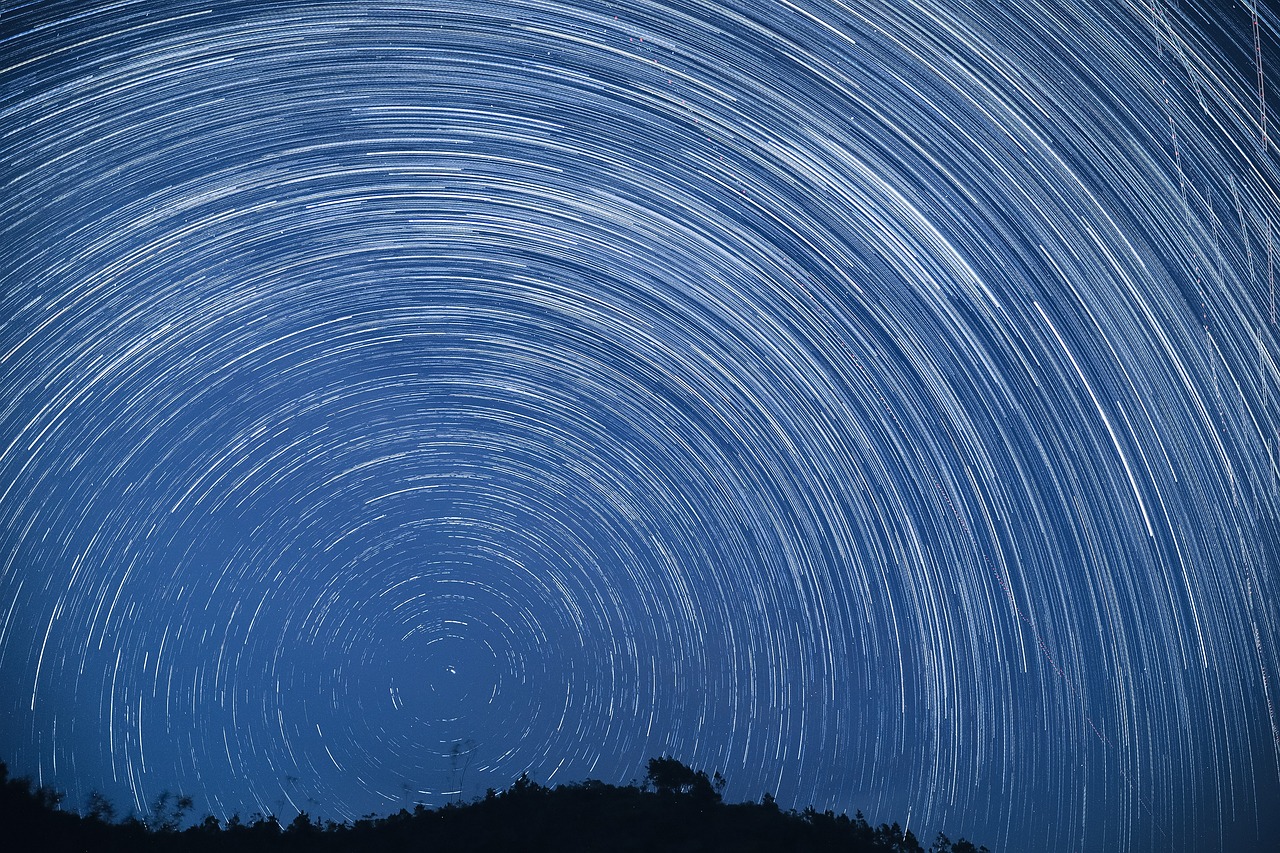
On August 1, Senators John W. Hickenlooper (D-CO) and Mike Crapo (R-ID) introduced a bill called The Dark and Quiet Skies Act (S.495) to assist astronomers with the night sky.
In a press release from Senator Hickenlooper’s office, we learn the Act would
…create a Center of Excellence overseen by National Institute of Standards and Technology (NIST) to develop best practices to reduce light and noise interference. The Center would boost collaboration between the astronomical community, industry, and Federal agencies to protect federally-funded scientific research that observes the sky and celestial bodies.
Specifically, this center would:
- Establish and circulate best practices to reduce unintentional optical and radio interference;
- Conduct research and development on tracking, identifying, modeling, and characterizing satellite interference; and
- Develop mitigation technology that includes satellite paint, film, orientation adjustments, cooling techniques, or fuselage design.
The bill may be a little late to the game, particularly if the press release is correct and the sky is really getting 10 percent brighter each year, but it is certainly welcome. We already know SpaceX, Amazon, and China have grand plans to fill up the sky with satellites, so this is the time to set some rules for the U.S. companies at least.
What is not clear is whether this supports or duplicates similar efforts by the International Astronomical Union (IAU), which has a Centre for the Protection of the Dark and Quiet Sky from Satellite Constellation Interference. While the bill above calls for the U.S. National Institute of Standards and Technology (NIST) to oversee this new Center of Excellence, the U.S. is also funding the IAU initiative via the National Science Foundation.
Let’s hope any and all such efforts in this area can be coordinated to bring the greatest pressure to bear on these satellite companies. The goal should be more than protecting the night sky for telescopes. If it is true that we will see hundreds of thousands of new satellites in orbit in the years to come, we need to make some sense of this booming industry before a few massive collisions make the space over our heads full of litter and unusable.
 Our Awesome Universe