
Take a look at the image above. Can you determine where this image originated? Take a guess and then check your answer by going to the “Where is This? The Answer Sheet” page.

Take a look at the image above. Can you determine where this image originated? Take a guess and then check your answer by going to the “Where is This? The Answer Sheet” page.

Does a summer studying astronomy in Rome sound interesting? If so, you might want to consider applying to be part of an astronomy program at the Vatican Observatory. The 440-year-old institution will be accepting 25 new applicants for the summer 2025 program.
Next summer’s program is titled “Exploring the Universe with JWST.” Here is a little more detail on the program:
Since the first release of data from the James Webb Space Telescope (JWST) in July 2022, we have witnessed a transformation in astronomy. VOSS 2025 will present a comprehensive overview of the major JWST results in its first three years (2022-2025), covering the four major scientific themes of JWST: (1) First Light and Reionization, (2) Assembly and Evolution of Galaxies, (3) Birth of Stars and Protoplanetary systems, and (4) Planetary Systems and the Origin of Life. In parallel, we will also provide a series of hands-on tutorials for JWST data processing and analysis. VOSS 2025 will convey the excitement of astronomical research in the era of JWST and the skills to pursue research projects spanning a broad range of themes in astrophysics.
The Catholic Church has come a long way since its treatment of Galileo. This observatory is just one example of the Church’s openness to the world around us.
You can read more about the 2023 summer program from the students themselves in this article.
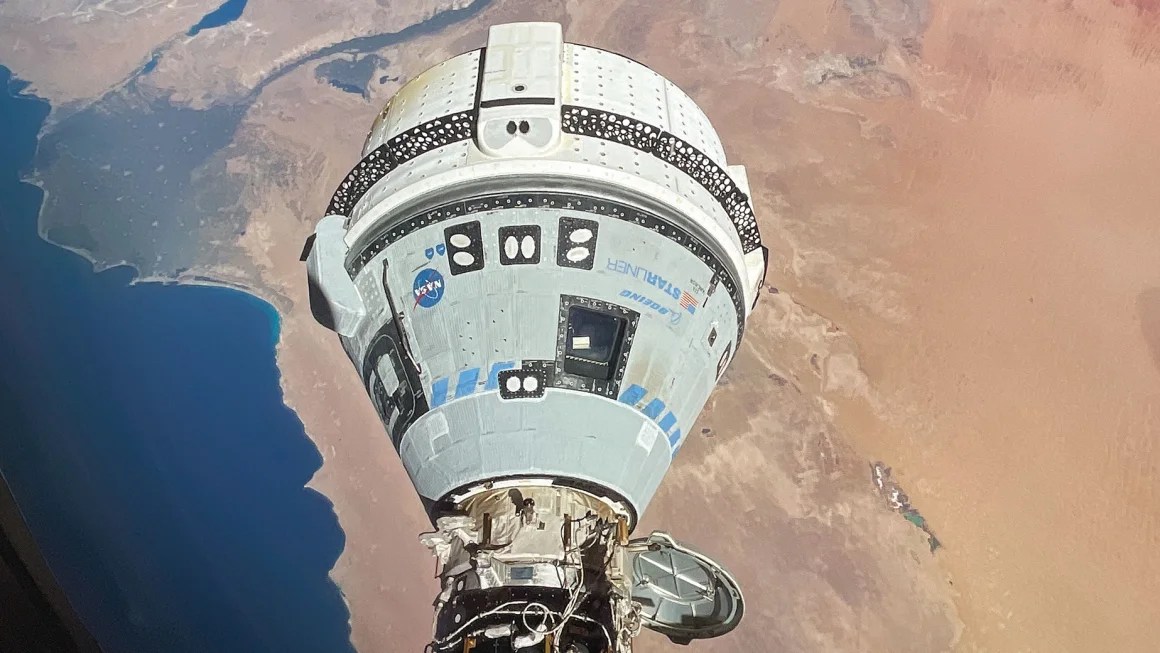
“Spaceflight is risky, even at its safest and most routine. A test flight, by nature, is neither safe, nor routine. The decision to keep Butch and Suni aboard the International Space Station and bring Boeing’s Starliner home uncrewed is the result of our commitment to safety: our core value and our North Star…I’m grateful to both the NASA and Boeing teams for all their incredible and detailed work.“
–Statement by NASA Administrator Bill Nelson regarding NASA’s decision to return Boeing’s Starliner to Earth without astronauts Butch Wilmore and Suni Williams aboard the spacecraft. Instead the two astronauts will remain on the International Space Station (ISS) until February 2025 when they will return to Earth aboard a SpaceX Dragon capsule.
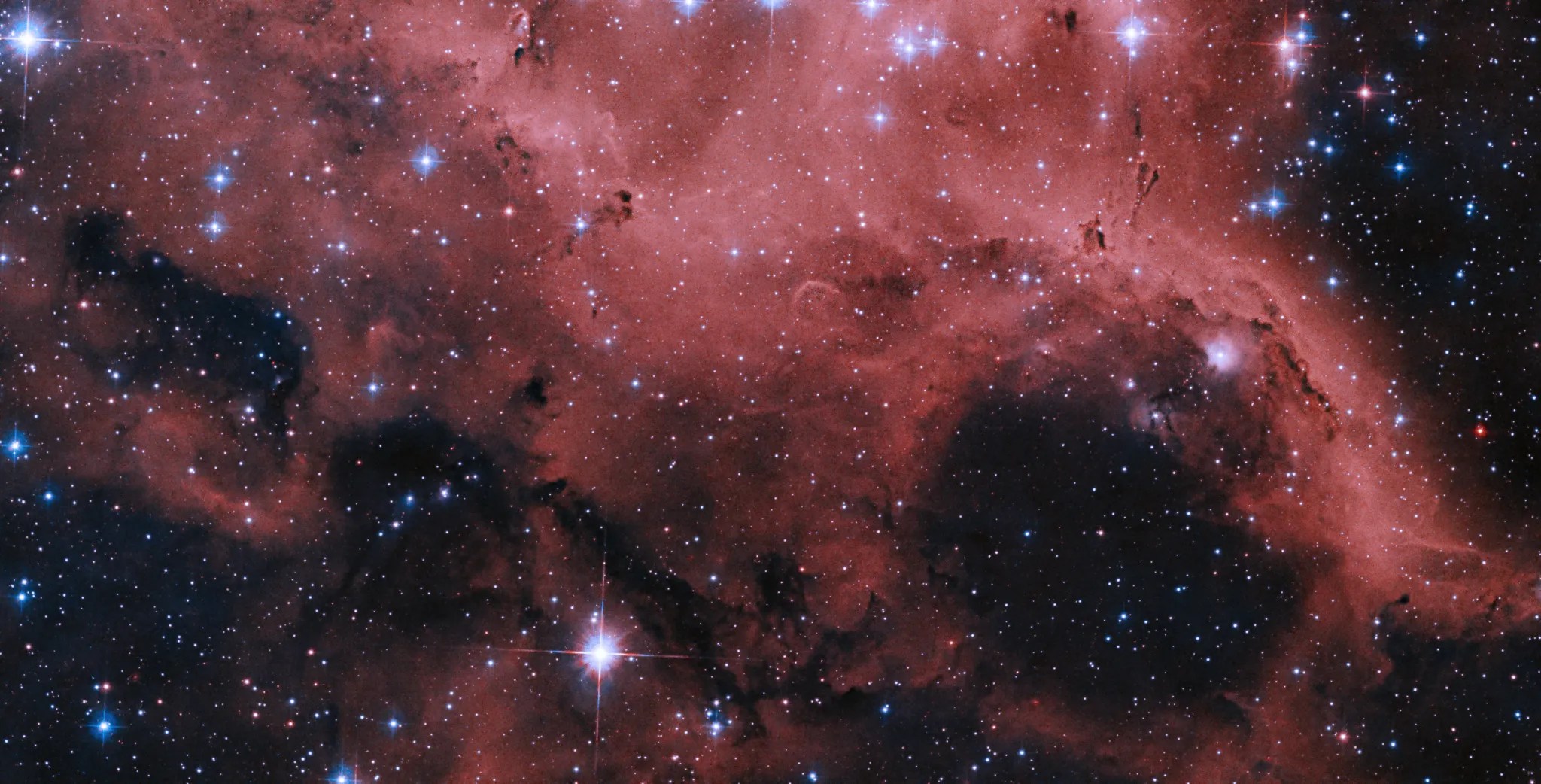
This week’s image is from the Hubble Space Telescope. It shows a cluster of stars that are about 160,000 light-years away in the Large Magellanic Cloud that orbits our Milky Way.
Here is the full story from NASA:
A bubbling region of stars both old and new lies some 160,000 light-years away in the constellation Dorado. This complex cluster of emission nebulae is known as N11, and was discovered by American astronomer and NASA astronaut Karl Gordon Henize in 1956. NASA’s Hubble Space Telescope brings a new image of the cluster in the Large Magellanic Cloud (LMC), a nearby dwarf galaxy orbiting the Milky Way.
About 1,000 light-years across, N11’s sprawling filaments weave stellar matter in and out of each other like sparkling candy floss. These cotton-spun clouds of gas are ionized by a burgeoning host of young and massive stars, giving the complex a cherry-pink appearance. Throughout N11, colossal cavities burst from the fog. These bubbles formed as a result of the vigorous emergence and death of stars contained in the nebulae. Their stellar winds and supernovae carved the surrounding area into shells of gas and dust.

On this day in 1920, Ray Douglas Bradbury was born in Waukegan, Illinois. Mr. Bradybury would grow up to be a famous American author and screenwriter.
One of his science fiction works,The Martian Chronicles stories, tells the story of mankind’s colonization of Mars and the ultimate effect on the colonizers.
He wrote numerous other famous books and short story collections, including Fahrenheit 541, Something Wicked This Way Comes, The Illustrated Man, and Dandelion Wine.
Speaking on science fiction, Mr. Bradbury once stated:
Science fiction is any idea that occurs in the head and doesn’t exist yet, but soon will, and will change everything for everybody, and nothing will ever be the same again. As soon as you have an idea that changes some small part of the world you are writing science fiction. It is always the art of the possible, never the impossible.
Asked in a 2004 interview what he thought about the US space program, he stated:
It’s too late, isn’t it? We’ve let 30 years go by. It’s stupid. It’s stupid. We should have stayed on the moon. We should have made moon the base, instead of building space stations, which are fragile and which fly apart. The moon is a good, solid base to build a space travel organization in the community. Then we take off from the moon and we go to Mars. But it’s terribly late. We’ve let too much time go by. We’ve been busy with war instead of being busy with peace. And that’s what space travel is all about. It’s all about peace and exploration and wonder and beauty.
Fortunately, it is not too late to visit the Moon or Mars, as demonstrated by NASA’s Artemis program. It’s the art (and science) of the possible.
 Our Awesome Universe