
Neil deGrasse Tyson interviews futurist Ray Kurzweil in this repeat StarTalk episode from November 2022 titled “Could We Someday Liver Forever? With Ray Kurzweil.” It is a heavy conversation about living forever as we integrate technology even more into our lives. Throughout the conversation Neil makes reference to a book coming out in 2023. In fact, the book came out in June of this year, which is probably why the episode is available again.
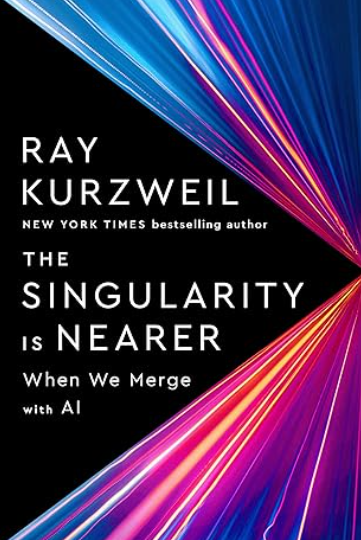
Here is a description of the new book from the publisher:
In this entirely new book Ray Kurzweil brings a fresh perspective to advances toward the Singularity—assessing his 1999 prediction that AI will reach human level intelligence by 2029 and examining the exponential growth of technology—that, in the near future, will expand human intelligence a millionfold and change human life forever. Among the topics he discusses are rebuilding the world, atom by atom with devices like nanobots; radical life extension beyond the current age limit of 120; reinventing intelligence by connecting our brains to the cloud; how exponential technologies are propelling innovation forward in all industries and improving all aspects of our well-being such as declining poverty and violence; and the growth of renewable energy and 3-D printing. He also considers the potential perils of biotechnology, nanotechnology, and artificial intelligence, including such topics of current controversy as how AI will impact employment and the safety of autonomous cars, and “After Life” technology, which aims to virtually revive deceased individuals through a combination of their data and DNA.
The culmination of six decades of research on artificial intelligence, The Singularity Is Nearer is Ray Kurzweil’s crowning contribution to the story of this science and the revolution that is to come.
You will want listen to the podcast interview, and afterward you might even want to pick up the book.
 Our Awesome Universe