
Here are some recent stories of interest.
—ARS Technica: “A Key NASA Commercial Partner Faces Severe Financial Challenges“
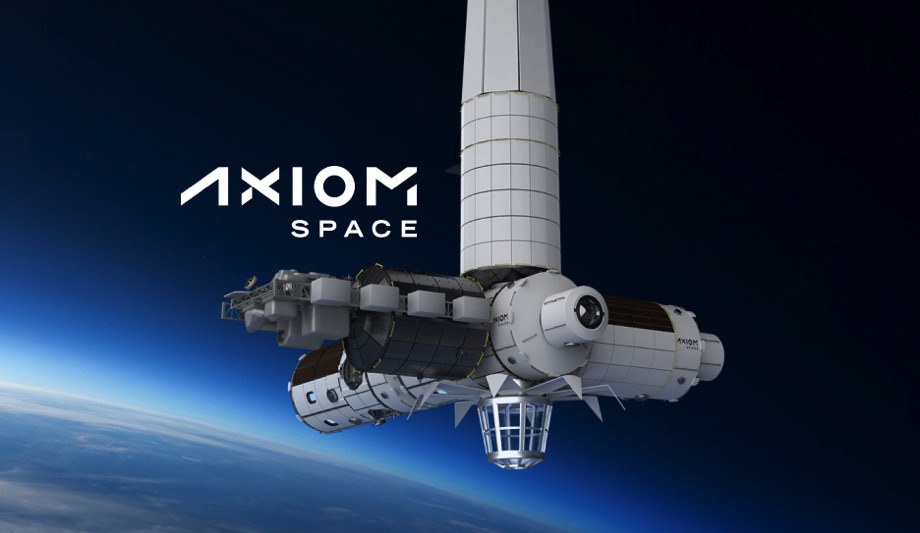
Axiom Space is facing significant financial headwinds as the company attempts to deliver on two key commercial programs for NASA—the development of a private space station in low-Earth orbit and spacesuits that could one day be worn by astronauts on the Moon. Forbes reports that Axiom Space, which was founded by billionaire Kam Ghaffarian and NASA executive Mike Suffredini in 2016, has been struggling to raise money to keep its doors open and has had difficulties meeting its payroll dating back to at least early 2023. In addition, the Houston-based company has fallen behind on payments to key suppliers, including Thales Alenia Space for its space station and SpaceX for crewed launches.
—Reuters: “Intuitive Machines Clinches $4.8 billion Navigation Services Contract from NASA“
Intuitive Machines said on Tuesday it has bagged a navigation and communication services contract of up to $4.82 billion from NASA for missions in the near space region. As part of the contract, which has a base period of five years with an additional five-year option period, Intuitive will deploy lunar relay satellites and provide communication and navigation services to aid NASA’s Artemis campaign.
—Planetary Science Institute: “Sources of Water and Hydroxyl are Widespread on the Moon“
A new analysis of maps of the near and far sides of the Moon shows that there are multiple sources of water and hydroxyl in the sunlit rocks and soils, including water-rich rocks excavated by meteor impacts at all latitudes. “Future astronauts may be able to find water even near the equator by exploiting these water-rich areas. Previously, it was thought that only the polar region, and in particular, the deeply shadowed craters at the poles were where water could be found in abundance,” said Roger Clark, Senior Scientist at the Planetary Science Institute and lead author of “The Global Distribution of Water and Hydroxyl on the Moon as Seen by the Moon Mineralogy Mapper (M3)” that appears in the Planetary Science Journal. “
 Our Awesome Universe