Image (Credit): Tropical Storm Helene on Sept. 24, 2024 as captured by the NASA/NOAA Suomi NPP satellite. (NASA Worldview)
SpaceX was scheduled to send astronauts to the International Space Station (ISS) tomorrow, but the approaching Hurricane Helene has delayed the launch until Saturday, September 28.
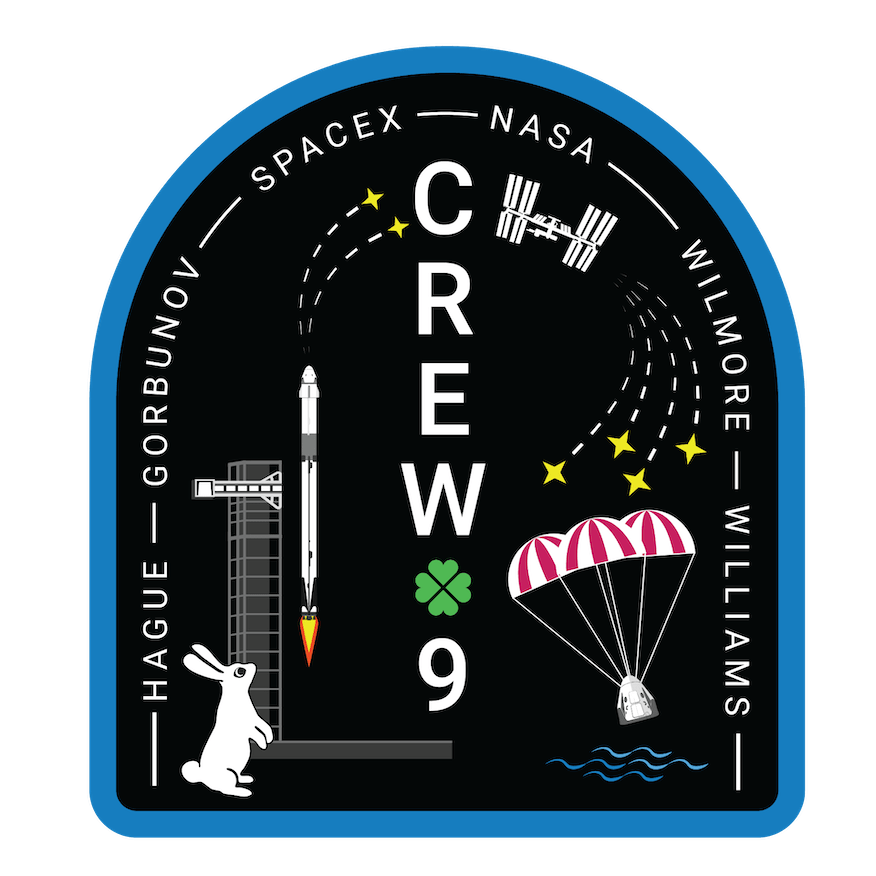
The Crew-9 mission is down to two crew members – NASA astronaut Nick Hague and Roscosmos cosmonaut Aleksandr Gorbunov – as a result of the two Boeing astronauts stuck on the ISS being added to the Crew-9 mission. The new combined crew will stay on the station until February 2025 and then return to Earth together.
NASA is in the process of locking down its Florida launch sites until the hurricane passes.
Patience is always needed with launches this time of year, and NASA seems to need a lot of patience these days for reasons beyond the weather.
Image (Credit): Crew-9 mission patch designed by SpaceX. (SpaceX)
A decade ago, on Sept. 21, 2014, NASA’s MAVEN (Mars Atmospheric and Volatile EvolutioN) spacecraft entered orbit around Mars, beginning its ongoing exploration of the Red Planet’s upper atmosphere. The mission has produced a wealth of data about how Mars’ atmosphere responds to the Sun and solar wind, and how these interactions can explain the loss of the Martian atmosphere to space.Today, MAVEN continues to make exciting new discoveries about the Red Planet that increase our understanding of how atmospheric evolution affected Mars’ climate and the previous presence of liquid water on its surface, potentially determining its prior habitability.
A new algorithm tested on NASA’s Perseverance Rover on Mars may lead to better forecasting of hurricanes, wildfires, and other extreme weather events that impact millions globally. Georgia Tech Ph.D. student Austin P. Wright is first author of a paper that introduces Nested Fusion. The new algorithm improves scientists’ ability to search for past signs of life on the Martian surface. This innovation supports NASA’s Mars 2020 mission. In addition, scientists from other fields working with large, overlapping datasets can use Nested Fusion’s methods for their studies. Wright presented Nested Fusion at the 2024 International Conference on Knowledge Discovery and Data Mining (KDD 2024) where it was a runner-up for the best paper award. KDD is widely considered the most prestigious conference for knowledge discovery and data mining research.
Astronomers have made a breathtaking revelation: The most massive discovered black hole jets, extending on to incredibly 23 million light-years. To look at it through that lens, that’s approximately the length of 140 Milky Way galaxies positioned in a straight line. The immense jets, named ‘Porphyrion’ after a Greek giant, emerge from a supermassive black hole at the center of a faraway galaxy that was in existence when the universe was only 6.3 billion years old – – close to half its existing age of 13.8 billion years.
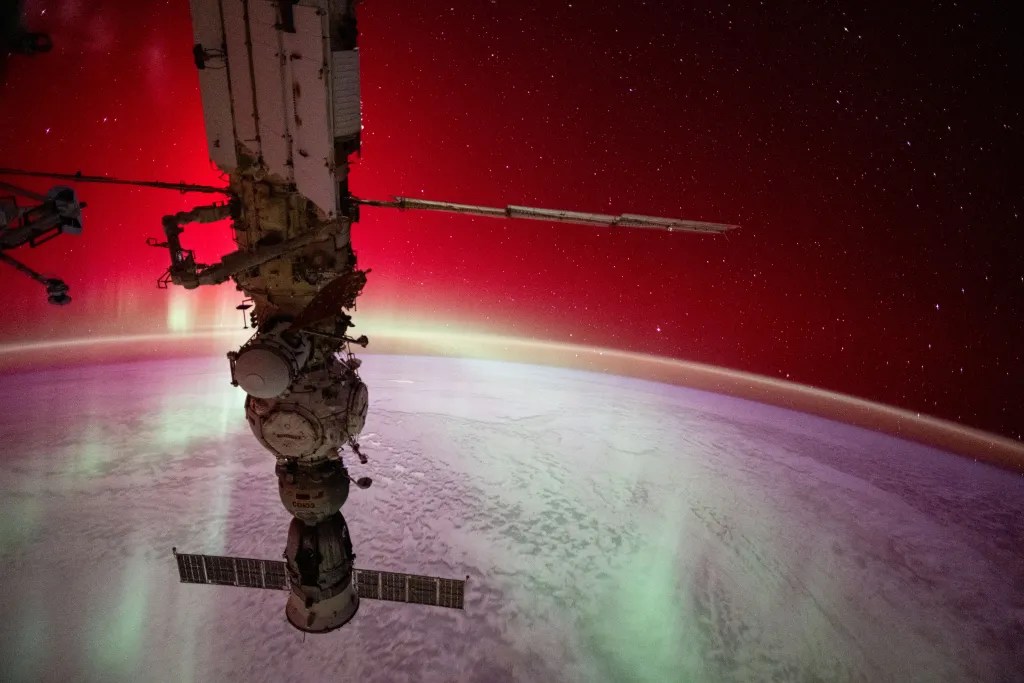
Image (Credit): The Soyuz MS-25 crew ship attached to the ISS as an aurora radiates brightly above the Indian Ocean. (NASA)
Astronaut Tracy C. Dyson is now safely back on Earth thanks to the Russian Soyuz MS-25 spacecraft, which also returned cosmonauts Oleg Kononenko and Nikolai Chub. The no drama return from the International Space Station (ISS) was very different from the recent Boeing Starliner return. The press barely paid attention, which is a good thing.
NASA highlighted Dyson’s six-month tour in this way:
Spanning 184 days in space, Dyson’s third spaceflight covered 2,944 orbits of the Earth and a journey of 78 million miles as an Expedition 70/71 flight engineer. Dyson also conducted one spacewalk of 31 minutes, bringing her career total to 23 hours, 20 minutes on four spacewalks.
I just hope that future Starliner’s can intentionally place astronauts in space for six-months or longer and then return to Earth with little attention. That type of clockwork will be success.
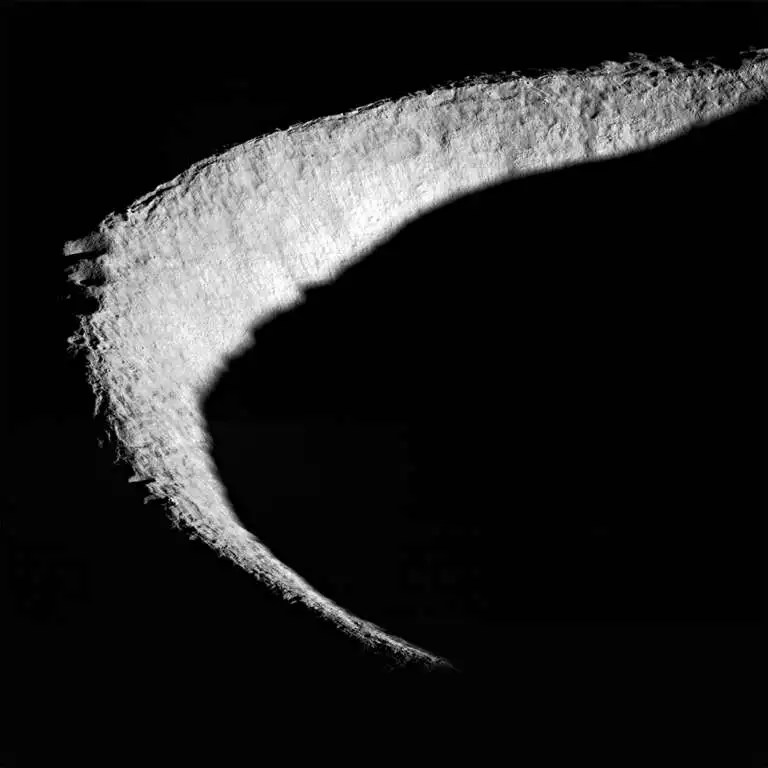
Image (Credit): Shackleton crater at the Moon’s south pole. (NASA/GSFC/Arizona State University)
With NASA planning to return to the Moon shortly as part of the Artemis mission, it is tying up loose end and figuring out what else it may need. It seems that one of the needed items is a better way to conduct its work at the lunar south pole. This comes down to two challenges, both of which have a payout to the winner.
Challenge 1: NASA is seeking an orienteering aid that will help the astronauts navigate on traverses away from the lunar lander and return back. While there were similar devices available to the Apollo astronauts, NASA is looking for new and unique solutions. Among other considerations, devices must be accurate, easy to use, able to be used on the moon’s surface by an astronaut wearing pressurized gloves. If your solution is one of the best, you could be eligible for a share of the $15,000 prize purse.
Challenge 2: NASA is looking for assistance in getting to and mapping the bottom of Shackleton Crater. The design must work in the extreme conditions of the lunar south pole and Shackleton Crater, map the crater, characterize and quantify what is in the crater, and send the data back to be used for future missions. If you can solve this challenge by describing your design concept in detail, you could be eligible for a share of the $30,000 prize purse.
You might wonder why NASA is only thinking of these needs now. I am hoping NASA has some less refined solutions and is only seeking for a better way.
If you have an idea or two, be sure to share it with NASA by November 25, 2024.
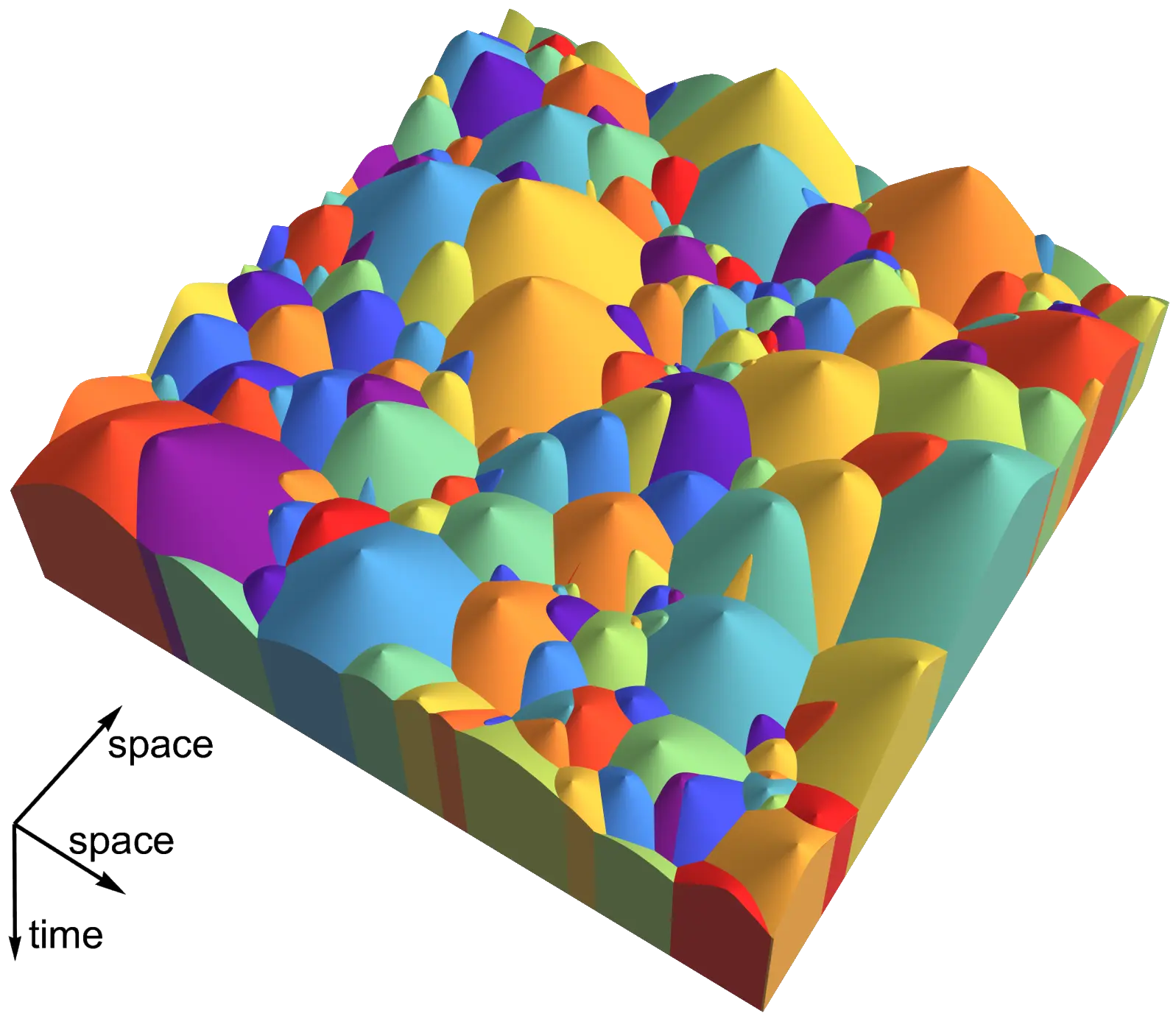
…a hypothetical type of “loud” alien civilization that are known for inhibiting the development of other technological civilizations in their area of influence. The concept of quiet and loud aliens is used to model hypotheses about the existence of extraterrestrial intelligence, particularly in the context of the Fermi Paradox.
You can read all about this theory at grabbyaliens.com. Then you can listen to Professor David Kipping provide three reasons why he does not believe this theory is workable.
As always, he provides an entertaining and enlightening view of the cosmos.



 Our Awesome Universe