Space Quote: NASA’s Space Expertise at Risk of Eroding

Image (Credit): The Artemis-1 rocket next to NASA’s Vehicle Assembly Building at the Kennedy Space Center in Florida on Nov. 3, 2022. (Voice of America)

“Extreme caution is needed to ensure that NASA’s critical relationships with commercial partners do not erode NASA’s own expertise, particularly in early-phase developmental efforts, and the agency should work to maintain a balance between benefiting from its partners’ capabilities and maintaining advanced internal skills. The report recommends that NASA drastically increase its investment in internal research and development to advance early-stage, mission-critical technologies that are not commercially available currently. It also makes a range of recommendations for maintaining an expert workforce, including the adoption of a new human capital strategy, and coordination with Congress to refresh the NASA Flexibility Act of 2004 and gain more appointment and hiring authority.”

-September 10, 2024 press statement for the National Academies of Sciences, Engineering, and Medicine’s recent report NASA at a Crossroads: Maintaining Workforce, Infrastructure, and Technology Preeminence in the Coming Decades. The report was requested by Congress in the CHIPS and Science Act of 2022. The National Academies of Sciences, Engineering, and Medicine convened an independent expert committee to evaluate whether NASA’s current workforce, infrastructure, technological capabilities, and their interfaces can meet its strategic goals. 
Do You Have Some Ideas for Lunar or Martian Art?

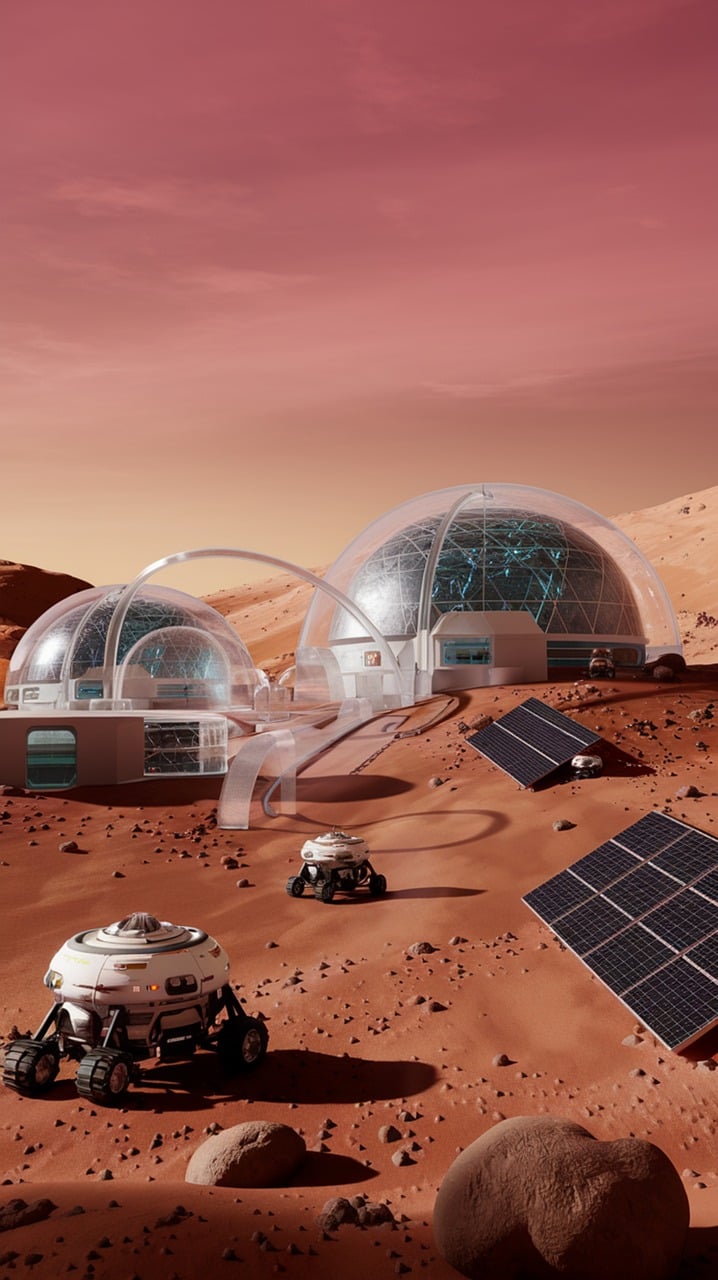
mage (Credit): AI image of a Martian colony. (Yol Gezer from Pixabay)

Do you have some time on your hands? If so, you may want to toss in a submission to the Moon to Mars contest being held by NASA.

Starting this week through October 31, you can submit your artistic interpretation of two topics: “Sustained Lunar Evolution” and “Humans to Mars.” The artist with the best image can win $10,000.

In terms of two categories, more definition from NASA is provided below.

Sustained Lunar Evolution Segment: This segment is an open canvas for exploration of the Moon, embracing new ideas, systems, and partners to grow to a long-term presence on the lunar surface. Sustained lunar evolution means more astronauts on the Moon for longer periods of time, increased opportunities for science, and even the large-scale production of goods and services derived from lunar resources. It also means increased cooperation and collaboration with international partners and the aerospace industry to build a robust lunar economy.

Humans to Mars Segment: This segment will see the first human missions to Mars, building on the lessons we learn from exploring the Moon. These early missions will focus on Martian exploration and establishing the foundation for a sustained Mars presence. NASA architects are examining a wide variety of options for transportation, habitation, power generation, in-situ resource utilization, scientific investigations, and more. How many missions would it take? How many astronauts? What sorts of technologies?

You can learn more about the contest here.

Just in case you were wondering, AI art cannot be submitted. So don’t try to submit something like the image above, nice as it is.

While We Were Watching Polaris Dawn, Just Another Day for the ISS

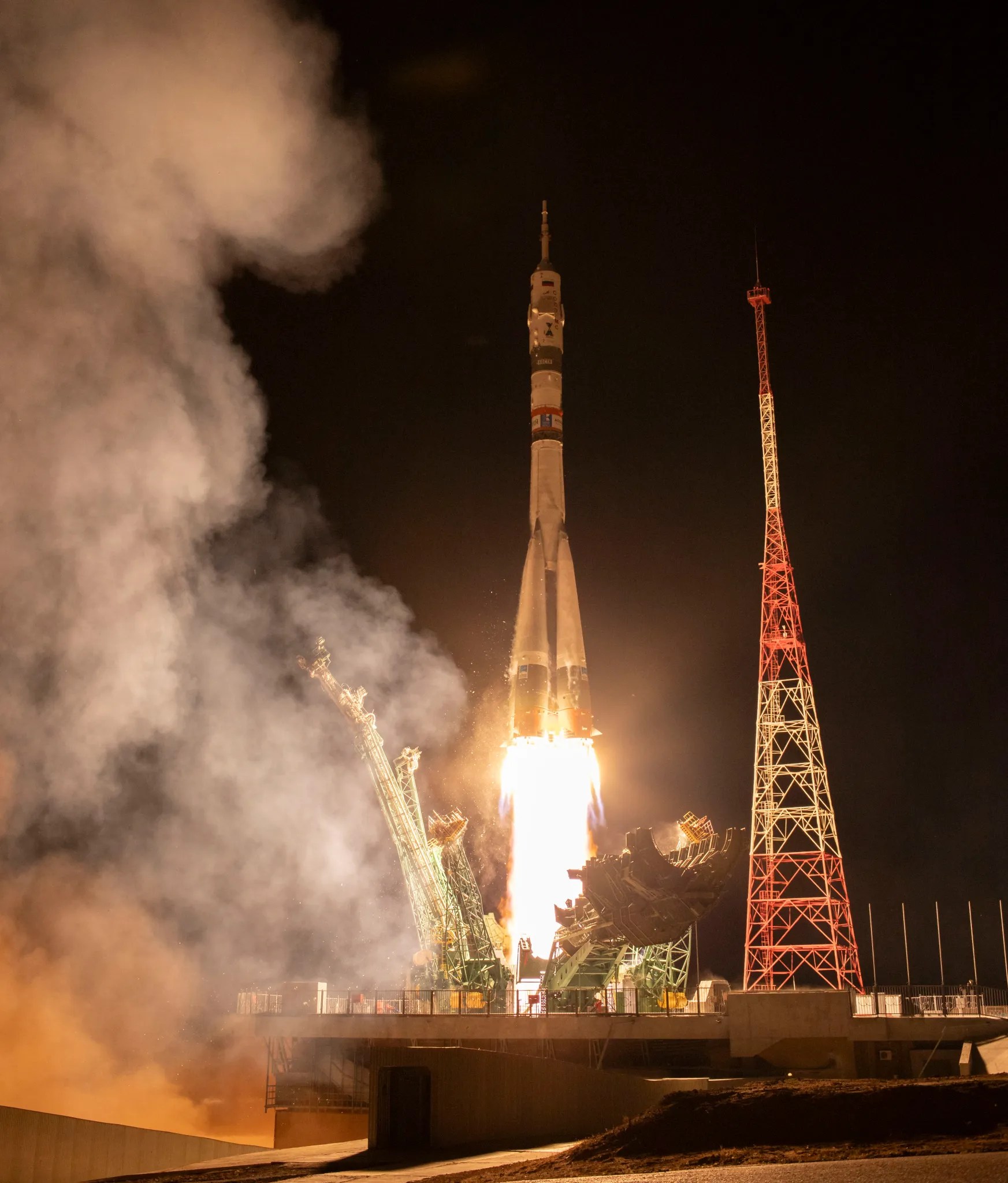
Image (Credit): The Russian Soyuz rocket launching from the Baikonur Cosmodrome in Kazakhstanon September 11 to bring the Expedition 72 crew to the ISS. (NASA/Bill Ingalls)

While all eyes were on the Polaris Dawn mission this week, the Russian Roscosmos Soyuz MS-26 was busy bringing a crew of three cosmonauts and one US astronaut to the International Space Station (ISS). Crewed and uncrewed launches to the ISS have been pretty routine for years, which is a good thing.

NASA reports that its astronaut Don Pettit, accompanied by Roscosmos cosmonauts Alexey Ovchinin and Ivan Vagner, are now safely aboard the space station. Expedition 72 will officially start on Monday, September 23. Members of the Expedition 71 crew – NASA astronaut Tracy C. Dyson and cosmonauts Nikolai Chub and Oleg Kononenko – will be departing the station shortly.

Let’s remember that while the Polaris Dawn crew will be playing in space for about 5 days, these crews are in space for 6-12 months.

Pic of the Week: The First Commercial Spacewalk

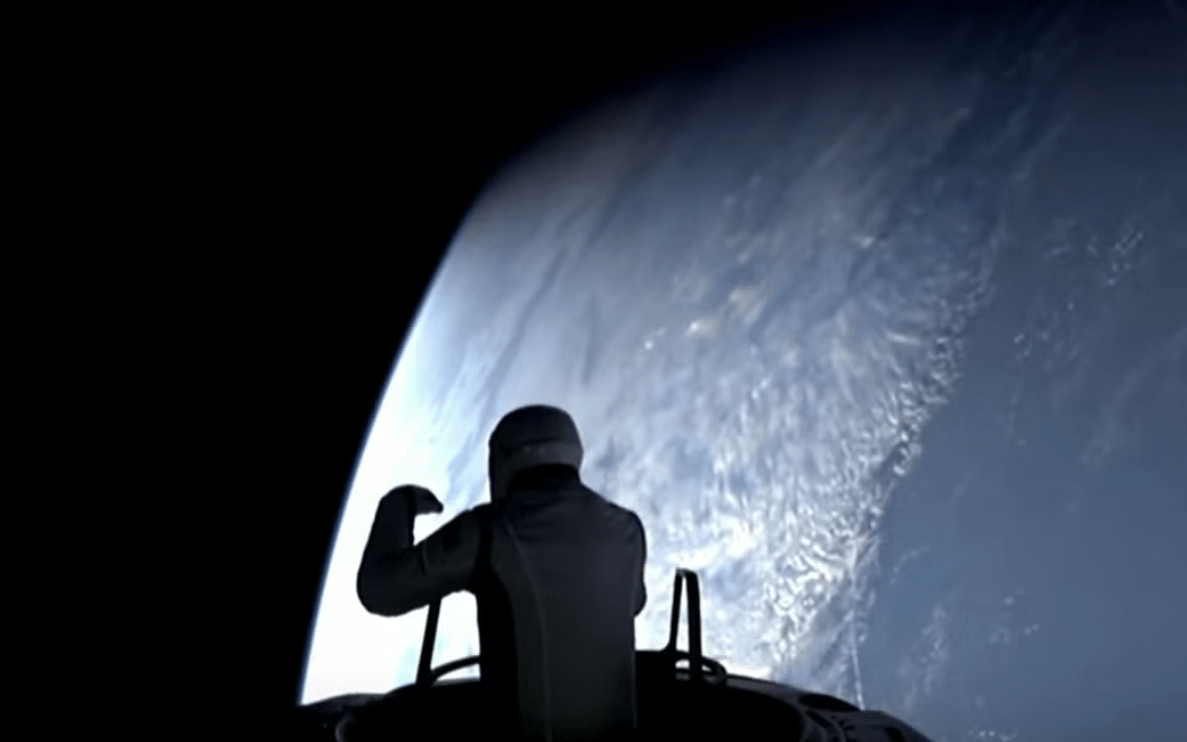
Image (Credit): SpaceX Polaris Dawn crew conducts first private spacewalk. (SpaceX/Polaris)

This week’s image shows the first commercial spacewalk as part of the Polaris Dawn mission launched into space earlier this week by SpaceX. All four crew members were exposed to space as part of the process earlier today, but only two exited the spacecraft. The spacecraft was between 118 to 435 miles above the Earth during the spacewalks.

NASA Administrator Bill Nelson posted this comment to Twitter/X:

Congratulations @PolarisProgram and @SpaceX on the first commercial spacewalk in history!

Today’s success represents a giant leap forward for the commercial space industry and @NASA ‘s long-term goal to build a vibrant U.S. space economy.

So Did NASA Make the Right Call with Starliner?

Image (Credit): The Starliner capsule in White Sands, NM. (Boeing Space)

So now that the Starliner capsule is back here on Earth, some may wonder if it was necessary to return it without a crew.

Here is what Steve Stich, manager of NASA’s Commercial Crew Program, had to say during a post-landing press conference:

If we’d have had a crew on board the spacecraft, we would have followed the same back away sequence from the space station, the same deorbit burn and executed the same entry. And so it would have been a safe, successful landing with the crew on board.

So that is good news for Boeing, but not likely to thrill Boeing stockholders. No matter how you spin it, only a crewed return would have been seen as a success.

It also appears the flight back was not quite as simple as portrayed by Mr. Stich’s initial statement. For instance, a Quartz article noted that during the capsule’s return another thruster failed and the guidance system blacked out for a moment.

Boeing has been pretty quite on the issue. Its latest update had a simple statement about the landing and an uncertain comment about “next steps”:

Boeing’s Starliner landed safely at 12:01 a.m. Eastern time on Saturday, Sept. 7 (10:01 p.m. Mountain time, on Friday, Sept. 6). After an extended stay at the International Space Station, Starliner’s reusable crew module touched down at its designated landing site, White Sands Space Harbor at the U.S. Army’s White Sands Missile Range in New Mexico.

“I want to recognize the work the Starliner teams did to ensure a successful and safe undocking, deorbit, re-entry and landing,” said Mark Nappi, vice president and program manager of Boeing’s Commercial Crew Program. “We will review the data and determine the next steps for the program.”

The Starliner crew module will be transported back to NASA’s Kennedy Space Center in Florida, where Boeing teams will analyze mission data.

Maybe when cooler heads prevail over at Boeing we will learn more. I just hope they are still in the game.