
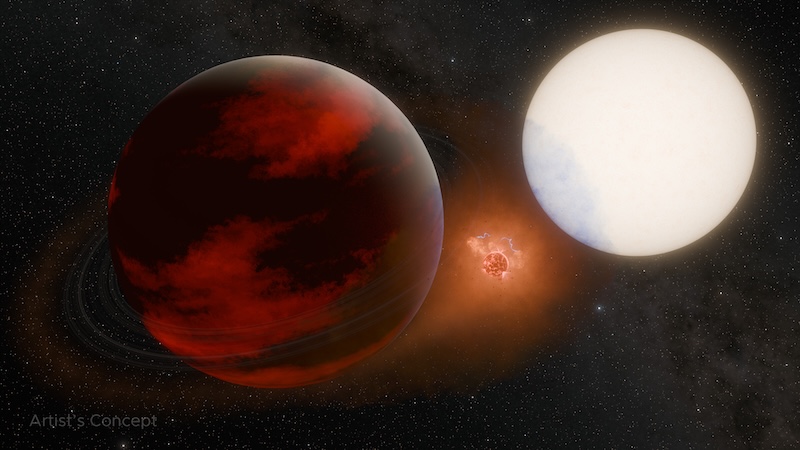
The search for new exoplanets in our galaxy continues, but now it may include the first exomoon. This was something that was expected to occur at some point as the detection methods became better over time.
The exomoon in question is believed to be a volcanic moon orbiting a giant planet about 635 light-years away. Detected using the European Southern Observatory’s Very Large Telescope in Chile, the exomoon is discussed in a paper written by researchers with NASA’s Jet Propulsion Laboratory and Caltech in California. The clue was a cloud of sodium that did not appear to come from the host exoplanet.
The new discovery is being compared to Jupiter’s volcanic moon Io, which is the most volcanically active world in the solar system.
If you want to learn more about exomoons, I recommend a Cool Worlds video narrated by Assistant Professor of Astronomy David Kipping who provides five reasons that the study of exomoons is so important.
 Our Awesome Universe