Image (Credit): The 31st SpaceX commercial resupply mission to the ISS, seen here, lifted off on a Falcon 9 rocket from our Kennedy Space Center in Florida at 9:29 p.m. EST, Monday, November 4, 2024. (NASA)
A SpaceX Falcon-9 rocket launched the loaded Dragon capsule from NASA’s Kennedy Space Center. The Cargo Resupply Services (CRS)-31 mission successfully met up with the station earlier today so that the 6,089 pounds of cargo could be unloaded.
As far as the election, the busy astronauts had an opportunity to be part of today’s election, as noted in an earlier post.
A new study suggests Uranus’ moon Miranda may harbor a water ocean beneath its surface, a finding that would challenge many assumptions about the moon’s history and composition and could put it in the company of the few select worlds in our solar system with potentially life-sustaining environments. “To find evidence of an ocean inside a small object like Miranda is incredibly surprising,” said Tom Nordheim, a planetary scientist at the Johns Hopkins Applied Physics Laboratory (APL) in Laurel, Maryland, a study co-author, and the principal investigator on the project that funded the study. “It helps build on the story that some of these moons at Uranus may be really interesting — that there may be several ocean worlds around one of the most distant planets in our solar system, which is both exciting and bizarre.”
NASA expects to determine by early next year the next steps for a lunar rover mission it canceled in July amid some confusion over the timing of that decision. Speaking at an Oct. 28 meeting of the Lunar Exploration Analysis Group (LEAG), Joel Kearns, deputy associate administrator for exploration in NASA’s Science Mission Directorate, said the agency was reviewing responses to a request for information (RFI) the agency issued in August seeking alternative uses for its Volatiles Investigating Polar Exploration Rover (VIPER) spacecraft.
In the hostile conditions beyond Earth, a spacecraft is all that stands between an astronaut and certain death. So having yearslong seemingly unfixable leaks on the International Space Station (ISS) sounds like a nightmare scenario. It’s also a reality, one that a recent agency report calls “a top safety risk.” Amid months of headlines about astronauts stranded by Boeing’s Starliner vehicle and NASA’s announcement of a contract with Elon Musk’s SpaceX to destroy the ISS early next decade, the ongoing concerns about the leaks come as another reminder that supporting a long-term population in space is a challenge that’s quite literally out of this world.
Image (Credit): Scene from season three of Star Trek: Strange New Worlds. (Paramount+)
I am eager for the third season of Star Trek: Strange New Worlds after season two ended back in August. In season two, we had a chance to meet Montgomery “Scotty” Scott, one more piece of the original Star Trek crew.
For a taste of what is to come, take a look at this preview clip of season three. Its shows a fun turn of events as members of the crew find themselves embracing the Vulcan ways for a mission. Of course, nothing is that easy. The interplay between human and Vulcan mindsets continues to entertain, much in the way The Next Generation enjoyed the interplay between human and android mindsets.
It is still unclear when season three will premiere in 2025, but the good news is that Paramount+ has already promised a fourth season, so the fun will continue. More importantly, Trekmovie.com reports that the series will eventually run into the first episode of the original series from 1966, so we can expect more original characters such as Scotty to populate the Strange New Worlds series.
With only one live action Star Trek series still on the air after the end of Star Trek: Discovery earlier this year, it is important for fans that the series continues to live long and prosper.
Fortunately, a few more Star Trek series are the in pipeline. More on that later.
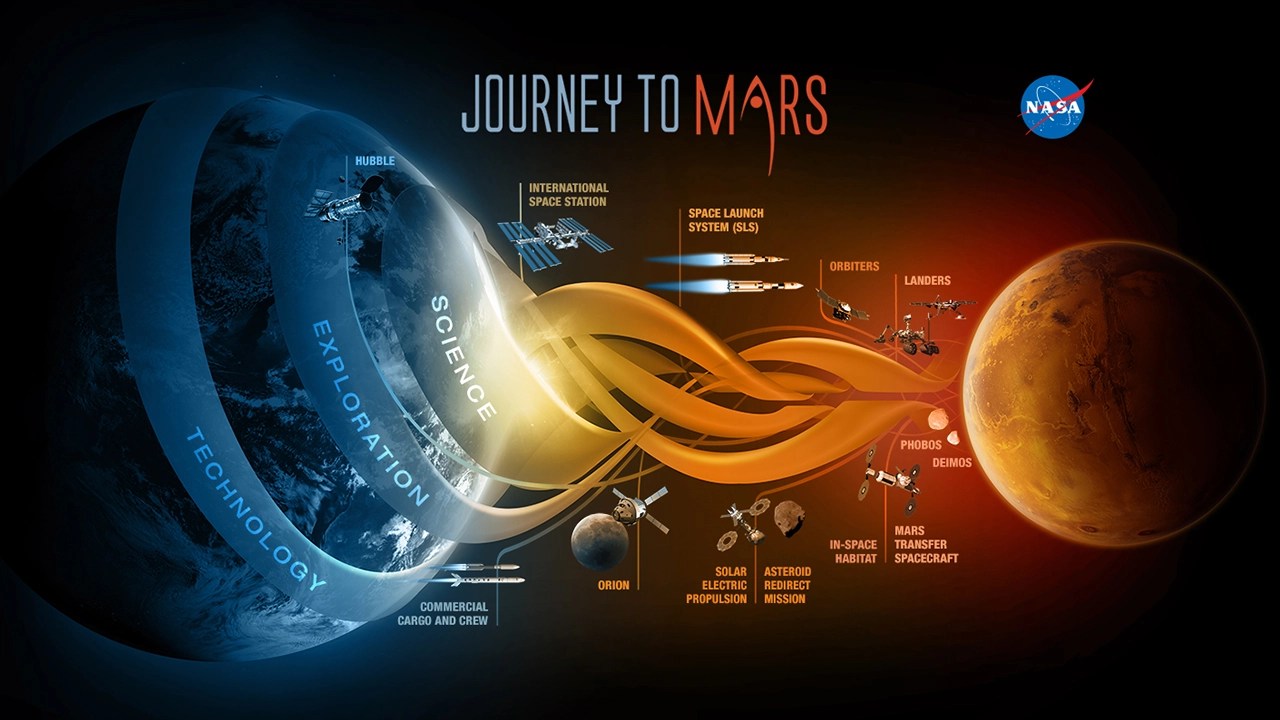
Image (Credit): A graphic from 2014 showing NASA’s approach to a human presence on Mars. This has been superseded by the Artemis program, but many elements remain the same. (NASA)
Well, the evidence continues to build on the difficulty of space travel and the need for greater study. This time its a report from The Guy Foundation in England, established by Geoffrey and Kate Guy to “facilitate exploration into quantum effects in biology and the role it could play in advancing medicine.” The 94-page report is titled The Health Hazards of Space Travel: Novel Insights from Quantum Biology.
You can read it this weekend at your leisure, but the bottom line is stated succinctly in the executive summary, further summarized here:
...space travel seems likely to induce accelerated ageing in astronauts…associated with the disruption of cellular bioenergetics which could have other, perhaps more worrying health consequences.
…complex long-lived organisms, such as humans, will not be able to adapt to the unnatural environment of space, while shorter-lived, rapidly evolving ones, such as bacteria will.
At this stage, the following factors seem particularly significant…
zero gravity…;
{i}ncreased radiation…;
[t]he lack of a magnetic field…; and
[a] lack of near-infrared radiation.
Further experiments are urgently needed to improve our understanding of the underlying causes of space-induced ill health, and potential approaches to mitigate it.
The bottom line is that if we want to spread more than bacteria throughout the solar system and beyond, we need to get to work on these issues.
I am hoping Mr. Musk and friends are reading this before jumping off a cliff (or Earth in this case) with Mars-bound Starships. In fact, it may encourage Mr. Musk to use some of his funds to study these issues rather than play games with politics here are Earth. The $47 billion spent on Twitter would have gone a long way to help Mr. Musk achieve his dream of a Mars-based society, if that really is his dream.
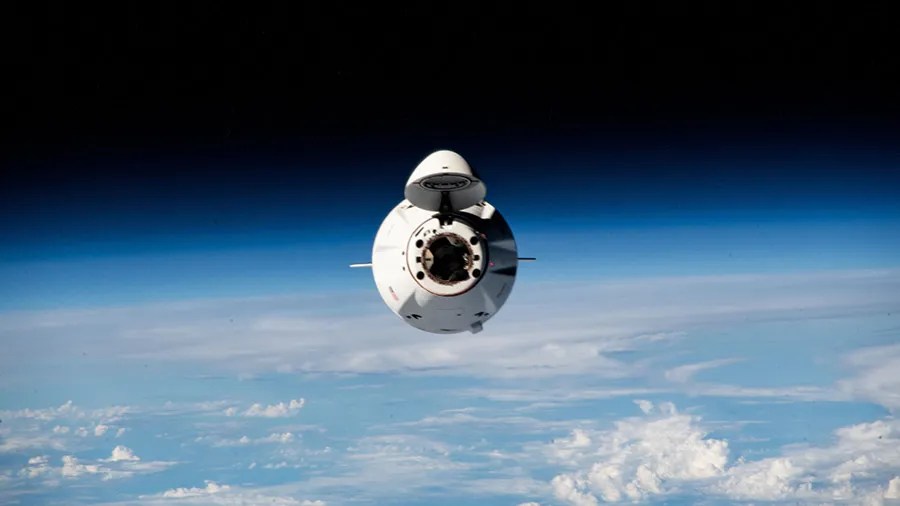
Image (Credit): The SpaceX Dragon cargo spacecraft approaching the ISS on March 16, 2023. (NASA)
“When you look at these recent incidents over the last handful of weeks, it does lead one say that it’s apparent that operating safely requires significant attention to detail as hardware ages and the pace of operations increases…Both NASA and SpaceX need to maintain focus on safe Crew Dragon operations and not take any ‘normal’ operations for granted.”
-Statement by Aerospace Safety Advisory Panel (ASAP) committee member Kent Rominger, as quoted by Space News, regarding recent SpaceX mishaps, including three recent Falcon 9 rocket issues as well as a parachute problem during the October 25th return of Crew-8 on a Dragon capsule from the International Space Station (ISS). After the splashdown, all four astronauts were hospitalized for observation.



 Our Awesome Universe