
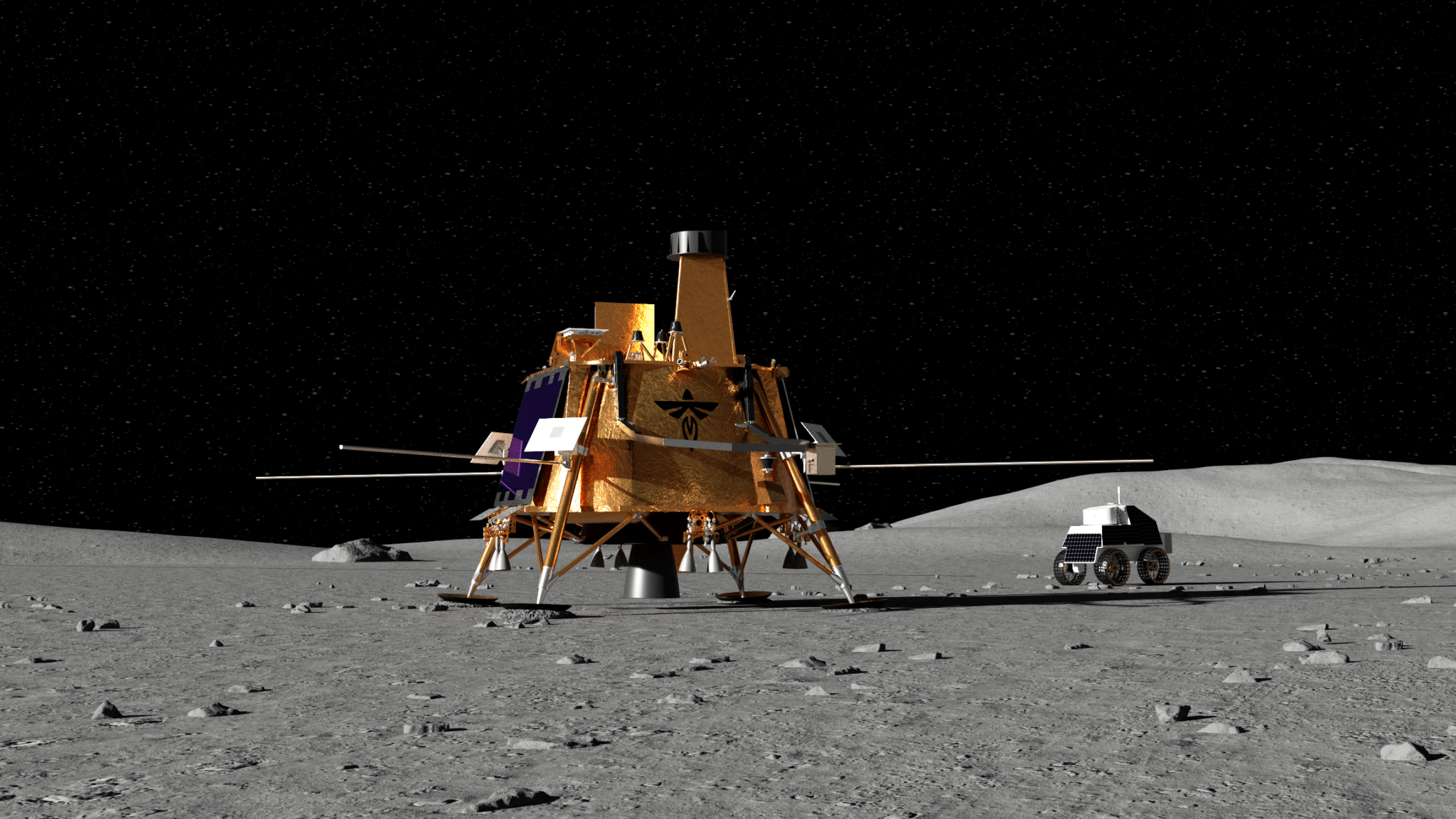
Earlier today, a SpaceX rocket successfully launched Firefly Aerospace’s Blue Ghost mission. If it makes it to the lunar surface, it will be the second US mission to land on the Moon since the end of the Apollo program in the 1970s.
Firefly Aerospace issued a press release noting its the initial success of the mission:
Firefly’s Blue Ghost lunar lander launched on a SpaceX Falcon 9 rocket, successfully acquired signal, and completed on-orbit commissioning. With a target landing date of March 2, 2025, Firefly’s 60-day mission is now underway, including approximately 45 days on-orbit and 14 days of lunar surface operations with 10 instruments as part of NASA’s Commercial Lunar Payload Services (CLPS) initiative.
Blue Ghost Mission 1, named Ghost Riders in the Sky, launched from Launch Complex 39A at NASA’s Kennedy Space Center in Florida, at 1:11 a.m. EST on January 15, 2025. Blue Ghost separated from the SpaceX Falcon 9 rocket in a highly elliptical Earth orbit at 2:17 a.m. EST and established communications with Firefly’s Mission Operations Center in Cedar Park, Texas, at 2:26 a.m. EST. On-orbit spacecraft commissioning was then completed by 5:30 a.m. EST, which included verifying attitude determination and control capabilities, increasing the data transfer rate, establishing a power-positive attitude, and completing initial lander health checks.
This is a big step for Firefly Aerospace, which hopes to build on the success of this mission to launch other lunar missions in the next few years. But we need to take it one step at a time given the two US commercial lunar missions that failed earlier last year.
Note: The SpaceX launch also included a Japaneses private sector Moon mission – iSpace’s HAKUTO-R M2 “Resilience” lunar lander. This is the second Moon mission for iSpace. The first mission crashed into the Moon’s surface back in 2023.
iSpace has shown resilience after the previous attempt. A successful mission will be a good sign for the company and the private lunar industry as well.
You can read more about the mission particulars here.

 Our Awesome Universe