Space Stories: Farewell to Bill Nelson, an Unpredictable Universe, and Ponds and Lakes on Mars

Image (Credit): Bill Nelson appearing before the Senate Committee on Commerce, Science, and Transportation on April 21, 2021 as the nominee to be the 14th administrator of NASA. (NASA/Bill Ingalls)

Here are some recent stories of interest.

WESH.comNASA Administrator Bill Nelson Writes Letter to Next Leader, Reflects on Legacy and Future of Space Exploration

In a heartfelt letter addressed to the 15th Administrator of NASA, Bill Nelson expressed his admiration for the agency’s workforce and the immense honor of leading the organization dedicated to space exploration. Nelson, who has a rich history with NASA, having flown on the Space Shuttle Columbia and served as a U.S. Senator from Florida, emphasized the exceptional nature of the NASA team. He noted that the agency embodies a “can-do spirit” that exemplifies American ingenuity and leadership in space.

Duke UniversityDan Scolnic Shows that the Universe Is Still Full of Surprises

The Universe really seems to be expanding fast. Too fast, even. A new measurement confirms what previous — and highly debated — results had shown: The Universe is expanding faster than predicted by theoretical models, and faster than can be explained by our current understanding of physics. This discrepancy between model and data became known as the Hubble tension. Now, results published in the Astrophysical Journal Letters provide even stronger support to the faster rate of expansion. “The tension now turns into a crisis,” said Dan Scolnic, who led the research team.

CaltechSignatures of Ice-Free Ancient Ponds and Lakes Found on Mars

Researchers have discovered two sets of ancient wave ripples on Mars, signatures of long-dried bodies of water preserved in the rock record. Wave ripples are small undulations in the sandy shores of lakebeds, created as wind-driven water laps back and forth. The two sets of ripples indicate the former presence of shallow water that was open to the Martian air, not covered by ice as some climate models would require.
Space Quote: Next Step Mars?

Credit: NASA

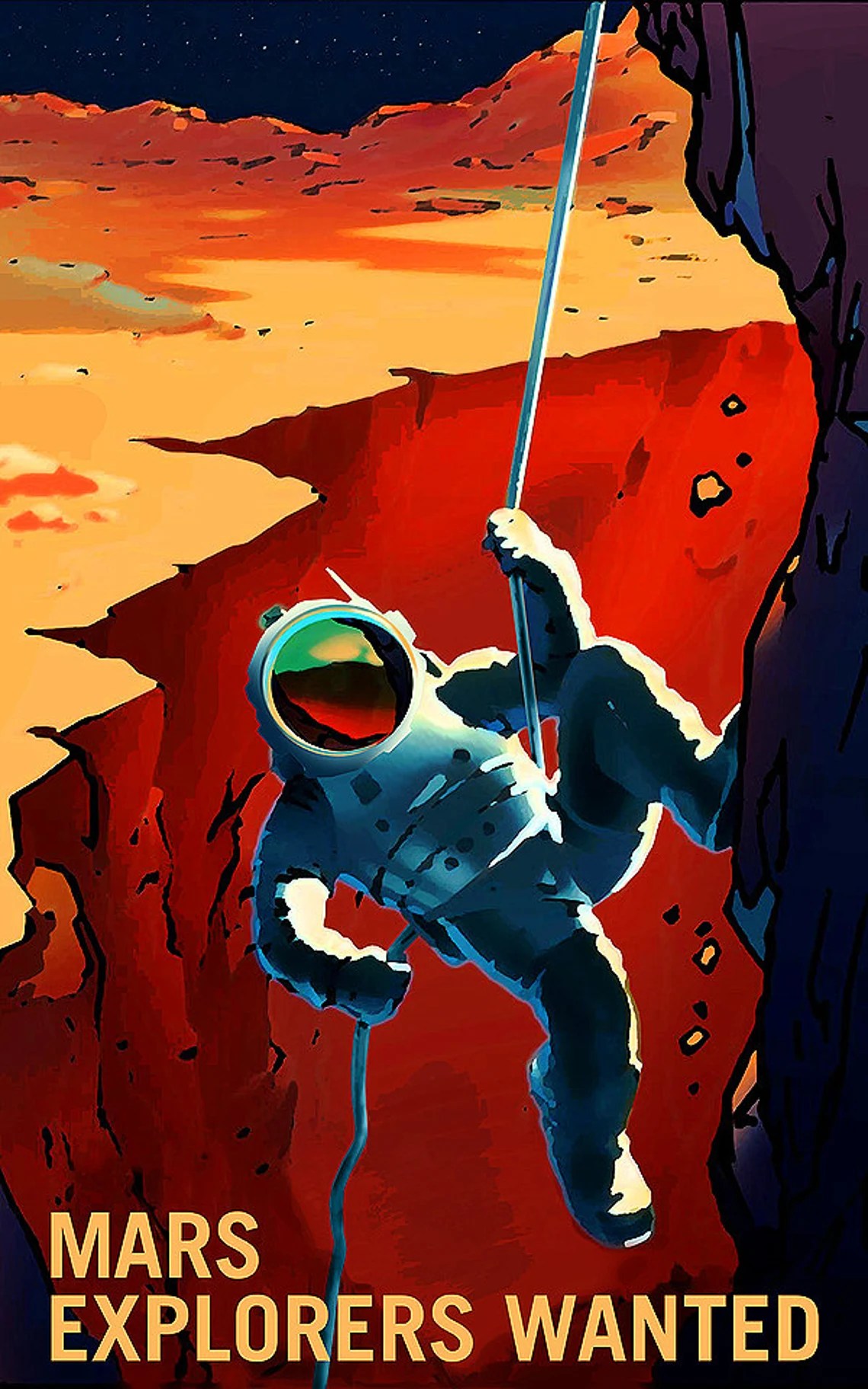
“We will pursue our manifest destiny into the stars, launching American astronauts to plant the Stars and Stripes on the planet Mars.”

-Inaugural statement by President Trump on January 20, 2024. He may want to check with NASA on the Artemis program given that the planned trip to the Moon has already cost taxpayers billions of dollars. He might also want to read a recent Politico story that discusses congressional preference for a Moon first program. The story quotes Texas Republican Brian Babin, who stated, “To bypass the moon would be a mistake.” It might also look bad to give the Moon to the Chinese long before we figure out a way to safely get to Mars. For all of Musk’s talk on this matter, the loss of a Starship rocket last week was not encouraging. We are having trouble enough getting ready to return to the Moon.

A Day in Astronomy: Birth of Edgar Allan Poe

Image (Credit): Illustration for Edgar Allan Poe’s “The Unparalleled Adventure of One Hans Pfaall” in Jules Verne’s “Edgar Poe et Ses Oeuvres.” (Musée des Familles magazine from Pari in 1864, courtesy of the Bibliothèque Nationale de France)

On this day in 1809, Edgar Poe was born in Boston, MA. “Allan” was added later as his middle name after he lost both parents and was taken in by the Allan family. He would only live for 40 years, but in that short time he created a wealth of stories that are still fresh in the minds of all of us, be it The Raven or The Fall of the House of Usher.

While many may think only of Gothic fiction when hearing the name Edgar Allan Poe, you should add astronomy to that list given Mr. Poe 1835 short story titled The Unparalleled Adventure of One Hans Pfaall. In this tale, his main character spends 19 days traveling to the Moon in a balloon and sends back a letter detailing his exploits.

This simple story may have inspired the Great Moon Hoax in 1935 about a massive telescope sighting strange beasts on the lunar surface, including zebras and unicorns. More importantly, it may have inspired Jules Verne to write From the Earth to the Moon, which was published in 1865.

The short story itself is somewhat dry and filled with calculations, as is the case with From the Earth to the Moon. As far as Mr. Pfaall’s findings once arriving on the Moon, you will learn little about the lunar inhabitants he discovered nor the Moon itself (you can read the entire story here).

This is just an example of how he defines the Moon’s inhabitants:

I had barely time to observe that the whole country, as far as the eye could reach, was thickly interspersed with diminutive habitations, ere I tumbled headlong into the very heart of a fantastical-looking city, and into the middle of a vast crowd of ugly little people, who none of them uttered a single syllable, or gave themselves the least trouble to render me assistance, but stood, like a parcel of idiots, grinning in a ludicrous manner, and eyeing me and my balloon askant, with their arms set a-kimbo.

While it’s not The Martian Chronicles, it still represents Poe’s curiosity about lunar travel distilled into a single tale. It also became the starting point for all of the fantastic science fiction that followed to this day.

Podcast: Cool Worlds Considers Communicating with Aliens

Credit: Cool Worlds

You may enjoy this week’s episode from the Cool Worlds Podcast all about leaving evidence of our civilization for alien visitors, or even a future civilization here on Earth. The episode, “Nick Searra – Alien Communication, Golden Record, Future Relics,” covers a lot of ground from the Pioneer and Voyager missions to the idea of placing time capsules about our civilization on the Moon or even within the orbit of Jupiter.

The guest is Nick Searra, who is Founder and Executive Directory of the Interstellar Foundation. The Interstellar Foundation has a clear mission – to create messages that represent the diversity and creativity of humanity, inspire future generations of explorers, and communicate with potential extraterrestrial life.

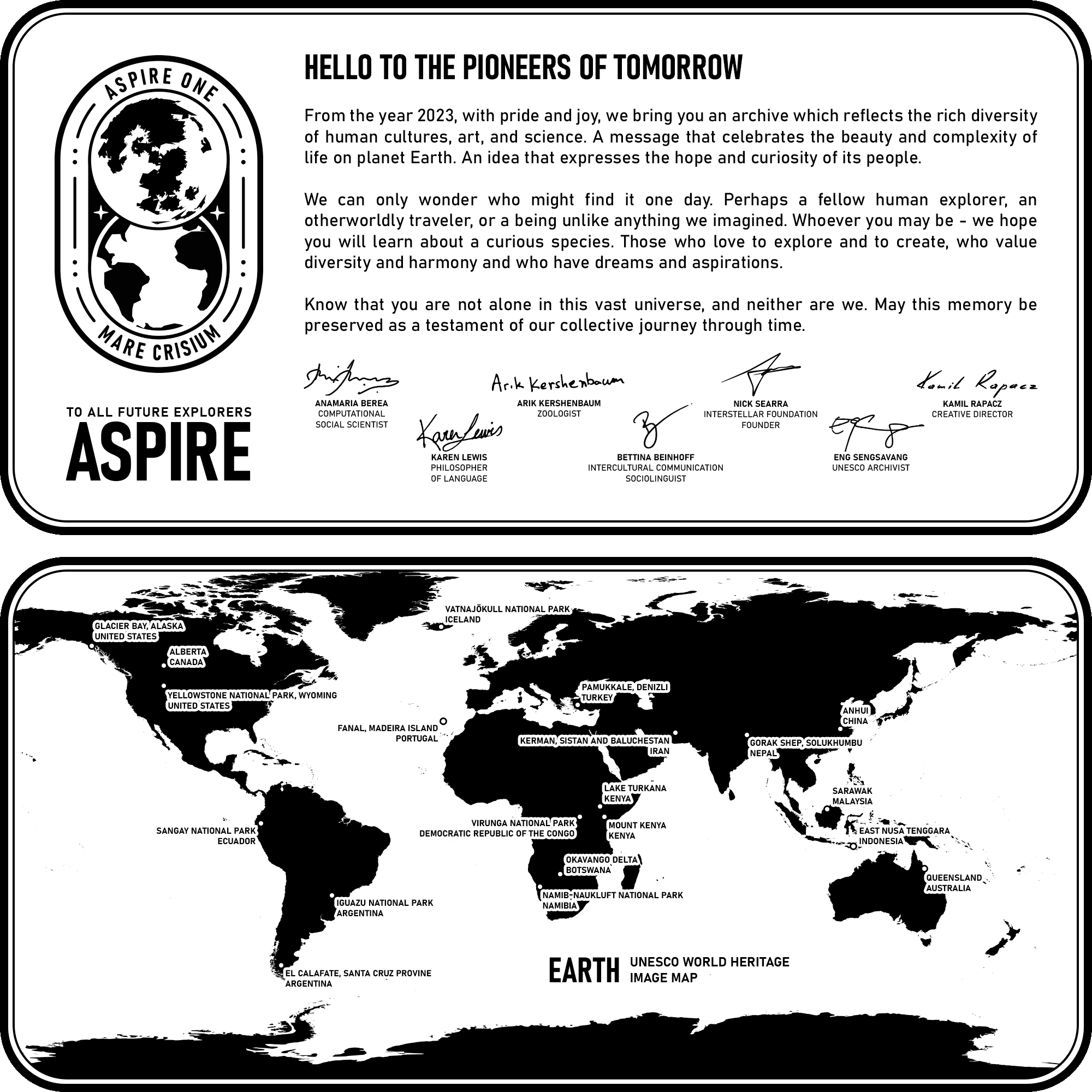
On the site, you an read about the Foundation’s Aspire One, which was an effort to create a lunar record to preserve Earth’s cultural and scientific heritage on the Moon. Preserved records include UNESCO archives, World Heritage images, and other scientific, historical, and cultural material. This message is already on its way to the Moon via this week’s launch of the Blue Ghost lunar lander.

A second messaging mission, Aspire Two, is now in development.

The podcast discussion and related website basically cover the continuation of work stared by Carl Sagan with the launch of Pioneer 10 back in 1972. I recommend you check out both of them.

Image (Credit): Sample images from Aspire One. (Interstellar Foundation)

Blue Origin Looses a Booster, and SpaceX Looses a Rocket

Image (Credit): Debris from the recent Starship streak across the sky over Turks and Caicos Islands. (Marcus Haworth via Reuters)

Overall, it was a good week in space with two lunar missions launched and the successful test of Blue Origin’s New Glenn rocket. Unfortunately, it did not end so well when SpaceX lost its Starship rocket during its seventh test of that system.

While the Starship’s booster made another dramatic landing, the rocket itself disintegrated 10 minutes after launch from Texas to became fireworks over the Caribbean. SpaceX prefers the term “rapid unscheduled disassembly,” but the results are the same.

Following the launch, SpaceX posted:

It served as a reminder that development testing, by definition, can be unpredictable…We will conduct a thorough investigation, in coordination with the FAA, and implement corrective actions to make improvements on future Starship flight tests.

It is also worth remembering that fancy booster landings are beside the point when your crew and cargo have disintegrated, which fortunately was not the case here. SpaceX needs to keep its focus on the rocket first and foremost.

Maybe the same can be said about the company’s CEO.