
Here are some recent stories of interest..
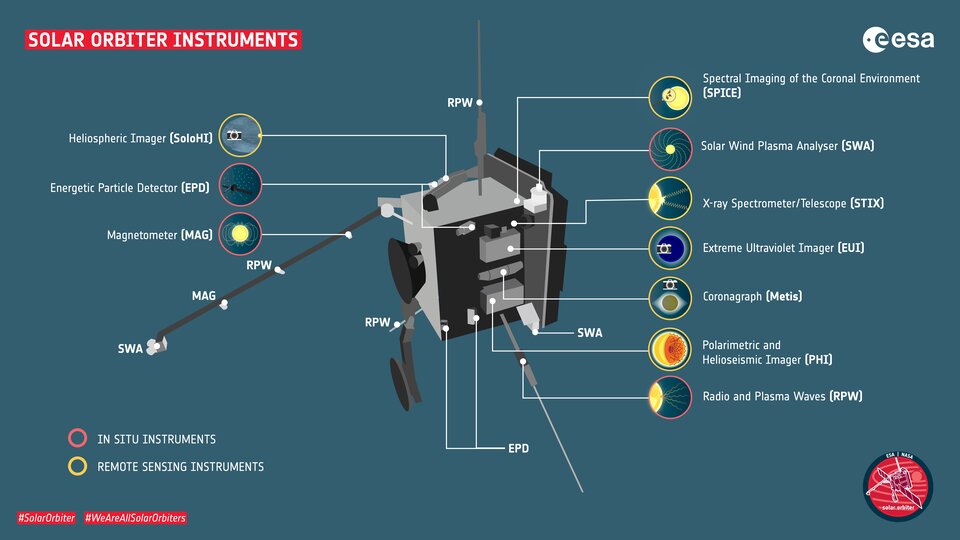
—European Space Agency: “Solar Orbiter Ready for Close Encounter with Venus’“
The European Space Agency (ESA) is ready to guide the ESA/NASA Solar Orbiter spacecraft through its closest encounter with Venus so far. Today’s flyby will be the first to significantly ‘tilt’ the spacecraft’s orbit and allow it to see the Sun’s polar regions, which cannot be seen from Earth. Studying the Sun’s poles will improve our understanding of solar activity, space weather, and the Sun-Earth connection.
—UC Irvine News: “UC Irvine Astronomers Gauge Livability of Exoplanets Orbiting White Dwarf Stars’“
Among the roughly 10 billion white dwarf stars in the Milky Way galaxy, a greater number than previously expected could provide a stellar environment hospitable to life-supporting exoplanets, according to astronomers at the University of California, Irvine. In a paper published recently in The Astrophysical Journal, a research team led by Aomawa Shields, UC Irvine associate professor of physics and astronomy, share the results of a study comparing the climates of exoplanets at two different stars. One is a hypothetical white dwarf that’s passed through much of its life cycle and is on a slow path to stellar death. The other subject is Kepler-62, a “main sequence” star at a similar phase in its evolution as our sun.
—Uppsala University: “Mission Accomplished for Space Telescope Gaia’“
The space telescope Gaia has created the largest three-dimensional map of the Milky Way ever. On January 15, 2025, Gaia shut down after 11 years in space. But the research on data Gaia collected will continue for many years to come. Gaia is a space telescope onboard a satellite that has orbited the sun for 11 years. With the help of astrometry, which is a technique to measure the positions, distances and movements of stars and other heavenly bodies, Gaia has been able to measure distances and luminosities for up to 2 billion stars, which is about 1% of all stars in the Milky Way.
 Our Awesome Universe