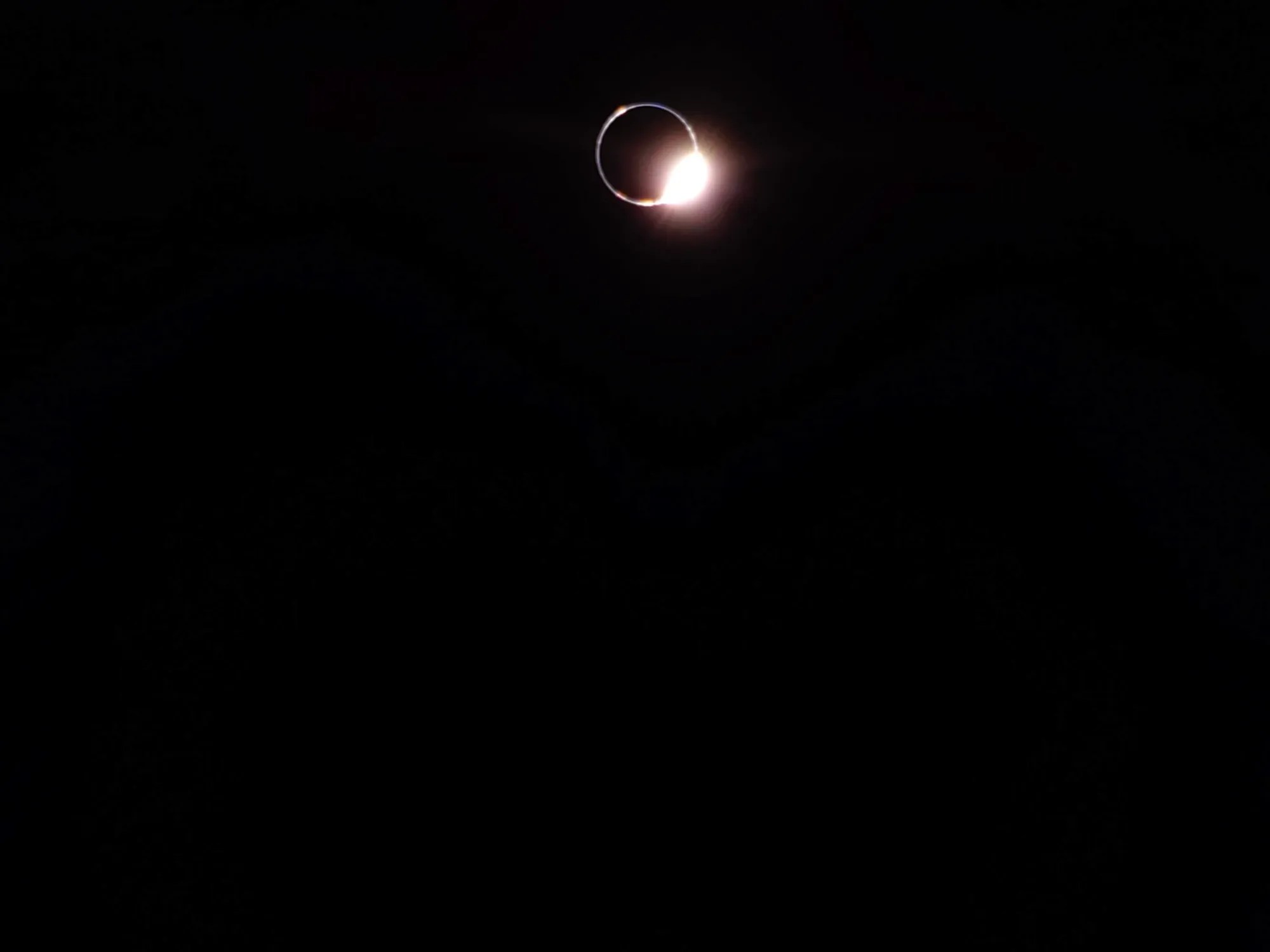
Image (Credit): The March 14, 2025 total lunar eclipse as seen from the Moon’s surface thanks to Firefly’s Blue Ghost Mission 1 lunar lander. (Firefly Aerospace)
If you were lucky enough to capture the total lunar eclipse last Friday, you are lucky. However, the image above shows a very different view of the event from an even luckier little craft on the Moon’s surface. That’s right, Firefly’s Blue Ghost lunar lander took a moment away from its work to snap this amazing image of a solar eclipse caused by the Earth blocking to Sun’s light.
The future should bring more craft and even humans to the lunar surface, which will provide many more amazing images of our floating blue marble.
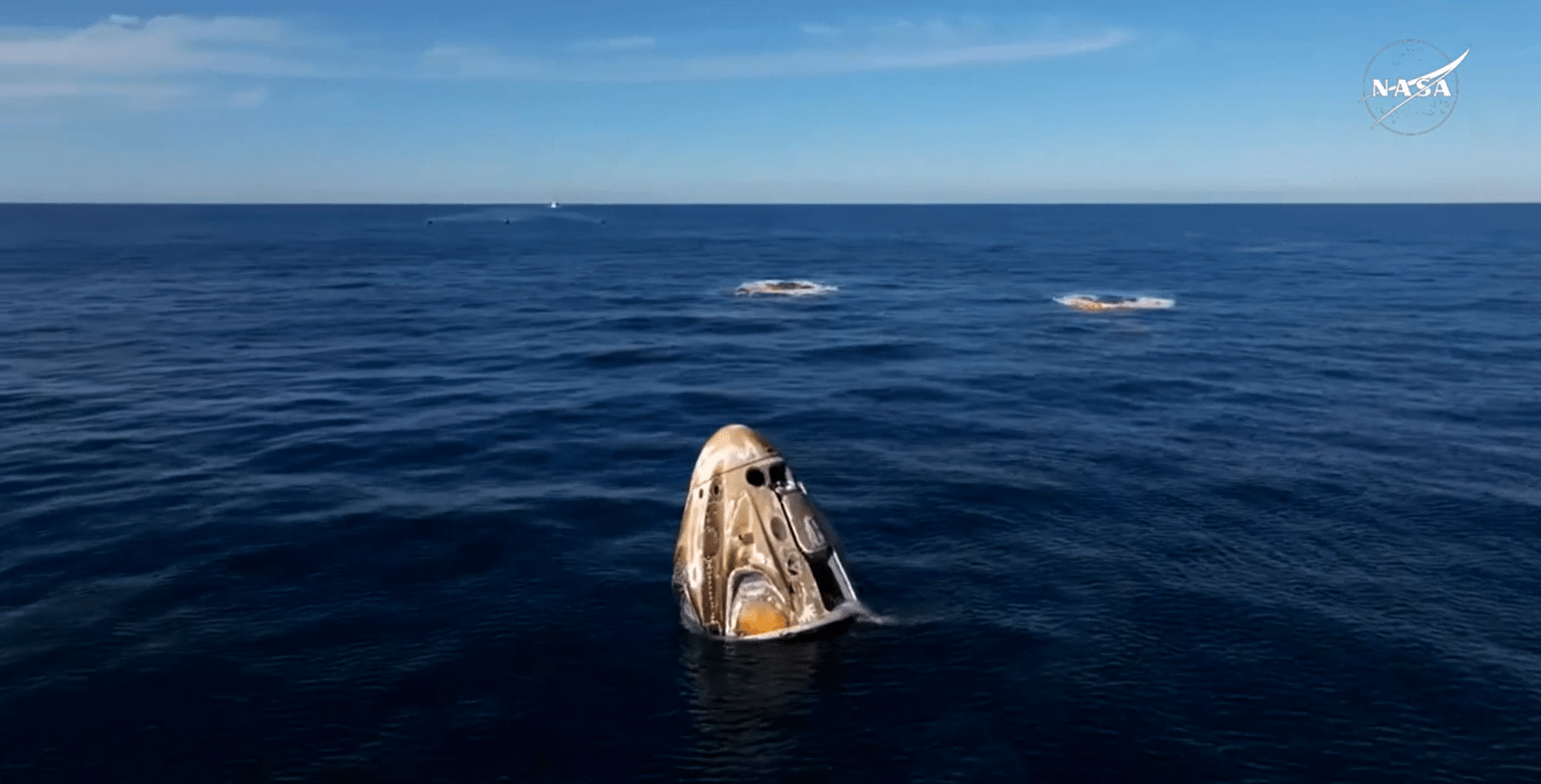
Image (Credit): The SpaceX Falcon 9 rocket standing ready earlier in the week to launch the Crew-10 members to the ISS. (SpaceX)
Yesterday saw the launch of the Crew-10 members from NASA’s Kennedy Space Center in Cape Canaveral. The Crew-10 members heading to the International Space Station (ISS) are NASA astronauts Anne McClain and Nichole Ayers, JAXA (Japan Aerospace Exploration Agency) astronaut Takuya Onishi, and Roscosmos cosmonaut Kirill Peskov.
This new crew will relieve the current ISS crew, which includes two astronauts (Suni Williams and Butch Wilmore) who arrived at the station last year on the Boeing Starliner only to stay longer than anticipated.
NASA has shown innovation by integrating Williams and Wilmore into the Expedition 72 crew and keeping them busy. Both of their attitudes have been positive throughout this process, regardless of all the drama back on Earth started by Elon Musk about a “rescue.”
NASA doesn’t do drama. We can expect a safe and professional transition of crews.
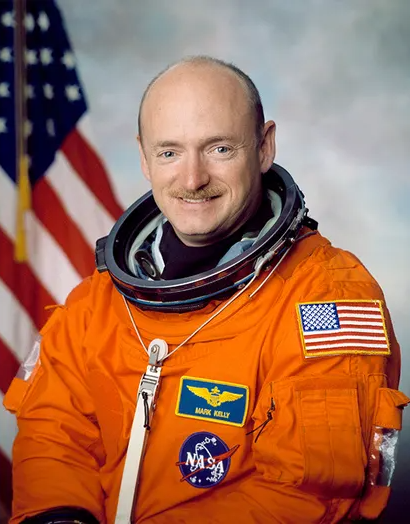
Image (Credit): Mark Kelly from his time as a NASA astronaut. (NASA)
”I swore an oath to our Constitution, to protect and defend the Constitution. I have lived that oath my entire life... [The] only oath I can think of that maybe Elon has sworn is an oath to his checking account, to his pocketbook. An oath, maybe, to ruining the lives of veterans.”
-Statement by Senator Mark Kelly, as quoted by The Independent, after Elon Musk called him a traitor for visiting Ukraine and criticizing Russia’s invasion. The Senator, who served as both a Navy pilot and a NASA astronaut, said Mr. Musk should focus his time on building rockets, which is a bit of a slam given that the last two Starship tests ended in explosions. Senator Kelly later said he is getting rid of his Telsa car because it reminds him of the amount of damage Donald Trump and Elon Musk are doing to the country.
Image (Credit): Lynds 483 as captured by the JWST. (NASA, ESA, CSA, STScI)
This week’s image is from the James Webb Space Telescope. It shows two actively forming stars that are 650 light-years away. The formation is called Lynds 483, or L483, after American astronomer Beverly Turner Lynds, who studied nebulae in the early 1960s.
The two protostars responsible for this scene are at the center of the hourglass shape, in an opaque horizontal disk of cold gas and dust that fits within a single pixel. Much farther out, above and below the flattened disk where dust is thinner, the bright light from the stars shines through the gas and dust, forming large semi-transparent orange cones.
It’s equally important to notice where the stars’ light is blocked — look for the exceptionally dark, wide V-shapes offset by 90 degrees from the orange cones. These areas may look like there is no material, but it’s actually where the surrounding dust is the densest, and little starlight penetrates it. If you look carefully at these areas, Webb’s sensitive NIRCam (Near-Infrared Camera) has picked up distant stars as muted orange pinpoints behind this dust. Where the view is free of obscuring dust, stars shine brightly in white and blue.
The work NASA conducts in space leads to ongoing innovations benefiting people on Earth. Some of these latest technologies, which have been successfully transferred from NASA to the commercial sector, are featured in the latest edition of Spinoff 2025 publication now available online. The publication features more than 40 commercial infusions of NASA technologies, including research originated at NASA’s Glenn Research Center in Cleveland.
When the National Aeronautics and Space Administration‘s lease on its current Washington, D.C. headquarters expires in 2028, Ohio members of Congress want NASA to move its headquarters to Ohio. In a Tuesday letter to Vice President JD Vance and President Donald Trump’s nominee to be NASA Administrator, Jared Isaacman, Ohio Congress members argue that bringing the headquarters of the nearly 18,000 employee agency to their state would align with broader government efforts to decentralize federal agencies and reinvigorate parts of the country outside Washington.
Astronomers have discovered 128 new moons orbiting Saturn, further solidifying the planet as the “moon king” of our solar system. Astronomers from Taiwan, Canada, France and the U.S. announced the discovery on Tuesday. The findings push Saturn’s moon count to 274, towering over the previous record-holder Jupiter, which has 95 moons. The recent discovery points to what astronomers have speculated for decades, that Saturn’s rings were caused by a massive collision about 100 million years ago, researcher Mike Alexandersen, an astronomer at the Center of Astrophysics, told USA TODAY. A collision of such size could explain the small moons that orbit Saturn.



 Our Awesome Universe