Space Stories: Even More Space Tourists, Upcoming Asteroid Encounter, and Copernicus Had Help

Image (Credit): New Shepard’s NS-31 Mission crew. (Blue Origin)

Here are some recent stories of interest.

ABC News: Blue Origin Mission with All-female Crew, Including Katy Perry, Completes Space Trip

Blue Origin’s all-female crew, which included pop star Katy Perry, completed their trip into space Monday morning. The flight lasted around 11 minutes and traveled more than 60 miles above Earth, according to Blue Origin, passing the Kármán line, which at 62 miles above sea level is considered to be the boundary between Earth’s atmosphere and outer space. Along with Perry, the crew included Blue Origin owner Jeff Bezos’ journalist fiancée, Lauren Sanchez, who is also a helicopter pilot.

NASA: NASA’s Lucy Spacecraft Prepares Second Asteroid Encounter

NASA’s Lucy spacecraft is 6 days and less than 50 million miles (80 million km) away from its second close encounter with an asteroid; this time, the small main belt asteroid Donaldjohanson. This upcoming event represents a comprehensive “dress rehearsal” for Lucy’s main mission over the next decade: the exploration of multiple Trojan asteroids that share Jupiter’s orbit around the Sun.

University of Sharjah: Copernicus May Have Leaned on Ancient Muslim Astronomer in Developing his Cosmological System

New research has revealed that the cosmological model developed by Nicolaus Copernicus, the renowned European Renaissance polymath, bears striking resemblance to the one designed by an Arab Muslim astronomer nearly two centuries earlier. The research conducted at the University of Sharjah is a comparative and analytical study which examines in parallel the writings of Copernicus in correlation with the works of the 14th century Muslim astronomer Ibn al-Shatir.

Space Quote: Senator’s Warning About NASA Cuts

Image (Credit): NASA’s Goddard Space Flight Center in Greenbelt, Maryland. (NASA)

“When you pull the plug on major space science, it’s like eating your seed corn; it’s so damaging to our entire ecosystem when it comes to American leadership and innovation in this area…We will lose engineers, we will lose others to China. In fact, they are launching a major space exploration initiative.”

Statement by Maryland Senator Chris Van Hollen commenting on potential DOGE cuts after visiting NASA’s Goddard Space Flight Center just outside the Washington, DC Beltway. The Center is home to the nation’s largest organization of scientists, engineers and technologists who build spacecraft, instruments and new technology to study Earth, the sun, our solar system, and the universe.

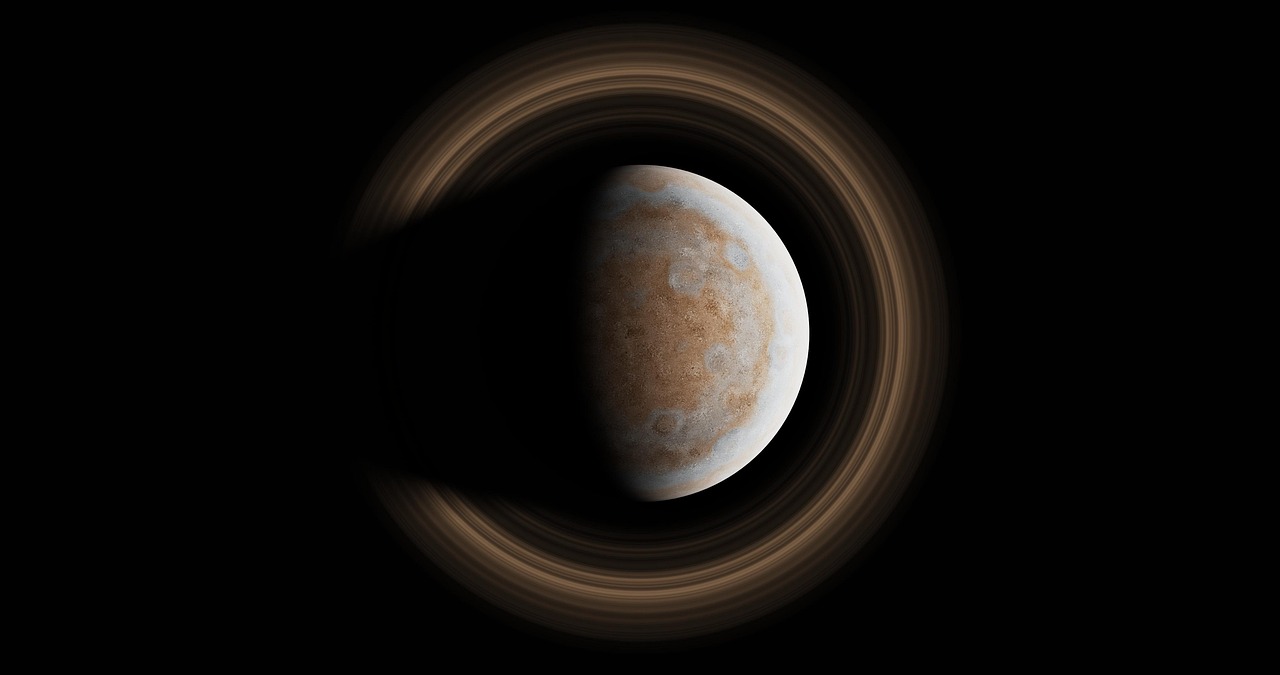
Good Article: Understanding Rogue Planets

Credit: Image by Dewald Van Rensburg from Pixabay.

Scientific American magazine has an interesting article on rogue planets, titled “How Many Rogue Planets Roam the Milky Way?” It discusses those lonely exoplanets that may or may not have started in a solar system, but nonetheless now drift in the darkness alone.

The article discusses a new paper from a team of astronomers at the Technion–Israel Institute of Technology that looked at the ejection of planets from planetary systems. Among the various findings noted, the team found that within the first billion years of a planetary system, on average as many as 3.5 planets are ejected , with most ejections happen within the first 100 million years. Moreover, systems with 10 or more planets eject more planets – as many as 70 percent of the system’s planets.

So that brings us back to our solar system. How many rogue planets did we spin off billions of years ago? We will never really know, but it gives one plenty to ponder when thinking about what awaits us out there should we venture beyond our present home system. Will we find old friends?

Note: An earlier article estimated there are seven rogue planets for every star in our galaxy, meaning the Milky Way may host trillions of rogue planets.

The Internet Satellite Race Continues, Almost

Amazon hopes to challenge SpaceX’s Starlink system, but not just yet.

The launch planned for earlier this week place 27 internet satellites into orbit as part of Amazon’s Project Kuiper was scrubbed at the last minute. The United Launch Alliance (ULA) launch, scheduled for last Wednesday, was delayed due to bad weather.

If all goes according to plan, Project Kuiper will have about 1,600 satellites in orbit by the middle of next year. That would mean about 80 launches over that period, which seems somewhat unlikely given ongoing delays. In addition to ULA launches, Amazon is booking launches with Arianespace, Blue Origin, and SpaceX. When the project is complete, about 3,200 Kuiper internet satellites will be in orbit.

The Kuiper satellites will compete head-to-head with SpaceX’s Starlink (with its goal of 42,000 satellites) and China’s SpaceSail (with its goal of 15,000 satellites).

A new launch date for the first launch of the Kuiper internet satellites has not been announced yet.

Update: I forgot to mention another competitor – Eutelsat’s Oneweb in the European Union, which already has about 650 Internet satellites in Low Earth Orbit.

Second Update: This story, “Telecommunications Satellites and Space Exploration,” has a nice summary about how we arrived at the current moment with our satellite technology as well as what the future may hold.

Planetary Society Decries NASA Budget Cuts

Image (Credit): Artist’s rendering of the Nancy Grace Roman Space Telescope, which is one of the programs that NASA may need to cut as a result of proposed budget cuts. (Institute of Space and Aeronautical Science)

Earlier today, the Planetary Society issued a press release condemning recently announced proposed science cuts at NASA. This is the same week that the Senate heard from the nominee for NASA Administrator, Jared Isaacman, who stated in his written testimony:

I am an advocate for science. During these missions to space, my crew & I performed approximately 50 science and research experiments. I have also publicly supported the Chandra x-Ray Observatory and offered to fund a mission to extend the life and capabilities of the Hubble space telescope.

In its press release, the Planetary Society pulled no punches:

Days ago, the Administration’s nominee to lead NASA called for a “new golden age of science and discovery” at the agency. The proposed budget from within the White House — which cuts NASA science by 47% — would plunge NASA into a dark age instead.

If enacted, this budget would force the premature termination of dozens of active, productive spacecraft. These spacecraft are unique assets: their instrumentation and capabilities cannot be replaced without billions of dollars of new taxpayer investment. No commercial or private space companies can fill this gap.

This budget would halt the development of nearly every future science project at NASA, wasting billions of dollars of taxpayer funds already spent on these projects, abandoning international and commercial partners, and surrendering U.S. leadership in space science to other nations.

This budget would eviscerate space science research, withering the nation’s STEM talent pipeline by removing opportunities to train future scientists and engineers.

The Planetary Society condemns this proposal for NASA and for NASA science. We urge Congress to swiftly reject this proposal and restore funding for NASA’s Science Mission Directorate. We remain committed to joining with all stakeholders to protect and promote U.S. leadership in the scientific exploration of space.

It is time to write to Congress about these cuts. The Planetary Society provided a helpful page to do this.

It is also a good time to get a full time Administrator to fight for the agency if Mr. Isaacman’s comments can be believed.