
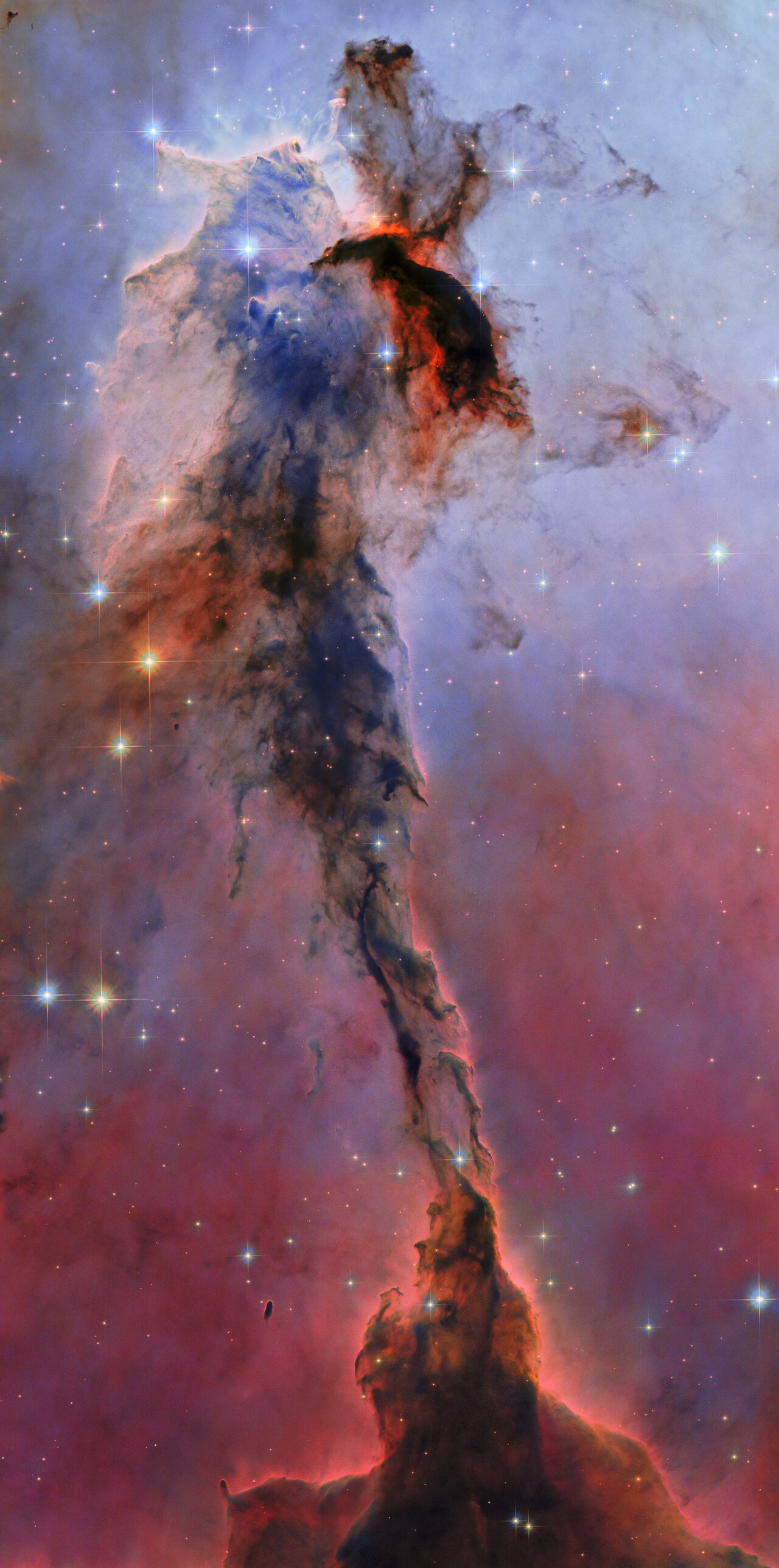
This week’s updated image is from the Hubble Space Telescope. It shows the Eagle Nebula in all its glory, located not too far from the Pillars of Creation.
For more on this spectacular image, we turn to the European Space Agency’s (ESA) Hubble page:
Unfurling along the length of the image is a pillar of cold gas and dust that is 9.5 light-years tall. As enormous as this dusty pillar is, it’s just one small piece of the greater Eagle Nebula, which is also called Messier 16. The name Messier 16 comes from the French astronomer Charles Messier, a comet hunter who compiled a catalogue of deep-sky objects that could be mistaken for comets.
The name Eagle Nebula was inspired by the nebula’s appearance. The edge of this shining nebula is shaped by dark clouds like this one, giving it the appearance of an eagle spreading its wings.
Not too far from the region pictured here are the famous Pillars of Creation, which Hubble has photographed multiple times, with images released in 1995 and 2015.
The heart of the nebula, which is located beyond the edge of this image, is home to a cluster of young stars. These stars have excavated an immense cavity in the centre of the nebula, shaping otherworldly pillars and globules of dusty gas. This particular feature extends like a pointing finger toward the centre of the nebula and the rich young star cluster embedded there.
The Eagle Nebula is one of many nebulae in the Milky Way that are known for their sculpted, dusty clouds. Nebulae take on these fantastic shapes when exposed to powerful radiation and winds from infant stars. Regions with denser gas are more able to withstand the onslaught of radiation and stellar winds from young stars, and these dense areas remain as dusty sculptures like the starry pillar shown here.
 Our Awesome Universe