Follow DIU Rather Than DOGE at NASA

Years ago the Department of Defense (DOD) established the Defense Innovation Unit (DIU) to use the full force of private sector innovation to address DOD needs. This has been a successful initiative that has lowered costs while improving DOD efficiency. Whether it is working to create better batteries or micro-reactors for the military, it represents the best efforts to do more with less.

Compare that to the now ill-fated Department of Government Efficiency (DOGE) that only demonstrates that the government will need to do less because it destroys rather than creates. NASA deserves better, and it is possible Elon Musk and friends could have done much better if they first learned about government programs and then redesigned them to be more efficient. That ship has sailed and DOGE only means Destroying Our Government’s Effectiveness.

It is not too late to bring a DIU equivalent into NASA to work around the giant space companies and look for simpler solutions to big problems. It will need a new name to erase the stain of DOGE, but it is something the taxpayers deserve – the most efficient and effective space program.

Note: You can find the FY 2023 DIU annual report here with many of its accomplishments listed.

Pic of the Week: Barred Spiral Galaxy NGC 5335

Image (Credit): Barred Spiral Galaxy NGC 5335 (NASA, ESA, STScI)

This week’s image looks like something ginned up by AI, but it is from the Hubble Space Telescope. Just the number of stray galaxies in the image is amazing.

Here is the description of the image from the European Space Agency’s (ESA) Hubble page:

Barred spiral galaxy NGC 5335 observed by the Hubble Space Telescope takes up the majority of the view. At its center is a milky yellow, flattened oval that extends bottom left to top. Within the oval is a bright central region that looks circular, with the very center the brightest. In the bright central region is what looks like a bar, extending from top left to bottom right. Around this is a thick swath of blue stars speckled with white regions. Multiple arms wrap up and around in a counterclockwise direction, becoming fainter the farther out they are. Both the white core and the spiral arms are intertwined with dark streaks of dust. The background of space is black. Thousands of distant galaxies in an array of colors are speckled throughout.

Space Quote: Lunar Sample Sharing

Image (Credit): China’s Chang’e-5 lunar lander. (China National Space Administration)

“I wish that every country would follow in the footsteps of the U.S. and now China.”

Statement by Frédéric Moynier, a cosmochemist at the Paris Institute of Planetary Physics, regarding China’s sharing of lunar samples from its 2020 Chang’e-5 mission. Seven institutions in six countries now have access to these samples, including two institutions in the United States. Unfortunately, the sample sharing goes only one way because the US Congress bans the sharing of space samples and technology with China.

Help NASA Classify New Galaxies

If you have a little bit of time left in your day, maybe you want to help NASA classify a few galaxies captured by the James Webb Space Telescope. The NASA site has more than 500,000 that need to be classified, and volunteers can make this process faster. For instance, you can help determine if a galaxy is round or has spiral arms.

While a lot of this classification work can be accomplished with artificial attention (AI), the program bumps into numerous images where human eyes can really help. Plus, you will be training the AI as you go.

If this sounds like fun, check out the site. You may be the first human to set eyes on a new galaxy. That sounds like a fun way to end the day.

Space Stories: Stranded Mars Samples, Cancelled Lunar Rover, and New Plans for Martian Travel

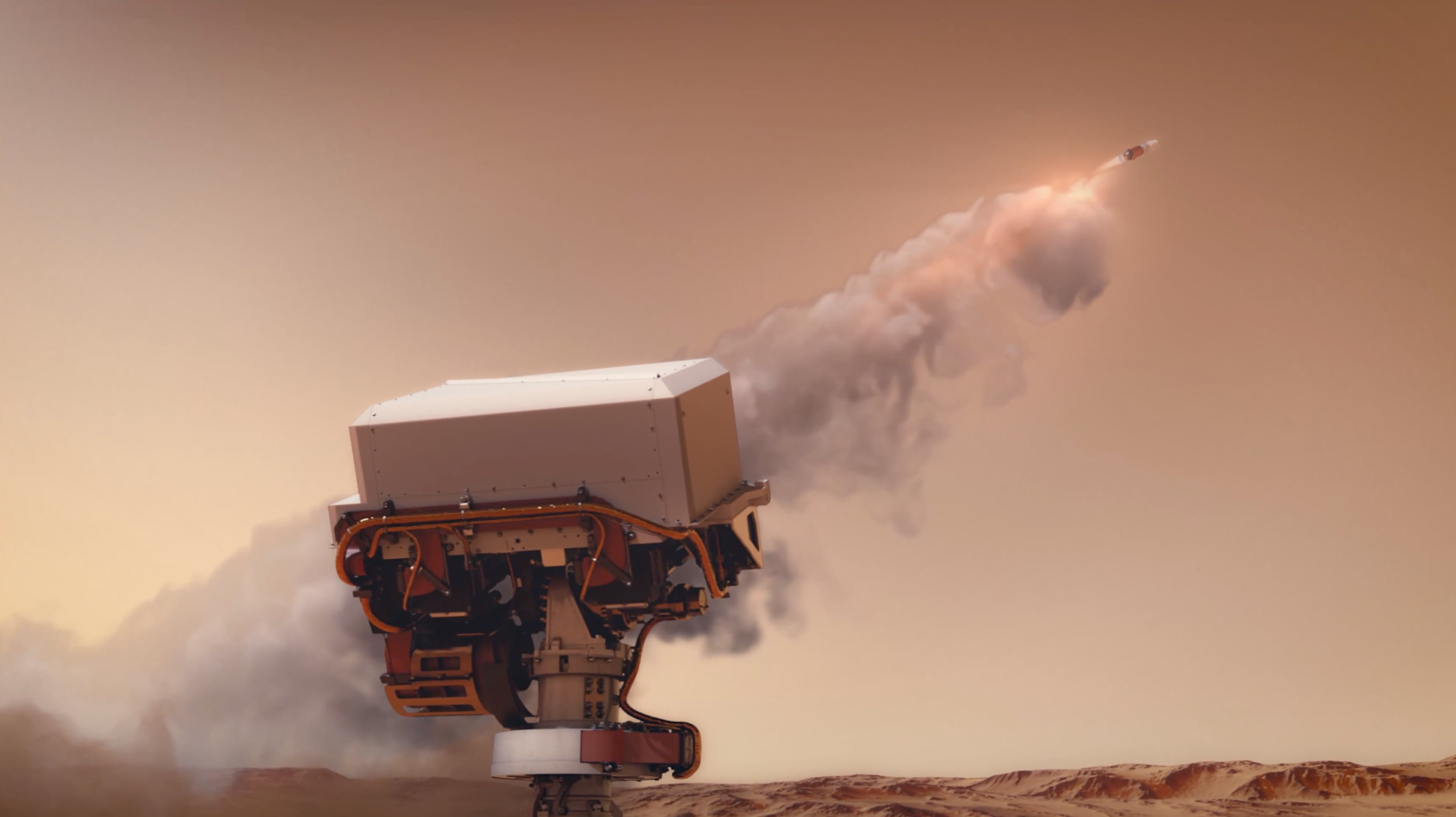
Image (Credit): Artist’s rendering of a Mars Sample Return initiative. (NASA)

Here are some recent space-related stories of interest.

Scientific American: NASA Spent Billions to Bring Rocks Back from Mars. Trump Wants to Leave Them There

on May 2 the White House’s Office of Management and Budget (OMB) dropped a budgetary bombshell, proposing to cut NASA’s top-line funding by a quarter, slash the space agency’s science budget by nearly half and entirely eliminate [the Mars Sample Return (MSR)}. The cancellation is justified, the OMB document claims, because MSR is “grossly overbudget” and its goals of sample return will instead “be achieved by human missions to Mars.”

Space News: NASA Backtracks on VIPER Commercial Partnership

 NASA has canceled plans to find a commercial partner to launch a robotic lunar rover and will instead pursue “alternative approaches” to fly the mission. In a May 7 statement, NASA said it is canceling a solicitation it released in February seeking proposals from industry on ways they could work with NASA to launch the Volatiles Investigating Polar Exploration Rover (VIPER) spacecraft. NASA envisioned having a company send VIPER to the south polar regions of the moon and handing operations of the rover there to look for water ice.

Politico: NASA, in Surprise Shift, May Launch Rockets to Mars Next Year

NASA is considering launching rockets to Mars next year, a major shift in priorities that could boost the fortunes of Elon Musk’s space company and speed up the timeline for astronauts to reach the red planet. The sudden switch follows the release of the White House’s 2026 budget proposal, which would increase funding for Mars-related projects by $1 billion and pay for the launches. It also signals the Trump’s administration’s intentions to prioritize sending people to Mars.