Watching NASA on Netflix

Credit: NASA

I’m glad to hear that NASA is working with Netflix to expand the amount of space stories available to the public.

This summer Netflix will make NASA+ live programming available to its customers, meaning more of the public can watch interviews with astronauts, the launch of space missions, and the happenings aboard the International Space Station (ISS). NASA also has plenty of entertaining videos about astronomy, various space missions, and more.

For example, Netflix customers will have access to content such as the launch of Russia’s Progress 92 Cargo Craft from the Baikonur Cosmodrome in Kazakhstan to the ISS on July 3rd, as well as the docking of this cargo craft with the ISS on July 5th . Or how about NASA videos, such as “Other Worlds: Europa“?

Of course, all of this is already available to the public for free on NASA’s website, but maybe this can draw in those eager viewers searching around for something to watch and not already aware of the website.

Any attempts to bring more attention to NASA’s amazing science and ongoing discoveries is good publicity as well as great programming.


Study Findings: The Influence of Passing Field Stars on the Solar System’s Dynamical Future

Credit: Image by Yol Gezer from Pixabay.

Icarus abstract of the study findings:

The long-term dynamical future of the Sun’s planets has been simulated and statistically analyzed in great detail, but most prior work considers the solar system as completely isolated, neglecting the potential influence of field star passages. To understand the dynamical significance of field star encounters, we simulate several thousand realizations of the modern solar system in the presence of passing field stars for 5 Gyrs. We find that the impulse gradient of the strongest stellar encounter largely determines the net dynamical effect of field stars. Because the expected strength of such an encounter is uncertain by multiple orders of magnitude, the possible significance of field stars can be large. Our simulations indicate that isolated models of the solar system can underestimate the degree of our giant planets’ future secular orbital changes by over an order of magnitude. In addition, our planets and Pluto are significantly less stable than previously thought. Field stars transform Pluto from a completely stable object over 5 Gyrs to one with a ∼5% instability probability. Furthermore, field stars increase the odds of Mercury’s instability by ∼50%–80%. We also find a ∼0.3% chance that Mars will be lost through collision or ejection and a ∼0.2% probability that Earth will be involved in a planetary collision or ejected. Compared to previously studied instabilities in isolated solar systems models, those induced by field stars are much more likely to involve the loss of multiple planets. In addition, they typically happen sooner in our solar system’s future, making field star passages the most likely cause of instability for the next 4–4.5 Gyrs.

Citation: Kaib, Nathan A. and Raymond, Sean N., The influence of passing field stars on the solar system’s dynamical future, Icarus (2005).

https://doi.org/10.1016/j.icarus.2025.116632

Study-related stories:

The New York Times

Science News

Planetary Science Institute

Upcoming Protest: NASA Needs Help!

Even if you cannot attend the protest on Monday, the site notes:

If you would rather not join this protest then there are still ways you can help. Please absolutely flood your representatives in Congress with pleas to save NASA. When you do, drive home the point that the cuts are happening now! Most of Congress seems to think that they will save NASA if they work out a budget for the coming fiscal year that funds NASA at previous levels. They don’t realize that NASA’s acting administrator, under pressure from the White House, OMB, and DOGE, are enacting “realignments” and cuts now. So please please please tell Congress that every day our nation is losing dedicated and brilliant career civil servants, contractors, and programs, that NASA is being fed into the woodchipper now. Congress must act immediately to save NASA, not wait for October 1!

For more information, visit https://sites.google.com/view/nasa-needs-help.

Mission Possible, But Not Yet

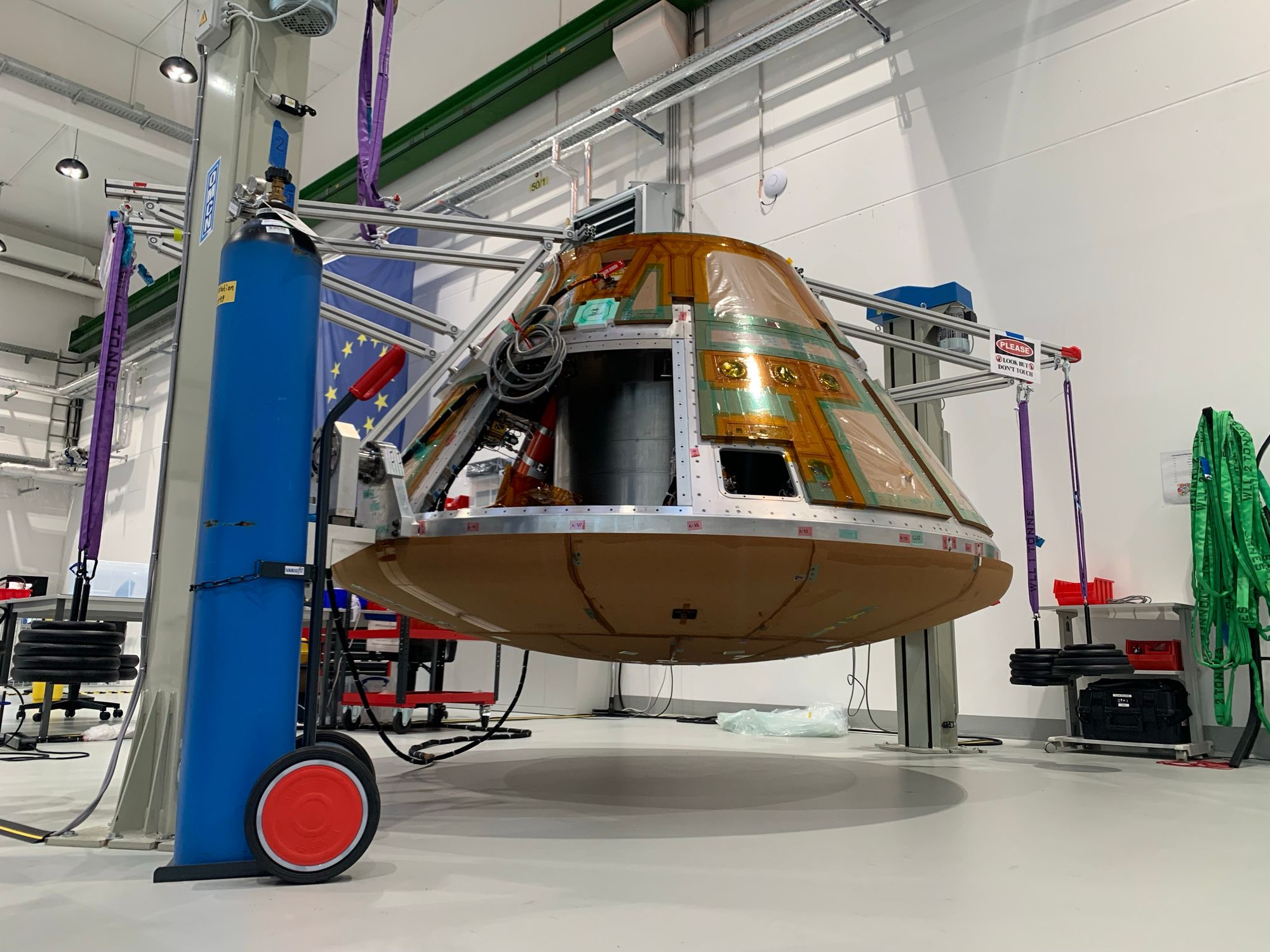
Image (Credit): The Mission Possible vehicle during construction. (The Exploration Company)

A new European space company came close to success with its space capsule early this week until it had problems with reentry. The Exploration Company, discussing its Mission Possible vehicle, had this to say:

The capsule was launched successfully, powered the payloads nominally in-orbit, stabilized itself after separation with the launcher, reentered and reestablished communication after black out…We are still investigating the root causes and will share more information soon. We apologize to all our clients who entrusted us with their payloads.

The Mission Possible capsule was expected to complete the following tasks:

  • Phase 1: Separation from the Launcher
  • Phase 2: Stabilizing the Capsule and Putting its Heatshield Forward
  • Phase 3: Atmospheric Re-entry
  • Phase 4: Parachute Deployment and Descent
  • Phase 5: Splashdown and Recovery

The problem appears to be related to the parachute deployment in Phase 4.

Launched into space aboard a SpaceX Falcon 9 rocket, the European company was preparing the way for its planned Nyx capsule. With the Nyx capsule, the company hopes to carve out a place for itself in the space cargo business – first in low-Earth orbit and later between the Earth and the Moon.

In an earlier press release, the company outlined its European roots:

Germany, Munich:Core of spacecraft avionics, power systems, and flight software. Also, a leader in additive manufacturing.
France, Bordeaux: Specializing in propulsion systems, reentry phase, thermal engineering, system engineering, and mission safety, also hosts the main control center.
Italy, Turin: Home to the babckup control center, docking and other complex mechanisms, life support system and high-thrust engine turbomachinery.
Luxembourg, opening in 2025: Dedicated to cryogenic refuelling, a critical development for deep-space missions.

This bold European company’s partial success should pave the way for more attempts and contribute to a greater European presence in the space industry.

Pic of the Week: Trifid and Lagoon Nebulas

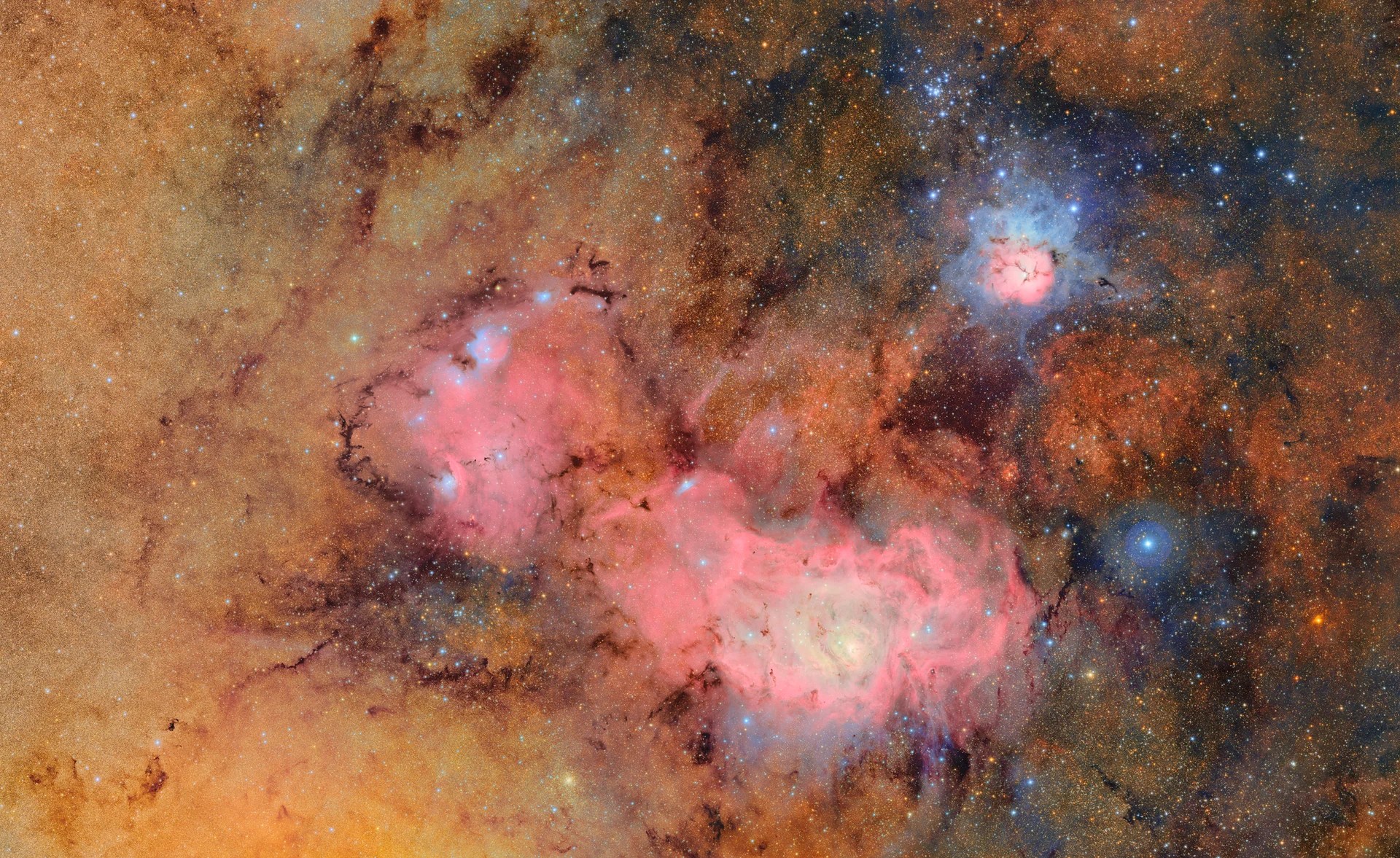
Image (Credit): The Trifid and Lagoon Nebulas as captured by the Vera C. Rubin Observatory. (NSF–DOE Vera C. Rubin Observatory)

This week’s colorful image is from the new Vera C. Rubin Observatory in Chile. It is part of the initial images being released as the observatory comes online. This particular image was created by combining 678 separate images. It shows clouds of gas and dust that comprise the Trifid nebula (top of image) and the Lagoon nebula (middle of image).

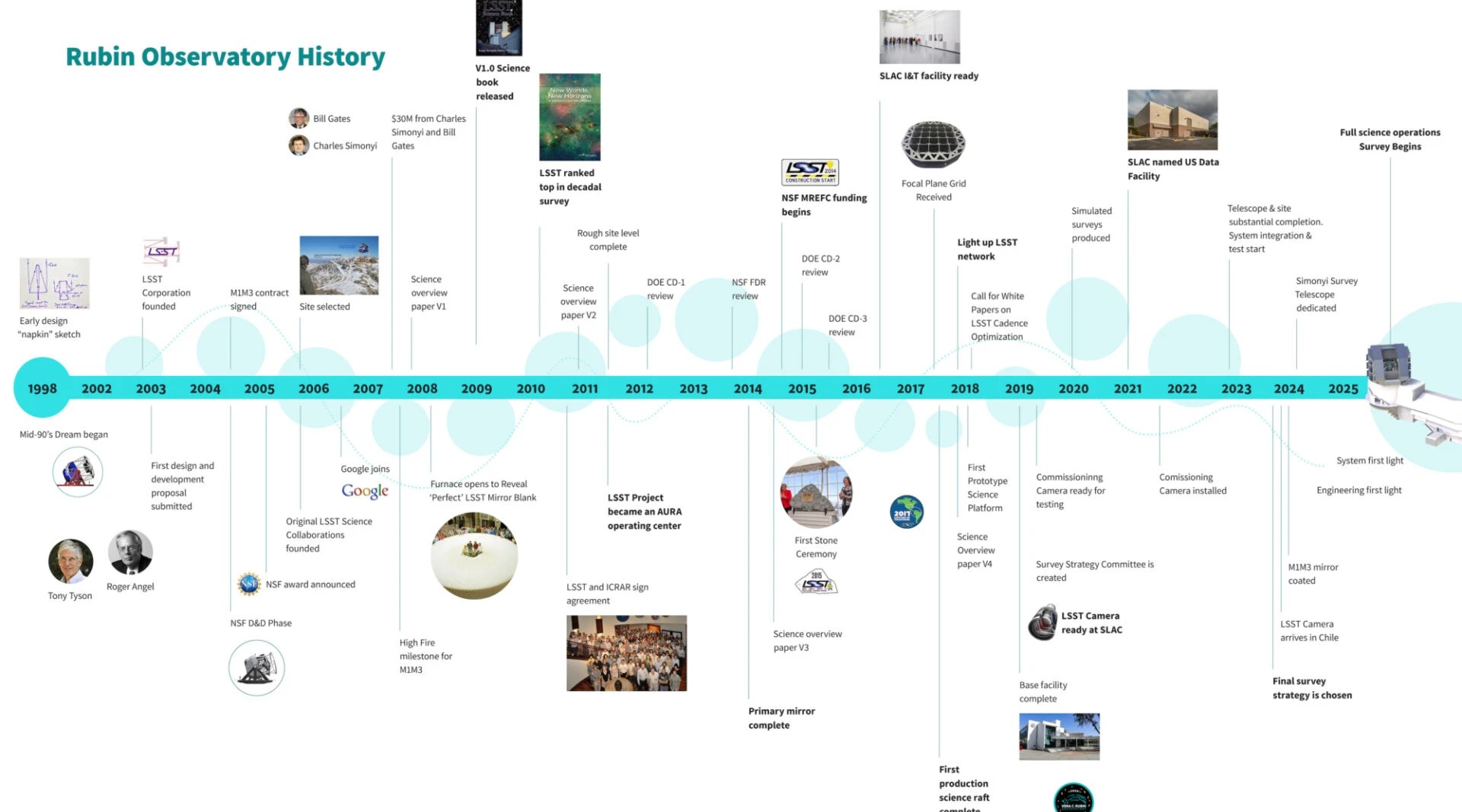
The new observatory is funded by the U.S. National Science Foundation and the U.S. Department of Energy’s Office of Science, and is expected to operate for at least 10 years so it can provide more amazing images and information for astronomers. The timeline related to the creation of the observatory is provided below as well as via this link.

Dr. Vera C. Rubin was an American astronomer known for her work proving the existence “dark matter” in the Universe.

Credit: Vera C. Rubin Observatory.