
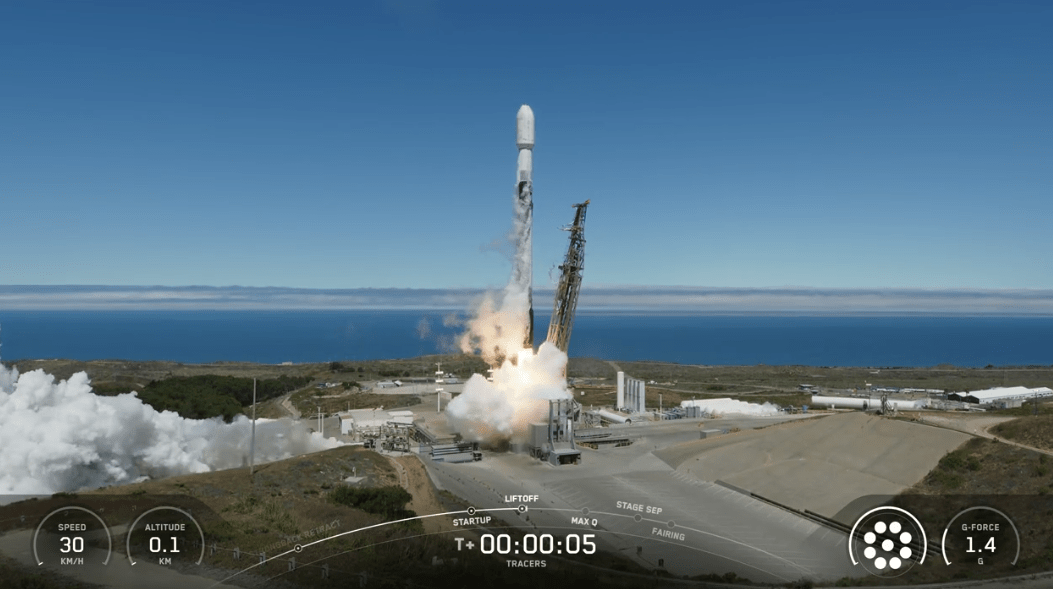
Earlier today, NASA’s Tandem Reconnection and Cusp Electrodynamics Reconnaissance Satellites (TRACER) twin satellites were successfully launched from Vandenberg Space Force Station in California.
The TRACER mission’s goal is to study magnetic reconnection and its effects in Earth’s atmosphere. Magnetic reconnection is the interplay between solar winds and the Earth’s magnetic field.
The two satellites, each about the size of a washing machine, will be in orbit over both the North and South poles for the next 12 months taking measurements.
In this interview, David Miles, TRACERS Principal Investigator at the University of Iowa, answers a number of questions about the current mission, including:
- Can you explain what space weather is?
- Why was this mission designed to have two spacecraft instead of just one?
- Why is understanding space weather important for protecting our astronauts as well as technology in space and on the ground?
You can learn even more about the mission from this NASA fact sheet.
It is encouraging to see scientific missions underway to better understand outside influences on our upper atmosphere. Let’s hope we can also maintain and expand on space missions that help us understand man-made influences on our atmosphere. Closing our eyes for political reasons is never a good idea.
 Our Awesome Universe