
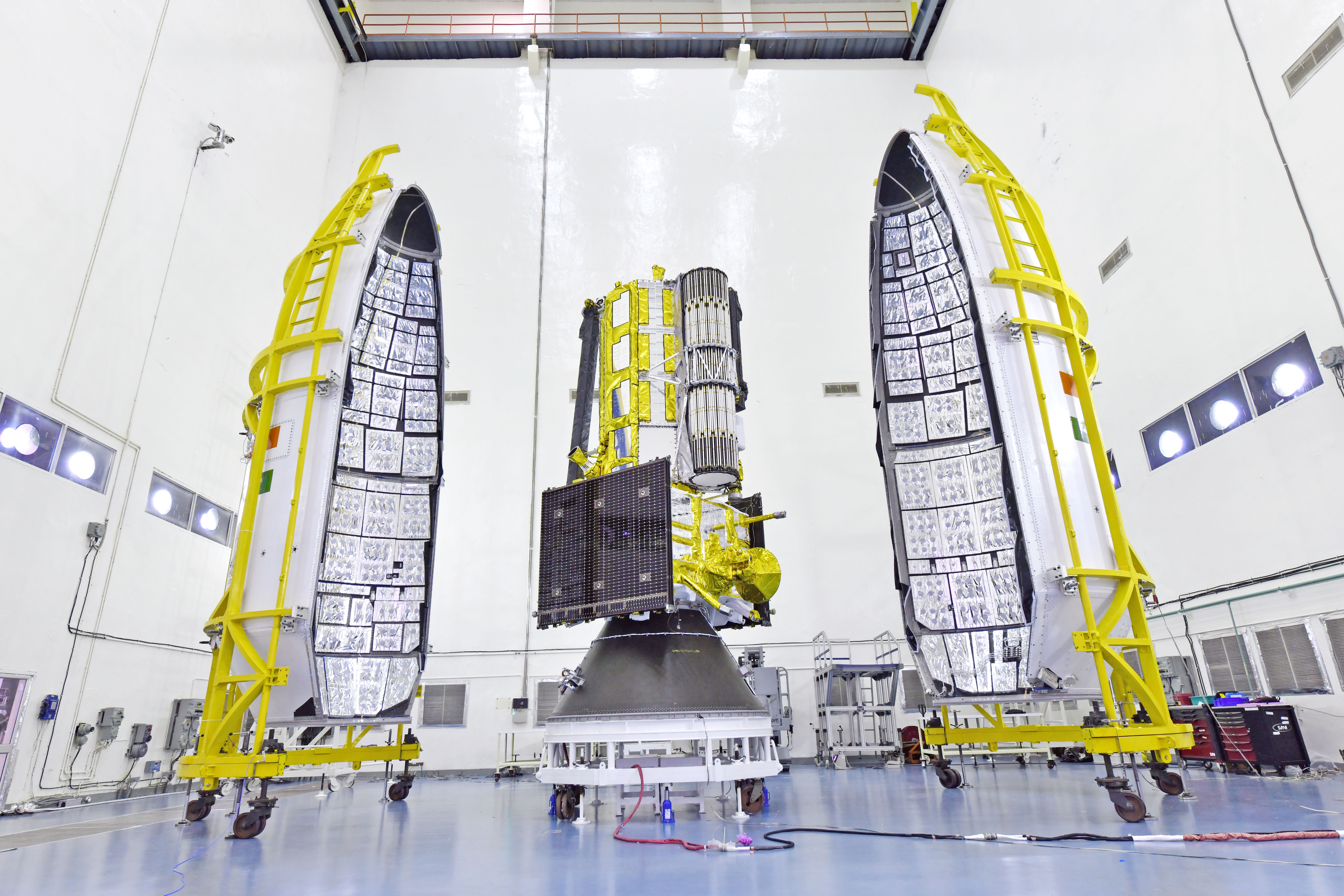
Earlier today the NASA-ISRO Synthetic Aperture Radar (NISAR) satellite was successfully launched from India’s Satish Dhawan Space Centre. ISRO stands for the Indian Space Research Organisation, which is India’s national space agency.
This first of its kind mission between NASA and India puts into orbit the NISAR satellite that can see the Earth in a new way, detecting the smallest of changes in the Earth’s surface from its 464 mile high orbit, including ground deformation, ice sheet movement, and vegetation dynamics. The addition list of satellite capabilities on the ISRO site include:
…sea ice classification, ship detection, shoreline monitoring, storm characterization, changes in soil moisture, mapping & monitoring of surface water resources and disaster response.
NASA’s Earth Science division director, Karen St. Germain, stated:
Observations from NISAR will provide new knowledge and tangible benefits for communities both in the U.S. and around the world…This launch marks the beginning of a new way of seeing the surface of our planet so that we can understand and foresee natural disasters and other changes in our Earth system that affect lives and property.
This will be useful information given that we run the risk of reverse-terraforming our Earth.
 Our Awesome Universe