Space Stories: Watching a Newborn Planet, Investigating a Cosmic Fossil, and TRACERS to Study Magnetic Fields

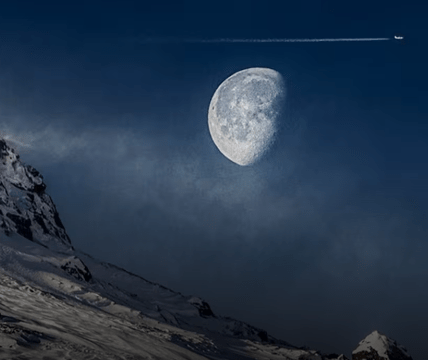
Credit: Image by Yol Gezer from Pixabay.

Here are some recent space-related stories of interest.

European Southern Observatory: Astronomers Witness Newborn Planet Sculpting the Dust Around It

Astronomers may have caught a still-forming planet in action, carving out an intricate pattern in the gas and dust that surrounds its young host star. Using ESO’s Very Large Telescope (VLT), they observed a planetary disc with prominent spiral arms, finding clear signs of a planet nestled in its inner regions. This is the first time astronomers have detected a planet candidate embedded inside a disc spiral. “We will never witness the formation of Earth, but here, around a young star 440 light-years away, we may be watching a planet come into existence in real time,” says Francesco Maio, a doctoral researcher at the University of Florence, Italy, and lead author of this study, published today in Astronomy & Astrophysics.

Space.com: Astronomers Discover a Cosmic ‘Fossil’ at the Edge of Our Solar System. Is this Bad News for ‘Planet 9’?“

Astronomers have discovered a massive new solar system body located beyond the orbit of Pluto. The weird elongated orbit of the object suggests that if “Planet Nine” exists, it is much further from the sun than thought, or it has been ejected from our planetary system altogether. The strange orbit of the object, designated 2023 KQ14 and nicknamed “Ammonite,” classifies it as a “sednoid.” Sednoids are bodies beyond the orbit of the ice giant Neptune, known as trans-Neptunian objects (TNOs), characterized by a highly eccentric (non-circular) orbit and a distant closest approach to the sun or “perihelion.”

Southwest Research Institute: TRACERS Mission Prepares for Launch

NASA’s Tandem Reconnection and Cusp Electrodynamics Reconnaissance Satellites (TRACERS) mission, a collaborative effort led by the University of Iowa (UI) with substantial contributions from Southwest Research Institute (SwRI), has entered its final integration phase. NASA is set to launch TRACERS’ two satellites into low Earth orbit on July 22, 2025, from Vandenberg Space Force Base in California. The TRACERS mission will explore the dynamic interactions between the Sun’s and Earth’s magnetic fields.

A Day in Astronomy: “The Eagle Has Landed”

Image (Credit): Astronaut Neil Armstrong’s boot print on the surface of the Moon. (US National Archives)

On this day in 1969, the statement “The Eagle has landed” changed the history of mankind as humans arrived on the surface of the Moon.

Spoken by Apollo 11 astronaut Neil Armstrong, the “Eagle” referred to the Lunar Module Eagle as it touched down on the Moon’s Sea of Tranquility. Four hours later, and almost 110 hours after being launched from Earth, Armstrong stepped onto the Moon, stating “That’s one small step for a man, one giant leap for mankind.”

The crew on Apollo 11 consisted of Neil Armstrong (Commander), Edwin E. “Buzz” Aldrin Jr. (Lunar Module Pilot), and Michael Collins (Command Module Pilot).

You can watch a video of the Apollo 11 landing here and read about the mission itself here.

Credit: NASA

Martian Rock Sells for Millions

Image (Credit): Mars rock NWA 16788. (Sotheby’s)

NASA may face problems getting Martian rocks back to Earth, but the rocks that already made it this far are being sold to the highest bidder.

Earlier this week a rock from Mars sold for $5.3 million at a Sotheby’s New York auction. Officially named NWA 16788, the meteorite weighs 54 pounds. Located in the Sahara Desert in 2023, it is believed to have traveled to Earth after being blasted off the Martian surface by an incoming asteroid.

So who bought it? That information has not been shared, but if Elon Musk bought it I would consider that cheating. He needs to get to Mars on his own and fulfill his destiny (while giving the rest of us a break).

Pic of the Week: WISPR and Solar Winds

Image (Credit): View of the Sun’s solar winds as captured by the Parker Solar Probe’s WISPR instrument during its record-breaking flyby of the sun on December 25, 2024. (NASA/Johns Hopkins APL/Naval Research Lab)

This week’s image is from the Wide-Field Imager for Solar Probe (WISPR) aboard NASA’s Parker Solar Probe, which was launched in 2018 to observe the Sun. It shows the solar winds in the Sun’s outer atmosphere, or corona. The probe was about 3.8 million miles away from the Sun’s surface.

Here is a little more from NASA regarding the image:

The new WISPR images reveal the corona and solar wind, a constant stream of electrically charged particles from the Sun that rage across the solar system. The solar wind expands throughout of the solar system with wide-ranging effects. Together with outbursts of material and magnetic currents from the Sun, it helps generate auroras, strip planetary atmospheres, and induce electric currents that can overwhelm power grids and affect communications at Earth. Understanding the impact of solar wind starts with understanding its origins at the Sun.

The WISPR images give scientists a closer look at what happens to the solar wind shortly after it is released from the corona. The images show the important boundary where the Sun’s magnetic field direction switches from northward to southward, called the heliospheric current sheet. It also captures the collision of multiple coronal mass ejections, or CMEs — large outbursts of charged particles that are a key driver of space weather — for the first time in high resolution.

Check out this helpful video from NASA describing the mission of the Parker Solar Probe.