Space Stories: Gas Giant Exoplanet Found Orbiting Alpha Centauri A, New Jesuit Heads Vatican Observatory, and Crew-10 Mission Astronauts Return from ISS

Image (Credit): Alpha Centauri. (NASA)

Here are some recent space-related stories of interest.

Astronomy.com: Webb Telescope Discovers Potential New World in Neighboring Star System

A team of astronomers has found evidence of a candidate gas giant planet orbiting Alpha Centauri A, a Sun-like star in the closest stellar system to our own. Initial observations hinting at the planet’s existence were made in August 2024 using data from the James Webb Space Telescope (JWST). The Alpha Centauri system is located just 4 light-years from Earth. The findings, detailed in two papers accepted for publication in The Astrophysical Journal Letters, could represent a major milestone. As Charles Beichman of NASA’s Jet Propulsion Laboratory noted in a JWST news release, “With this system being so close to us, any exoplanets found would offer our best opportunity to collect data on planetary systems other than our own.”

News Nation: Pope Leo Appoints New Head Astronomer to Run the Vatican Observatory

Pope Leo XIV has appointed a new head astronomer to run the Vatican Observatory, one of the oldest scientific observatories in the world. Rev. Richard D’Souza, 47, will succeed Guy Consolmagno, an American physicist who was known as the “pope’s astronomer” for ten years. Both men are members of the Jesuit Order.

ISS National Laboratory: NASA’s SpaceX Crew-10 Returns Safely After Completing Dozens of ISS National Lab-Sponsored Investigations

After nearly six months onboard the International Space Station (ISS), the four astronauts of NASA’s SpaceX Crew-10 mission have safely returned to Earth. This weekend’s splashdown off the coast of California concludes a long-duration science expedition that supported dozens of investigations sponsored by the ISS National Laboratory. NASA astronauts Anne McClain and Nichole Ayers, Japan Aerospace Exploration Agency (JAXA) astronaut Takuya Onishi, and Roscosmos cosmonaut Kirill Peskov played a vital role in advancing science in space, contributing to biomedical research, physical and materials sciences, technology demonstrations, and student-led experiments. Their work helped push the boundaries of discovery in low Earth orbit (LEO) The orbit around the Earth that extends up to an altitude of 2,000 km (1,200 miles) from Earth’s surface. The ISS’s orbit is in LEO, at an altitude of approximately 250 miles. to benefit life on Earth and support a sustainable and robust space economy.

RIP: Jim Lovell, Apollo Astronaut

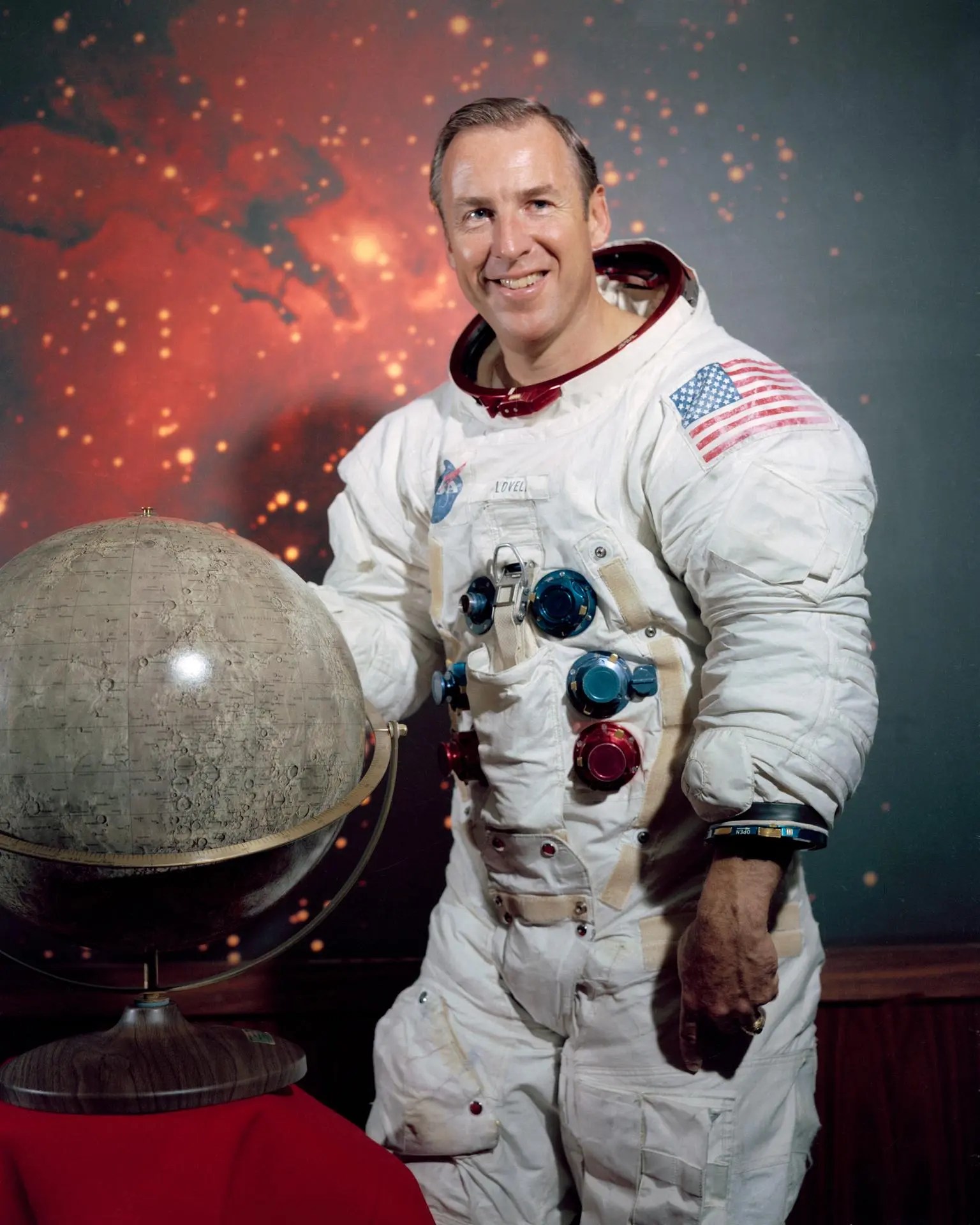
Image (Credit): NASA astronaut Jim Lovell. (NASA)

Last Thursday, former NASA astronaut Jim Lovell passed away at the age of 97. Mr. Lovell was one of the first astronauts to orbit the Moon in Apollo 8, and he also commanded the Apollo 13 mission around the Moon under great stress after the onboard explosion of an oxygen canister. While the crew was unable to complete its mission by landing on the Moon, he was able to safely bring his crew back to Earth.

In commenting on the Apollo 13 mission, Mr. Lovell later said ““It was plagued by bad omens and bad luck from the very beginning.” Even so, he was part of a long tradition of trial and error as the U.S. stretched itself and eventually ferried men and supplies to the lunar surface. The deaths of three astronauts in the Apollo 1 capsule had shown the world that a mission to the Moon was a dangerous gamble.

Mr. Lovell took his chances and we are all the better for it. He also stated:

There are people who make things happen, there are people who watch things happen, and there are people who wonder what happened. To be successful, you need to be a person who makes things happen.

He made things happen.

You can read more on Mr. Lovell’s life and career at these sites:

NASA
BBC
The New York Times

Rest in peace.

Television: The New Series Alien: Earth is Coming

Credit: FX Productions.

Given that Hollywood has apparently given up on summer blockbusters about space aliens and similar science fiction, we need to look to television. The summer has already been a lot of fun given the new series Murderbot, as well as the new seasons of Foundation and Star Trek: Strange New Worlds.

But wait, there’s more.

Ridley Scott’s Alien franchise is coming to a television near you. That’s right, some things cannot be contained to the screen.

The new series Alien: Earth will premiere on FX, Hulu, and Disney+ on August 12th. The latest trailer will show you that the screaming and running has just started. But instead of a two hour movie, you now have eight hours of terror spread over eight episodes.

So what is the spin this time? It’s in the title. Hell has come to our planet.

It is basically a tale of childlike super soldiers taking on the Xenomorph, or Alien creature. This future Earth is more advanced and nothing like ours, but it does not seem advanced enough to understand what just crash-landed onto the planet.

Here is the plot summary from FX:

When the mysterious deep space research vessel USCSS Maginot crash-lands on Earth, “Wendy” (Sydney Chandler) and a ragtag group of tactical soldiers make a fateful discovery that puts them face-to-face with the planet’s greatest threat in FX’s Alien: Earth.

In the year 2120, the Earth is governed by five corporations: Prodigy, Weyland-Yutani, Lynch, Dynamic and Threshold. In this Corporate Era, cyborgs (humans with both biological and artificial parts) and synthetics (humanoid robots with artificial intelligence) exist alongside humans. But the game is changed when the wunderkind Founder and CEO of Prodigy Corporation unlocks a new technological advancement: hybrids (humanoid robots infused with human consciousness). The first hybrid prototype named “Wendy” marks a new dawn in the race for immortality. After Weyland-Yutani’s spaceship collides into Prodigy City, “Wendy” and the other hybrids encounter mysterious life forms more terrifying than anyone could have ever imagined.

The Alien story was always about the hubris of humanity, corporate greed, and scary technological “improvements”. It is all here again in this television series.

We seem to be slow learners, even with our technology.

IPO Shows Moon Missions Stir Stock Investors

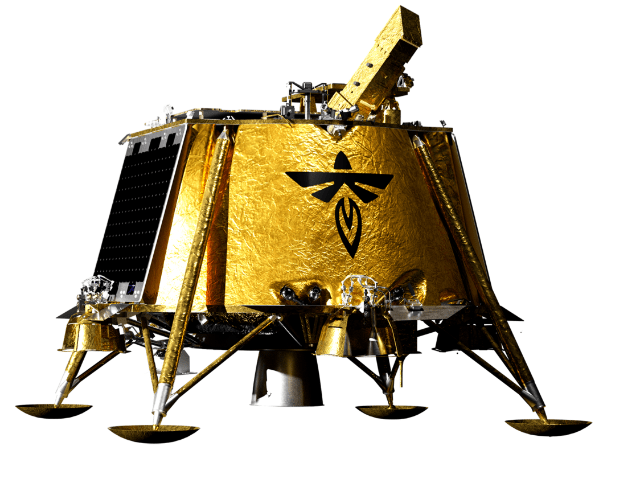
Image (Credit): The Blue Ghost lunar lander. (Firefly Aerospace)

Firefly Aerospace, the Texas-based company that successfully put a lander on the Moon earlier this year, is now having success with the stock market as well. It’s initial public offering (IPO) earlier this week led to a valuation of about $6 billion for the company. The sale provided Firefly with about $868 million in new funds to supports its ongoing efforts.

Firefly Aerospace has seen contracts roll in after its recent lunar success. For example, just last month NASA awarded the company a $177 million Commercial Lunar Payload Services contract. The contract calls for Firefly to deliver NASA-sponsored payloads to the lunar South Pole in 2029.

After the award last month, CEO Jason Kim stated:

Firefly is honored to support another NASA CLPS task order as a proven, reliable partner for robotic missions to the Moon…Following our first Blue Ghost mission that made history just a few months ago, this bold Firefly team proved we have the right mix of grit, innovation, and dedication to not only stick the landing, but also complete all scientific objectives for our payload partners. We’ve set the bar high, and we aim to continue setting new records in our missions to come with our active production line of Blue Ghost landers.

This is good news for other companies striving for a piece of the space industry. Now we just need to ensure NASA remains a reliable partner for Firefly Aerospace and others who have proven they can get the job done.

Pic of the Week: The Third Interstellar Visitor

Image (Credit): Interstellar comet 3I/Atlas captured by the Hubble Space Telescope. (NASA, ESA, D. Jewitt (UCLA), J. DePasquale (STScI))

This week’s image is from the NASA/European Space Agency’s (ESA) Hubble Space Telescope. It shows an image of interstellar comet 3I/Atlas from July 21, 2025. The comet was about 365 million kilometers from Earth. First identified by a telescope in Chile last month, this is the third such object to be observed by astronomers.

Here is a little more from the ESA about this unusual object:

Hubble also captured a dust plume ejected from the Sun-warmed side of the comet, and the hint of a dust tail streaming away from the nucleus. Hubble’s data yields a dust-loss rate consistent with comets that are first detected around 480 million kilometres from the Sun. This behaviour is much like the signature of previously seen Sun-bound comets originating within our Solar System. The big difference is that this interstellar visitor originated in some other Solar System elsewhere in our Milky Way galaxy. 3I/ATLAS is traveling through our Solar System at roughly 210,000 kilometres per hour, the highest velocity ever recorded for a Solar System visitor. This breathtaking sprint is evidence that the comet has been drifting through interstellar space for many billions of years. The gravitational slingshot effect from innumerable stars and nebulae the comet passed added momentum, ratcheting up its speed. The longer 3I/ATLAS was out in space, the higher its speed grew.